When God Sent His Human Son into the World

“You are the Messiah, the Son of the Living God.”

The Human Being God Sent into the World

The Man Jesus is Sent in the name of His God and Father

God’s human son Jesus was not of this world but had been sent into the world.1 What doees it mean to be sent “into the world.” The disciples of Jesus are also sent “into the world.”2 The disciples of Jesus are not of this world.3 Jesus said that, “they are not of this world just as I am not of this world.”4 And so when the disciples are sent, they are sent “into the world” just as Jesus had been sent “into the world.”5 After Jesus had risen from the dead, he met his disciples in the upper room and sent them into the world by anointing them with the Holy Spirit just as the Father had sent him at the Jordan.6 Just as Jesus sent the disciples were sent “into the world,” Jesus had been sent “into the world.”

“They are not of this world just as I am not of the world.”

“Just as You sent me into this world, I have sent them into the world.”

“Just as the Father has sent Me, I also send you. And when he had said this, he breathed on them and said to them, “Receive the Holy Spirit.”

Jesus sent his disciples into the world just as God the Father had sent Jesus into the world. Just as Jesus later sent his disciples into the world, his God and Father had anointed the man Jesus with the Holy Spirit and sent him from the Jordan “into the world.” God sanctified the man Jesus at the Jordan and sent him into the world. (John 10:36).

The Spirit of the Lord is upon me wherefore He has anointed me7 to preach good news to the poor. He has sent me to proclaim release to the captives and recovering of sight to the blind, to free those who are oppressed, to proclaim the acceptable year of the Lord.”

“Christ” and “Messiah” are English forms of the Greek and Hebrew words for “The Anointed.” A full translation of the Greek words is not “Jesus Christ” or “Jesus the Christ,” and a full translation of the Hebrew words is not “Jesus the Messiah.” Rather a full translation of the words is “Jesus the Anointed.” The man Jesus was the human being chosen to be God’s Christ, God’s Messiah, God’s Anointed One. However, we must understand that the Messiah, the Anointed One, did not function as the Messiah, the Anointed One, until he was anointed. His role as Christ, Messiah, the Anointed One, began here at the Jordan when God had actually anointed the man Jesus to be “the Anointed One,” that is, the Messiah, the Christ, God’s Messiah.

Anointed with Power to do Kingdom Signs and Wonders

The Spirit is power and God had anointed Jesus8 with his God and Father’s Holy Spirit at the Jordan River.9 In this way, Jesus was sent out not in his own name but in his Father’s name, the only God.10 And having been anointed with the Holy Spirit, his God was with him and in him and working through him, and the man Jesus was anointed with power to do miracles which his God and Father did through him.11 Jesus himself testified that his words and his works were not his own but the Father’s who sent him and was in him.12

Anointed with Authority to Forgive Sins

When Jesus announced that he was sending his disciples just as the Father had sent him and after he had anointed them with the Spirit, he said to them, “If you forgive the sins of any, their sins have been forgiven them; if you retain the sins of any, they have been retained.”13 Jesus had been given the authority to forgive sins in the same manner. When his God and Father anointed the man Jesus with the Spirit at the Jordan, the Father had authorized this man to forgive sins.

There were some men who were completely unaware that such authority to forgive sins had been given by God to this man Jesus. On one occasion some men brought a paralytic to Jesus.14 And seeing the faith of these men, Jesus forgave the paralytic’s sins. But the Pharisees objected and declared that only God Himself had the authority to forgive sins.15 And then Jesus demonstrated their error by showing them that the son of man had authority on earth to forgive sins, that is, a man had been given this authority. And Jesus did this by asking them a question, “Which is easier to say, “Your sins are forgiven,” or “Rise up and walk.” So to prove he had this authority to forgive sins, Jesus demonstrated he had the authority to do something even greater – to completely heal a paralyzed man and cause him to walk. And this Jesus did do. He healed the paralytic who rose up, picked up his pallet, and walked home. Jesus clearly demonstrated to the Pharisees that a man, he himself, had been given authority to forgive sins by demonstrating he had the authority to do something even greater. And so we read in the Scriptures that the onlooking crowd was absolutely amazed that God had indeed given such authority to men.16 Jesus had proven that the Pharisee’s declaration – that only God could forgive sins – was now completely wrong. God had given the authority to forgive sins to a man. This man had been anointed with the Father’s Holy Spirit and authorized to forgive sins in his Father’s name. Everything Jesus did was according to his Father’s will and in his Father’s name.

Apostle of the Father: A Man Sent into the World

The English word “apostle” is simply a form of the Greek noun apostolos. The verb form of this word, apostello, means to send out. Jesus was sent by his God and Father. Jesus was his God and Father’s Apostle.17 The man Jesus was sent into the world in the name of his God. Like his disciples who were not of this world and sent into the world, Jesus was not of this world and sent into the world. He was sent into the world from the Jordan River when he was anointed with the Holy Spirit, “The Spirit of the Lord is upon me wherefore He has anointed me… He has sent me.” Anointing this man with the Holy Spirit at the Jordan, God had sent a man into the world to do His will.

NOTES:

1. John 3:16-17,19; 10:36; 1 John 4:9. See also John 1:9; 6:14;11:27; 12:46; 16:28; 17:18; 18:37.
2. John 17:18; see also 20:21-22. Deceivers have also gone “into the world.” See 1 John 4:1; 2 John 1:7.
3. John 17:6, 14-16.
4. John 17:14,16
5. John 17:18
6. Luke 4:18
7. Luke 4:18; Acts 10:38.
8. Acts 10:38; Luke 4:18. 9. Matthew 3:16-17.
10. John 5:43-45
11. John 14:9-10; Acts 2:22; 10:38
12. John 7:16; 9:4; 12:49; 14:9,24.
13. John 20:21-23; see Luke 24:46-49.
14. Compare parallel accounts at Matthew 9:1-8; Mark 2:1-12; Luke 5:17-26.
15. Mark 2:7
16. Matthew 9:8.

The Man who became Ruler of the Universe

“Let all the angels of God bow down before him.”

How a Man came to be Lord of the People of God

1. God Appoints a Human to be Lord and King of His People

God had foretold that the royal scepter would not depart from Judah.

The scepter shall not depart from Judah, nor a lawgiver from between his feet, until Shiloh comes and to him the obedience of the people.1

YAHWEH was the God of Israel. YAHWEH was the Lord of Israel. YAHWEH was the King of Israel. When YAHWEH brought His people out of Egypt, the Israelites, He was their God, their Lord, their King. They had one God, one Lord, and their Lord and God was YAHWEH. No one else was their God, their Lord, their King. But it did not remain this way.

YAHWEH God was the King of Israel.2 He had raised up human judges such as Samuel.3 But when Samuel grew old he appointed his sons to be the judges of Israel.4 The Israelites rejected the rule of God and wanted a human King to judge them like all the other nations.5 So God handed them over to their wicked desires and directed Samuel the prophet to appoint them a King.6 And then God instructed Samuel to anoint Saul, a man of the Tribe of Benjamin, to rule over the nation of Israel.7 And Samuel anointed Saul to rule over Israel.8 But Saul took it upon himself to offer the burnt offerings which only a Levitical priest may offer.9 And so Saul was rejected by God for his disobedience and God took away his kingship in favor of David, a man after God’s own heart.10

2. The Throne of YAHWEH

God chose a young shepherd, David son of Jesse, to be the King of Israel.11 And Samuel anointed David with oil and the Holy Spirit of God departed from Saul and came upon David in power.12 The Hebrew based word “Messiah” means “Anointed One.” God had anointed David the foregather of His Messiah, Jesus, God’s Son, David’s Son.

God promised David that his seed would reign upon his throne forever:

When your days are complete and you lie down with your fathers, I will raise up your descendant after you, who will come forth from you, and I will establish his kingdom. He shall build a house for My name, and I will establish the throne of his kingdom forever. I will be a father to him and he will be a son to Me; when he commits iniquity, I will correct him with the rod of men and the strokes of the sons of men, but My lovingkindness shall not depart from him, as I took it away from Saul, whom I removed from before you. Your house and your kingdom shall endure before Me forever; your throne shall be established forever.13

David and his son Solomon sat on the throne of YAHWEH as King over YAHWEH’s Kingdom.14

Then David said to all the assembly, “Now bless YAHWEH your God.” And all the assembly blessed YAHWEH, the God of their fathers, and bowed low and worshiped YAHWEH and the King…. then Solomon sat on the throne of YAHWEH as King instead of David his father.15

David sat on “the throne of YAHWEH.” The whole assembly of Israel bowed down and worshiped16 both YAHWEH and King David. The King of Israel was God’s divinely established authority.17 This human being sat on “the throne of YAHWEH.” The same idea is present in the 45th Psalm which is about the Davidic King.

My heart overflows with a good theme; I address my verses to the King; My tongue is the pen of a ready writer. are the fairest of the sons of men; Grace is poured upon your lips; Therefore God has blessed You forever. Gird Your sword on Your thigh, O Mighty One, In Your splendor and Your majesty! And in Your majesty ride on victoriously, For the cause of truth and meekness and righteousness; Let Your right hand teach You awesome things. Your arrows are sharp; The peoples fall under You; Your arrows are in the heart of the King’s enemies. Your throne, the God, forever and ever.18 A scepter of uprightness is the scepter of your kingdom. You have loved righteousness and hated wickedness; Therefore God, your God, has anointed you with the oil of joy above your fellows. All Your garments are fragrant with myrrh and aloes and cassia; Out of ivory palaces stringed instruments have made You glad. Kings’ daughters are among your noble ladies; at Your right hand stands the queen in gold from Ophir. Listen, O daughter, give attention and incline your ear: Forget your people and your father’s house; Then the King will desire your beauty. Because He is your Lord, worship16 Him.18

The above Psalm, also quoted at Hebrews 1:8-9, is about the Davidic King of Israel, “the fairest of the sons of men,” a man who has a God who has anointed him. In context, it must refer to a Davidic King who has human daughters of other Kings among him and at his right hand. We have already seen how the Scriptures say that David and Solomon sat on the throne of YAHWEH. The words translated above as “Your throne, the God, forever and ever,” are the most literal rendering of this verse both in Hebrew and Greek.19 The message here is that the throne of this King is the throne of “the God” and is the exact same concept as the Davidic King sitting on the throne of YAHWEH. The word “throne” is a reference to authority and the authority exercise by the Davidic King is the authority of YAHWEH. Anointed in the Spirit, the Davidic King exercises YAHWEH’s authority over Israel, “your throne the God to the age of the age,” meaning his thronal authority was the authority of his God. The point of Psalm 45:6 is to express the idea that the throne of this Davidic King is the throne of the God of Israel, the throne of YAHWEH.

Solomon sat on the throne of YAHWEH as King instead of David his father.

Your throne, the God, forever and ever.

The word “throne” signifies authority. To sit on the throne of YAHWEH means that this human being is authorized by God to rule His Kingdom. “Your throne, the God” simply means that this human being’s throne is the throne of God and this man exercises YAHWEH’s authority over the nation of Israel.

The One who sits on this Throne is “Lord.”

Notice also how Psalm 45 says, “Because he is your Lord, worship him.” The Davidic King was “Lord.”

Then Nathan spoke to Bathsheba the mother of Solomon, saying, “Have you not heard that Adonijah the son of Haggith has become king, and David our Lord does not know it? So now come, please let me give you counsel and save your life and the life of your son Solomon. Go at once to King David and say to him, `Have you not, my Lord the King, sworn to your maidservant, saying, “Surely Solomon your son shall be King after me, and he shall sit on my throne”? Why then has Adonijah become King?’ Behold, while you are still there speaking with the King, I will come in after you and confirm your words.” So Bathsheba went in to the King in the bedroom. Now the King was very old, and Abishag the Shunammite was ministering to the Kng. Then Bathsheba bowed and worshiped16 the King. And the King said, “What do you wish?” She said to him, “My Lord, you swore to your maidservant by YAHWEH your God, saying, `Surely your son Solomon shall be king after me and he shall sit on my throne.’ Now, behold, Adonijah is King; and now, my Lord the King, you do not know it. He has sacrificed oxen and fatlings and sheep in abundance, and has invited all the sons of the King and Abiathar the priest and Joab the commander of the army, but he has not invited Solomon your servant. As for you now, my Lord the King, the eyes of all Israel are on you, to tell them who shall sit on the throne of my Lord the King after him. Otherwise it will come about, as soon as my Lord the King sleeps with his fathers, that I and my son Solomon will be considered offenders.” Behold, while she was still speaking with the King, Nathan the prophet came in. They told the King, saying, “Here is Nathan the prophet.” And when he came in before the King, he worshiped16 the King with his face to the ground. Then Nathan said, “My Lord the King, have you said, `Adonijah shall be King after me, and he shall sit on my throne’? For he has gone down today and has sacrificed oxen and fatlings and sheep in abundance, and has invited all the King’s sons and the commanders of the army and Abiathar the priest, and behold, they are eating and drinking before him; and they say, `Long live King Adonijah!’ But me, even me your servant, and Zadok the priest and Benaiah the son of Jehoiada and your servant Solomon, he has not invited. Has this thing been done by my Lord the King, and you have not shown to your servants who should sit on the throne of my Lord the king after him?” Then King David said, “Call Bathsheba to me.” And she came into the King’s presence and stood before the King. The King vowed and said, “As YAHWEH lives, who has redeemed my life from all distress, surely as I vowed to you by YAHWEH the God of Israel, saying, `Your son Solomon shall be King after me, and he shall sit on my throne in my place’; I will indeed do so this day.” Then Bathsheba bowed with her face to the ground, and worshiped16 the King and said, “May my Lord King David live forever.” Then King David said, “Call to me Zadok the priest, Nathan the prophet, and Benaiah the son of Jehoiada.” And they came into the King’s presence. The king said to them, “Take with you the servants of your lord, and have my son Solomon ride on my own mule, and bring him down to Gihon. Let Zadok the priest and Nathan the prophet anoint him there as King over Israel, and blow the trumpet and say, ‘Long live King Solomon!’ Then you shall come up after him, and he shall come and sit on my throne and be King in my place; for I have appointed him to be ruler over Israel and Judah.” Benaiah the son of Jehoiada answered the King and said, “Amen! Thus may YAHWEH, the God of my Lord the King, say, ‘As YAHWEH has been with my Lord the King, so may He be with Solomon, and make his throne greater than the throne of my Lord King David!” 20.

The one who sat on the throne of YAHWEH and ruling over the nation of Israel was the Lord of all the people. Now let us see how God made Jesus “Lord” when he raised him from the dead and sat down on the throne of YAHWEH God.

Jesus, the Son of David, sits down on the Throne of YAHWEH God

Jesus was a son of David.21 And he would sit on the throne of David his father.22 Like his father David, Jesus was the King of Israel;23 he was the King of Jews.24

On one occasion Jesus, quoting Psalm 110:1, asked the Pharisees who they expected the Messiah to be and how it could be possible that the Messiah was both David’s son and David’s Lord.

“What do you think about the Christ, whose son is He?” They said to Him, “The son of David.” He said to them, “Then how does David in the Spirit call Him ‘Lord,’ saying, ‘The Lord said to my Lord, “Sit at my right hand until I put your enemies beneath your feet.”? If David then calls Him ‘Lord,’ how is he his son?” No one was able to answer Him a word, nor did anyone dare from that day on to ask Him another question. 25

In the ancient Jewish mind, the notion of a son being your “Lord” was an impossibility. Seniority meant positional authority and never inferiority. But Jesus put these men in an inescapable dilemma. The admitted the Messiah was David’s son but could not explain how David’s son was also David’s Lord. The Messiah was a son of David which necessarily means the Messiah was a human being since only a human being is the son of David.

Peter explains how it is possible. Notice how Jesus said that David was speaking “in the Spirit.” David was speaking prophetically and this is also affirmed by Peter:

Men of Israel, listen to these words: Jesus the Nazarene, a man attested to you by God… this man… you nailed to a cross by the hands of godless men and put Him to death. But God raised him up again… Brothers, I may confidently say to you regarding the patriarch David that he both died and was buried, and his tomb is with us to this day. And so, because he was a prophet and knew that God had sworn to him an oath to seat one of his descendants on his throne, he looked ahead and spoke of the resurrection of the Christ…. This Jesus God raised up again, to which we are all witnesses. Therefore having been exalted to the right hand of God, and having received from the Father the promise of the Holy Spirit, He has poured forth this which you both see and hear. For it was not David who ascended into heaven, but he himself says: ‘The Lord said to my Lord, ‘Sit at my right hand until I make your enemies a footstool.‘26 Therefore let all the house of Israel know for certain that God has made Him both Lord and Christ, this Jesus whom you crucified.27

God had raised David’s son Jesus from the dead and seating Jesus down at His right hand, God had made this human being “Lord.”28 Peter explains very clearly that Psalm 110:1 was fulfilled when Jesus sat down at the right hand of God, this positionally making the human son of David “Lord.” Jesus rose from the dead and sat down at the right hand of God.29 A man sat down at the right hand of Power.30 A man had sat down on his the throne of his God and Father.31 A man sat down on the throne of the God of Israel, the throne of YAHWEH.32 His authority was God’s authority since he sat down on the throne of God. He was exercising God’s authority, “your throne the God to the age of the age.” The ancient Jewish mind immediately understood that sitting on God’s throne in this manner meant that God had given the man Jesus the right to exerices His, God’s, authority. God had bodily anointed this man with His Holy Spirit giving the man Jesus YAHWEH’s authority.33 The idea here is the same as Pharaoh making Joseph Lord of all Egypt and granting Joseph the right to exericise his, Pharaoh’s authority.34 Or again, the idea is that the man Jesus sits on the throne of YAHWEH exercising rule over God’s Kingdom just as David and Solomon sat on the throne of YAHWEH exercising rule of God’s Kingdom Israel.35

But seated on the throne of YAHWEH, David and Solomon only ruled over the nation of Israel. A risen man now rules as Lord over all heaven and earth.36 Jesus was a man and being a man he had been made lower than the angels37 but now in his resurrection and exaltation, the man Jesus became superior to the angels38 and had inherited a better name than them.39 Jesus had been made “Lord” of heaven and earth. And having been made superior to the angels, the angels were now subjected to him.40 In his resurrection the promise God made to David, “I will be a father to him and he will be a son to me” was fulfilled.41 Having made purification for sins on the cross, Jesus had been born out of the dead by God42 and as such this risen man Jesus was the firstborn out of the dead.43 God brought his risen firstborn44 into the oikoumene to come, the economy of heaven45, the heavenly community of God and all his angels.46 And having been seated at the right hand of God, he was made superor to the angels and the angels were to bow down47 before the man Jesus, “Let all the angels of God worship him.”47 God had placed the man Jesus over all the works of his hands48 and even over the angels.49 The man who like us had been made lower than the angels,50 the man who had called out to God who could save him51 learning obedience from what he had suffered52 had been perfected through his suffering,53 was now crowned with glory and honor54 and seated in a position superior to the angels,55 the right hand of YAHWEH.56

Just as David or Solomon, the Lord and King of Israel, acted as the judge of Israel,57 the Lord Jesus, Lord of heaven and earth, will judge the living and the dead.58 God will judge the world through a man.59 God has appointed a man to judge the world.60 And before this man every knee will bow and every tongue will confess that Jesus is “Lord” to the glory of the Father.61

The man Jesus will reign until all enemies are put under his feet.62 All things are placed under the man Jesus.63 However, it is obvious, as Paul says, that there is one thing which is not subject to Jesus: God the Father who placed all things under Jesus.64 For us there is one God and that one God is the Father and there is one Lord and that one Lord is Jesus Christ.65 God the Father is the Lord of Jesus. We have one Lord, Jesus Christ, and one God, the Father who is above all.66 The Father is not this one Lord but is the God of this one Lord, “the God and Father of the Lord of us, Jesus Christ.” 67

David was Lord of all Israel; David’s risen human son, Jesus the Messiah, is Lord of all heaven and earth. God raised up a man to rule the universe. God has entrusted the rule of the universe to a man, a resurrected man named Jesus.

And the God of Jesus,68 the Father of our Lord, made it all happen.

There will be no end to the increase of His government or of peace, On the throne of David and over his kingdom, To establish it and to uphold it with justice and righteousness from then on and forevermore. The zeal of the YAHWEH of hosts will accomplish this. 69

In the days of those kings the God of heaven will set up a kingdom which will never be destroyed, and that kingdom will not be left for another people; it will crush and put an end to all these kingdoms, but it will itself endure forever. 70

And behold, with the clouds of heaven One like a Son of Man was coming. And He came up to the Ancient of Days And was presented before Him. And to Him was given dominion, glory and a kingdom, that all the peoples, nations and men of every language might serve71 Him. His dominion is an everlasting dominion which will not pass away; And His kingdom is one which will not be destroyed. 72

God has entrusted a man from Galilee with absolutely everything. And the God of this one Lord, Jesus Christ the Lord of the universe, is his Father. For us there is one God, the Father, and one Lord, Jesus Christ, and Jesus is the Son of this one God and the Father is the God of this one Lord. For us there is one Lord, Jesus Christ, whose God is the “God and Father of our Lord Jesus Christ,” the God of Abraham, Isaac, and Jacob, who raised his servant Jesus from the dead and made him Lord placing all things under his feet, the God who is so powerful He could make these things occur, the God of the man JESUS, the God of the one Lord of the universe.

NOTES:

1. Genesis 49:10. See also 1 Chronicles 5:2; 28:4. Shiloh was the central place of worship for Israel prior to Jerusalem. The meaning of “Shiloh” is contested but many see this as a Messianic prophecy. Let us recall that the central place of worship now is the body of Jesus Christ, the temple of God.
2. Judges 8:23; 1 Samuel 8:7; 12:12; Psalm 10:16.
3. 1 Samuel 7:15.
4. 1 Samuel 8:1-4.
5. 1 Samuel 8:5-22; 10:19.
6. 1 Samuel 8:22; 12:17.
7. 1 Samuel 9:16-17; see 11:14; 12:1,13.
8. 1 Samuel 10:1.
9. 1 Samuel 13:9-12.
10. 1 Samuel 13:13-14.
11. 1 Samuel 16:1-12; 1 Chronicles 28:4.
12. 1 Samuel 16:13-14.
13. 2 Samuel 7:11-14; see 1 Chronicles 17:11-14; 28:6.
14. 1 Chronicles 28:5. God’s Kingdom in this context is understood to be the nation of Israel. See Acts 1:6.
15. 1 Chronicles 29:20-23.
16. Hebrew shachah. This common Hebrew word is used about 162 times in the Old Testament to refer to worship of God or other gods. The basic concept behind this word, and its Greek equivalent, is to bow down before, and in subjection to, another identity. For examples, see Genesis 18:2; 19:1; Exodus 20:5; 23:24; 34:14; 1 Samuel 1:19, 28; 15:25,30; 12:20. The Greek equivalent is proskyneo/proskuneo which is how the Jews translated shachah into Greek at 1 Chronicles 29:20 and is the same Greek word used at Hebrews 1:6.
17. See the RSV translation of Psalm 45:6. Also take note of Romans 13:1ff.
18. Psalm 45.
19. Hebrews 1:8-9 literally reads, “the throne of you the god to the age of the age” (o qronoV sou o qeoV eiV ton aiwna tou aiwnoV). The verb “is” also does not exist in the original text. The word which Trinitarian translators like to translate as “O” is the standard Greek word for “the,” the definite article. “The god” is also the standard Koine Greek way to refer to the one God. It is not possible for God to be addressing the Son as `God“ and then have the writer say that God`s God anointed him. 20. 1 Kings 1:11-37.
21. Matthew 1:1; 9:27; 12:23; 15:22; 20:30-31; 21:9,15; 22:42-45; Mark 10:47-48; 12:35-37; Luke 3:31; 18:38-39; 20:41-44; John 7:42; Acts 13:22-23; Romans 1:3; 2 Timothy 2:8; Revelation 5:5; 22:16.
22. Luke 1:31-32. See Mark 11:10.
23. Matthew 27:42; Mark 15:32; John 1:49; 12:13
24. Matthew 2:2; 21:5; 27:11,29,37; Mark 15:2,9,12,18,26; Luke 1:32; 23:3,37-38; John 18:33,39; 19:3,19,31.
25. Matthew 22:42-46; cf. Mark 12:35-37; Luke 20:40-44.
26. Psalm 110:1. The original Hebrew text reads “YHWH said to Adonai,” or perhaps “YHWH said to Adoni.” In English translations of the Old Testament, the word “LORD” replaces the name YHWH and is to be distinguished from the word “Lord.” This distinction does not occur in the Greek Septuagint or Greek New Testament. Our English word “LORD” translates the Hebrew word “Adonai” which was a replacement word used by the Jews for “YHWH” who did not want to utter their God’s name. It is also questionable whether the second instance of the word “Lord” at Psalm 110:1 should read “Adonai” or “Adoni.” The difficulty here is that the original Hebrew text did not contain vowels and these vowels (vowel points) were later scribal additions to Hebrew words.
27. Acts 2:22-36.
28. Acts 2:36; Philippians 2:9-11; Romans 10:9. See also Hebrews 1:4.
29. Mark 16:19; Acts 5:31; 7:55-56; Romans 8:34; Ephesians 1:20-22; Colossians 3:1; Hebrews 1:3,13; 8:1; 10:12; 12:2; 1 Peter 3:22. 30. Matthew 26:64; Mark 14:62; Luke 22:69. The word “Power” is not intended to refer Jesus’ authority but is intended to refer directly to the Father who is understood in ancient the Hebrew mind to be EL, a word which refers to their one God as “the Power.”
31. Revelation 3:21. See also Revelation 1:6; 7:17;12:5;19:5;20:11-12;22:1-3.
32. Hebrews 1:8 quoting Psalm 45:6, literally, “the throne of you the god to the age of the age.” In ancient Koine Greek, the term “the god” is how someone referred to the one God. The intent of Hebrews 1:8 is the same intent as the rest of this chapter: the man Jesus has become superior to the angels because this man sat down on God’s throne, the throne of YAHWEH. “Your throne, the God, to the age of the age” means that Jesus is seated on the throne of God. Note also how the Trinitarian translation is impossible since it would result in God being anointed by his God, a complete absurdity, “Your throne, O God, is forever and ever…. therefore God, your God, has anointed you.”
33. Acts 2:33; Hebrews 1:9. See also 1 Peter 3:18; 1 Corinthians 15:45.
34. Genesis 41:40-43; 45:9.
35. 1 Chronicles 29:20,23.
36. Matthew 28:18: Hebrews 2:8.
37. Hebrews 2:6-8; Compare Hebrews 3:3, literally, “who was faithful to Him who made (poieo) him” where the writer is referring back to Hebrews 2:6-7.
38. Hebrews 1:4; 2:7; 1 Peter 3:22 (compare Heb 4:14).
39. Acts 2:36; Philippians 2:9-11.
40. 1 Peter 3:22; Hebrews 2:6-9.
41. Hebrews 1:4-5 quoting YAHWEH’s promise to David at 2 Samuel 7:-14.
42. Hebrews 1:5; Acts 13:30-33. In both of these passages it is quite clear that the event in view is the resurrection when God raised Jesus from the dead.
43. Colossians 1:18; Revelation 1:5; See also Romans 8:29.
44. The “firstborn” at Hebrews 1:6 refers directly to what he has just stated in verse 5, “Today I have begotten you.”
45. Hebrews 1:6. Compare Hebrews 2:5. The Hebrews writer tells us explicitly that he has been speaking of “the oikoumene to come.” The word used here is not the standard Greek word for “world” which would be kosmos The Greek word used here is oikoumene and was used to refer to a community or population of persons. See Luke 2:1; Acts 11:28; 17:6,31; 19:27. In context, the oikoumene is the heavenly community of God and all His angels in heaven.
46. See also Hebrews 12:22-24.
47. Hebrews 1:6. The Greek word proskyneo means to bow down in submission to a higher authority. Proskyneo is essentially equivalent to Hebrew shachah and is translated as such by the 2nd century B.C. Jews who translated the Old Testament Scriptures from Hebrew into Greek. There are numerous examples in the Old Testament of men bowing down/worshiping other men and angels in proskyneo worship. The angels were to bow down/worship Jesus because this man had become positionally superior to the angels (1:4).
48. Hebrews 2:7-8.
49. Hebrews 1:4,6. 1 Peter 3:22.
50. Hebrews 2:6-7,9.
51. Hebrews 5:7
52. Hebrews 5:8.
53. Hebrews 2:9-10; 5:9. Note also 2:17.
54. Hebrews 2:7-9.
55. Hebrews 1:4,6; 1 Peter 3:22.
56. Hebrews 1:8; Revelation 3:21.
57. 1 Samuel 8:6,20; 1 Kings 3:9; 7:7.
58. Acts 10:42; Romans 14:10-12; 2 Timothy 4:1.
59. Romans 2:6,16.
60. Acts 17:30-31.
61. Philippians 2:9-11.
62. 1 Corinthians 15:25-26.
63. 1 Corinthians 15:27.
64. 1 Corinthians 15:27-28.
65. 1 Corinthians 8:6. The Father is not the “one Lord” in this verse just as Jesus is not the “one God.” THIS one Lord has a God, the God and Father of our Lord Jesus Christ.
66. 1 Corinthians 8:6; Ephesians 4:4-6.
67. Romans 15:6; 2 Corinthians 1:3; 11:31; Ephesians 1:3, 17; Colossians 1:3; 1 Peter 1:3.
68. Matthew 27:46; John 20:17; Revelation 3:12.
69. Isaiah 9:7.
70. Daniel 2:44.
71. LXX latreuo.
72. Daniel 7:13-14.
When the First Man was Born Again

“You are the Messiah, the Son of the Living God.”

The First Man to be Born Again

There are many folks who have been conditioned to think that being born again is equivalent to saying one was forgiven of their sins. But this is not quite right because it conflates the cross and the resurrection into one thing. The forgiveness of our sins pertains to death and the Cross of Christ but our new birth pertains life and the Resurrection of Christ. The cross happened first and the resurrection happened after the cross. Our sins are washed away first and we are raised up with Christ into a new life next. The new birth is something which happens only after we have died with Christ. The new birth only happens after we bodies of flesh have had our sins washed away and we are made as white as snow, pure virgin white, like the bride of Joseph, the virgin Mary, in whom Jesus was born from above by the Spirit of God. God only plants in uncorrupted soil. Only when there is no sin may we be born again and that is why, if we want to be born again from above, we must first die with Christ and have our sins washed away. And having had our sins washed away we are, at that moment, pure and free from all our past sins. And only after this has occurred can we sinless bodies of flesh be born anew by the Spirit of God into Jesus’ resurrection life. Only sinless humans can be born again and they are made completely sinless by uniting with the Cross of Christ and dying with him so that they might be raised up with him in his resurrection life, the new birth.

The Scriptures tell us that the sinless man Jesus was born again, born a second time. He had been born in Bethlehem of pure virgin flesh, the flesh of his mother Mary. But having died on the cross, the sinless man Jesus was stone dead. He died for you and me, so that we could die with him and become sinless, having our sins washed away by the sacrifice of the cross so that we too could be born again, born a second time by God as our Father. Just as we are born again after becoming sinless by the blood of the cross, Jesus who was sinless was born again when God raised him from the dead. Death cannot hold a sinless man.

God raised Jesus out of the dead. Jesus was begotten out of the dead. And for this reason, Jesus is called “the firstborn out of the dead.”1

When Paul came to Pisidian Antioch to proclaim the gospel, he recounted how God had raised the man Jesus from the dead fulfilling the second Psalm, “You are my son, today I have begotten you.”:

When they had carried out all that was written concerning Him, they took him down from the cross and laid him in a tomb. But God raised him from the dead and for many days he appeared to those who came up with him from Galilee to Jerusalem, those who are now His witnesses to the people. And we preach to you the good news of the promise made to the fathers – that God has fulfilled this promise to our children in that He raised up Jesus JUST AS IT IS WRITTEN in the second Psalm, ‘You are my son, TODAY I have begotten you.’ And that He raised Him up from the dead, no longer to return to corruption, He has spoken in this way: ‘I will give you the Holy and Sure blessings of David.’ Therefore He also says in another [Psalm], ‘You will not allow your Holy One to will not allow Your Holy One to see corruption.’ For David, after he had served the purpose of God in his own generation, fell asleep, and was laid among his fathers and saw corruption but He whom God raised

 did not see corruption.2

Observe carefully that the second Psalm,’You are my son, Today I have begotten you3 was fulfilled WHEN God raised Jesus from the dead. The Hebrews writers expresses the very same idea and further adds additional insight by quoting God’s promise to King David:

Having made purification of sins, he sat down at the right hand of the Majesty on High, having become superior to the angels, inasmuch as he has inherited a more excellent name than them. For to which of the angels did He ever say, ‘You are my son, TODAY I have begotten you.’ and again, “I will be a father to him and he shall be a son to me”?4

And again we see the second Psalm is said to be fulfilled once Jesus had made purification for sins and had become superior to the angels when he had risen from the dead and sat down at the right hand of the throne of God.

Jesus had first been begotten in Bethelhem of Judea in the days of Herod.5 But he died and he was dead. In order for the man Jesus to come to life again, He needed to be begotten again, born again out of the dead. Jesus was the firstborn out of the dead, the first human being to be born again a second time, begotten again from above.6 Jesus was begotten again from above when God raised him from the dead.

The Hebrews writer immediately goes on to say, “And when He again brings the firstborn into the oikoumene, He says, “‘And let all the angels of God bow down to him’.”7 The word oikoumene word is a Greek word which they used to refer to a population, a large scale community, an economy of people.8 The Hebrews writer tells us explicitly what specific “oikoumene” he has in mind, “the oikoumene to come of which we are speaking,”9 that is, the Kingdom of God, the heavenly economy of God and all his angels. We see the writer return to this idea later in the book of Hebrews, “you have come to Mount Zion and to the city of the living God, the heavenly Jerusalem, and to myriads of angels, to the general assembly and church of the firstborn who are enrolled in heaven.”10 God brought the man Jesus into this heavenly economy, the oikoumene to come when He raised him from the dead and exalted him to God’s throne in heaven. Jesus was the firstborn out of the dead and in this way God brought his firstborn, the risen man Jesus, into this oikoumene, “the oikoumene to come,” the economy of God and all his angels in heaven.

The man Jesus of Nazareth had been begotten to Mary in Bethlehem of Judea in the days of Herod. But having been crucified this man was now dead. In great love, this innocent and sinless man had given himself up as a sacrifice for our sins and had died on the cross for our sins. Jesus was dead. The dead man Jesus had once lived. He had come to life when he was begotten in Bethlehem of Judea in the days of Herod to his mother Mary. But now he had been laying dead in a tomb, lifeless. He no longer lived; Jesus was dead. He had died to that life in which he was begotten the first time. Now dead, he had once lived, and in order for him to live again a second time, he had to be begotten again out of the dead. And this did happen when God raised him from the dead. He was begotten again to new life, resurrection life.

The Hebrews writer and the Apostle Paul both demonstrated to us that the second Psalm, “You are my son, today I have begotten you,” was fulfilled when God raised Jesus from the dead. In his resurrection, Jesus who had once been begotten in Bethlehem, had died and was dead, but now he had been begotten again out of the dead, begotten again a second time, born again. For this reason, he is the firstborn out of the dead, the firstborn among many brothers, the firstborn of many sons of God who are begotten of God. Because of him who died and was born again out of the dead, we too can be born again IN HIM into new resurrection life.

___________________________________________________________

NOTES:

1. Colossians 1:18; Revelation 1:5.
2. Acts 13:30-37.
3. Psalm 2:7
4. Hebrews 1:5; see 2 Samuel 7:11-14 and 1 Chronicles 17:11-14.
5. Matthew 1:20; 2:1,4; Luke 1:35.
6. See John 3:3-8.
7. Hebrews 1:6.
8. See Matthew 24:14; Luke 2:1; Acts 11:28; 17:31; 24:35.
9. Hebrews 2:5.
10. Hebrews 12:22-23.

When the Man Jesus became a Divine Man

“You are the Messiah, the Son of the Living God.”

The Man Jesus is Raised “Life-making Spirit.”

When Jesus rose bodily from the dead, John’s Gospel tells us how his disciple Thomas doubted that he had risen. But when he finally saw Jesus he said, “My Lord and My God.”1 Thomas had said is the context of seeing and believing.2 We are here to be reminded of Jesus’ earlier teaching about seeing and believing. Jesus had taught that to see him was to see the One who had sent him, the Father.3 And again he taught his disciples that to see him, Jesus, was to see the Father.4 And then Jesus explained that the manner in which they seen the Father is by the works he had done from the Father who was in him.5 It was the Father at work in Jesus.6 But now in his resurrection glory the Father was not just dwelling inside Jesus, the Father was in Jesus bodily. The Father was at work making Jesus’ resurrection body immortally alive and in glory. The Father had clothed the man Jesus with his glory, His own divine nature, His own Holy Spirit. And so now where the man Jesus is, the Father also is, because he is bodily clothed in His Father’s Spirit.

Thomas actually said, “The Lord of me and the God of me.” In the Greek language, if you wanted to refer to one person, you would say, “The Lord and God of me.”7 But Thomas did not say this. He used the language which Greek speakers used when they wanted to refer to two people, “The Lord of me and the God of me.”8 And so true to Jesus’ teaching to him, Thomas no longer doubted but affirmed Jesus’ earlier teaching to him, “If you have seen me you have seen the Father.” And indeed, the Father was present right there before Thomas in Jesus’ glorified body which was clothed in the glory of the Father, the Holy Spirit of his Father.” We must also remember that what Thomas finally believed was the Jesus was alive and had risen from the dead. Thomas refused to believe Jesus was risen unless he saw the wounds in his hands and side. His confession affirms that he really believed it was Jesus standing before him and that Jesus had risen. Jesus had taught him, “In that day, you will know that I am in my Father.” Thomas knew, Thomas confessed.

Jesus rose from the dead. He was a man crucified in weakness but who now lives out of the power of God.9 He was put to death in the flesh but made alive in the Spirit.10 Paul explains what the resurrection body is like.11 Jesus rose in a “Spiritual Body.”12 The crucified man became “Life-making Spirit.”13 Angels are spirits and so they are immortal and cannot die.14 Jesus explained that those who are worthy of the resurrection and the age to come cannot die anymore because they are like the angels and sons of God being sons of the resurrection.15

“Flesh and blood” cannot inherit the Kingdom of God.16 Our bodies must be changed, not replaced, but changed.17 God breathed the neshamah of life into the formed dust He called Adam and then that dust, Adam, became a living soul.18 A soul is by definition dust which is alive, dust which breathes.19 A soul is dust which is kept alive by a life-breath spirit.20 But describing the resurrection body, Paul tells us how the first man, the dust of the earth, became a living soul but the last Adam, Jesus, became “Life-making Spirit.”21 A living soul is “flesh and blood” which cannot inherit the Kingdom of God. To enter the Kingdom of God we cannot be flesh and blood, that is, we cannot be living souls. Rather we must be something else; we bodies must be changed. Our earthly bodies, these living souls, this flesh and blood, must be changed to inherit the Kingdom of God. We cannot inherit the Kingdom of God bearing the earthly image; we can only enter if we bear the heavenly image.22 They must become heavenly bodies, Spiritual bodies.23 We souls of dust who are kept alive by a life-breath spirit within us, must be changed so that our bodies themselves are life-making, immortal, eternal. And the way this happens is that our bodies must become Spiritual bodies, bodies which are life-making or life-giving and the only way that can occur is if these selfsame bodies become united with the Holy Spirit, our bodies becoming one with the Spirit of God, a new creation, a new kind of being, a new kind of humanity, immortal, heavenly, eternal, Spiritual.

Paul explained that the resurrection body is a body which has been clothed.24 And when the resurrection body is clothed man is not found naked.25 He says that the perishable body is clothed with the imperishable; the mortal body is clothed with immortality.26 The Holy Spirit is life;27 the Spirit is life-making28 and it is the Holy Spirit which enclothes the resurrection body. The resurrection body is that which is clothed and swallowed up, consumed, by the Spirit of God. Death, the mortal body, is swallowed up in victory, mortality swallowed up by Life, that is, consumed by the Spirit, the power of life.29 This is all colorful language to describe how the mortal dead body is consumed by the Holy Spirit which gives Life. And this is what makes the human body a “Spiritual Body” and “Life-making Spirit.” Spirit and the physical body, the two become one new creation without horizon. Jesus’ risen body is not body and Spirit but Spiritualized body, a Spiritual body, a divinized body. For this reason, Paul tells us that the Lord Jesus IS the Spirit.30 The resurrection body is a new creation, a new kind of humanity, an immortal humanity, divine humanity, and it is for this reason the risen Jesus is termed the second and last Adam, the heavenly man as opposed to the earthly mortal man.31

God the Father is spirit, Holy Spirit.32 Our Holy God is Holy Spirit. His divine nature is Spirit. People are filled with the Spirit of God and the Spirit is the fullness of God, the fullness of deity dwelling in them.33 And because Jesus’ resurrection body is a Spiritual body, a body characterized by the Spirit of God the Father, a body clothed in the Father’s deity, the Holy Spirit, we read that all the fullness of deity dwells in the risen man Jesus bodily.34 His crucified and resurrected body is clothed in divinity, deity, the divine nature of God, the Holy Spirit. In this way, the risen man Jesus is the image of God.35 God is spirit; Holy Spirit, and the risen man Jesus is also “Life-making Spirit”; “the Lord is the Spirit.” And we are even now being transformed into the very same image36 and when we are raised from the dead we will bear the image of the heavenly man who is “Life-making Spirit.”37 The resurrection body is a glorified body, a body of glory and so we also read that the risen man Jesus is the radiance of God’s glory.38 It is God’s glory because it is God the Father’s Spirit which clothes the resurrection body and glorifies that resurrection body, God’s Holy Spirit, God’s divine nature. The resurrection body is the inheritance of God’s divine nature, the Holy Spirit, and this is the inheritance of all the servants of God. It is what makes one a true son, a true child of God.39 To be a true son one must share their Father’s nature. And so even now, the servants of God are given the Holy Spirit in their hearts as a pledge of the inheriting the divine nature of the Holy Spirit.40 Those who are led by the Spirit of God, these are sons of God.41 And in this way, the Spirit testifies to our spirit that this is really who we are: children of God, partakers of the divine nature,42 those who will inherit the Spirit of God in the resurrection of the body. So we who have the Spirit dwelling in us have the fullness of God dwelling within us, the fullness of deity, the fullness of deity that now dwells in the risen Jesus the firstfruits, Jesus the firstborn son. We have the Spirit of Jesus Christ,43 the Spirit of God’s Son,44 the Spirit the man Jesus dwelling in us, the first divinized man. Jesus is a man with a new human nature, a divine humanity, a humanity that is characterized by the Spirit, a Spiritual body. He is “Life-making Spirit.” “The Lord is the Spirit.” And now the man Jesus who rose into glory comes to dwell in our hearts.

Until this very day at the reading of the old covenant the same veil remains unlifted, because the veil is removed in Christ. But to this day whenever Moses is read, a veil lies over their heart but whenever a person turns to the Lord, the veil is taken away. Now the Lord is the Spirit, and where the Spirit of the Lord is, there is liberty. But we all, with unveiled face, beholding as in a mirror the glory of the Lord, are being transformed into the same image from glory to glory, just as from the Lord, the Spirit…. we do not preach ourselves but Christ Jesus as Lord. (2 Corinthians 3:14-4:5).

___________________________________________________________

NOTES:

1. John 20:28.
2. John 20:25-2,29.
3. John 12:44-45.
4. Hebrews 1:4.
5. John 14:10
6. See Acts 2:22
7. Granville Sharp First Rule of Greek Grammar. This particular rule has absolutely no value without demonstrating that a Greek speaker would speak differently and use a different sentence construction if he wanted to rather refer to two persons and not one. Hence, Granville Sharp was compelled to show that Greek speakers were in the habit of using a different sentence structure to refer to two persons instead of one.
8. Granville Sharp Sixth Rule of Greek Grammar.
9. 2 Corinthians 13:4.
10. 1 Peter 3:18.
11. 1 Corinthians 15:35.
12. 1 Corinthians 15:44.
13. 1 Corinthians 15:45; cf. 2 Corinthians 3:17.
14. Luke 20:36.
15. Luke 20:35-36.
16. 1 Corinthians 15:50.
17. 1 Corinthians 15:51-52.
18. Genesis 2:7.
19. At Genesis 2:7 the dust itself becomes a living soul. The Hebrew word nephesh implies the idea of a “breather.”
20. James 2:26.
21. 1 Corinthians 15:45.
22. 1 Corinthians 15:45-50.
23. 1 Corinthians 14:44,48-49.
24. 1 Corinthians 15:53-54; 2 Corinthians 5:2-4.
25. 2 Corinthians 5:3; see Revelation 3:18; 16:15; 19:8 (cf. Matthew 22:12). The idea here is that God work in his servants by the Spirit in them and the works that they do are worked in the Holy Spirit.
26. 1 Corinthians 15:53-54.
27. Romans 8:10-11.
28. John 6:63.
29. 1 Corinthians 15:54; 2 Corinthians 5:4; 13:4 (cf. Romans 1:4).
30. 2 Corinthians 3:17 (the preceding context and following context make it quite clear that the ‘Lord” here is Jesus. See especially verse 4:5.
31. 1 Corinthians 15:45-49.
32. John 4:24; cf. Matthew 10:20; Luke 4:18 (cf. Matthew 12:28). Jesus is anointed by his Father’s Holy Spirit. Also notice at Luke 1:35 that the Father conceives Jesus by His Holy Spirit.
33. Ephesians 4:24; Colossians 2:10.
34. Colossians 2:9; see 1:19.
35. 2 Corinthians 4:4; Colossians 1:15; Hebrews 1:3.
36. 2 Corinthians 3:17-18. Continue reading to 4:4.
37. 1 Corinthians 15:45,49.
38. Hebrews 1:3.
39. Luke 20:36; Romans 8:14-25.
40. 2 Corinthians 1:22; 5:5; Ephesians 1:13; 4:30; see also Romans 8:23-25.
41. Romans 8:14.
42. 2 Peter 1:4.
43. Romans 8:9; Acts 16:6-7; Philippians 1:19.
44. Galatians 4:6; cf. Romans 8:14-25 esp. 8:15.

The Disciples of Jesus: God is Their Own Father

“Just as the Father sent me, I send you.”

The Disciples of Jesus: Those who are a child of God just like Jesus

The Disciples of Jesus: God’s Many Begotten Sons

Like Jesus, the disciples of Jesus are suffering servants. Paul said that all those who desire to live holy in Christ Jesus will be persecuted. Jesus said that they will hate his disciples just as they hated him. And there is a very good reason for this fact. The true disciples of Jesus are God’s begotten sons who walk as he walked, suffering as he suffered, giving up themselves bodily as sacrifices unto God.

Jesus was begotten of virgin flesh. The man Jesus was begotten from above by the power of the Holy Spirit in Bethlehem in the days of Herod. And he was begotten again, a second time, when God raised him from the dead. God’s only-begotten Son died on the cross so that there might be not one begotten Son but many begotten sons and daughters of God.

Jesus’ disciples are begotten of pure flesh because they had their sins washed away and were made as white as snow. Having been purified, these bodies of flesh were born again, begotten from above by the Spirit of God, born of God.

Jesus was not of this world. Jesus’ disciples were not of this world. Jesus was sent into the world. His disciples are sent into the world. Jesus was from above and not below. His Kingdom was not of this world. Jesus’ disciples are born from above not below. Spirit gives birth to spirit; flesh gives birth to flesh. They are born into the Kingdom of God and so they, like Jesus, are born from above. Jesus denied himself and picked up his cross and only those who deny themselves and pick up their cross are his disciples. Jesus yielded up his body as a sacrifice to God. Jesus’ disciples yield up there bodies as a sacrifice to God. Jesus’ disciples walk as Jesus walked because they too are sons of God. Those who are led by the Spirit of God, these are sons of God.

The religious Jewish leaders considered themselves righteous and pleasing to God in their own eyes. But Jesus called these Jews lying, lawless, murderous, children of the devil, and these men wanted to kill Jesus because he called God his own Father making himself equal with God. Being a son of God meant that he had a divine identity like his Father. And the same is true of all God’s begotten sons. Having been begotten by the Spirit of God they too are born of God and God is their own Father. As the spiritual children of God they have divine identities. They died to their first life into which they were born of natural parents and were born again a second time into a new life and this time their Father was God Almighty, the Creator of Heaven and Earth. For this reason, the devil wages war upon them and he raises up his servants to kill the sons of God, all the children of God, those who call God their own Father. If you are truly born again from above, the one God is indeed your own Father.

For this reason therefore the Jews were seeking all the more to kill Jesus, because he was not only breaking the Sabbath, but was also calling God his own Father, making himself equal with God. John 5:18.

And like Jesus, they will want to kill you for it. They counted it blasphemous to say God was his own Father. If indeed, you are born of God, then you know God, and men with the same spirit as the Pharisees will do the same to you and think they are doing God a favor. They will malign your name, then tell outright lies about you, then try and corner you with questions, then demonize you, all to test you, and then when none of that works for them, they will kill you. Jesus said it would happen. And you should already know who these men are. It will be those who do not know God.

The faithful servants of God will be bodiliy raised into glory, raised to be in the same image as the risen Jesus. Even now, they are being transformed into the same image from glory unto glory, the Holy Spirit. They know have the deposit of the Spirit in them as a pledge of this inheritance. And in the resurrection of the body, those who walked as children of God in how they lived, will be children of God in what they are by nature. They will no longer just be children of God by identity but children of God by nature sharing in the Father’s divine nature, the Spirit. In this way, they become divine humans, humans who are like the angels and can no longer die.

And those faithful servants will sit down along with Jesus on his Father’s throne such that they, like Jesus, will have authority over the angels and will judge even the angels.

The Scriptures testify of all these things. Our Father, God Almighty, is a God of great power and He is able to bring his human servants into such glory.

The Trinity vs. Facts

Some Undeniable Facts to Keep in Mind

  • The Triune God is never mentioned once in the entire Bible. It is absurd to believe this three-person-God exists but is never once mentioned in the Bible. God is the main character of the Bible and He is mentioned thousands upon thousands of times. Yet there is not a single reference to a Triune God anywhere in the entire Bible. For that reason, Trinitarians resort to the practice of shamelessly imagining their three-person-God into the text by an act of their own will wherever they think they can get away with it.
  • There is a missing controversy. It is ludicrous to suppose the first Christians (mostly Jews) believed in a three-person-God but no controversy erupted among the Jews concerning this belief. However, we don’t even find a hint of anyone at all debating a three-person-God. This shows the earliest Christians did not have such a belief.
  • The earliest Christian writers of the first two centuries never mention a three-person-God. In fact, one of them for example, Irenaeus about 180 AD, repeatedly insisted only the Father is the true God of Christians. His main argument against the Gnostics was the true identity of the one God. In his five volume work, he never once mentions a three-person-God. He obviously had never heard of such a thing. That these earliest Christians never refer to a three-person-God is very strong evidence that the concept was unheard of. It is preposterous to suppose that during New Testament times, people had come to the shocking realization that their monotheistic God was three persons all along but nobody really thought it was significant enough to talk about. If such a thing had occurred, it would have been front and center of every discussion. It didn’t happen. The only thing which did happen is that they believed Jesus was divinized/deified in his resurrection glorification and that is quite true.
  • The doctrine of the Trinity was created by men. It is a “conclusion” to a human reasoning process of a group of men developing through the late second to the fourth century. That is a historical fact which is there for all to see. During Christological debates of the first two centuries, nobody ever appealed to an apostolic teaching of the Trinity; rather men debated would they thought they should believe. This tells us that a three-person-God is not an apostolic teaching but a later product of of the minds of men and not the God of our Lord Jesus. When men come up with a God of their own making, as Aaron did in the golden calf account, this amounts to an idol crafted by men.
  • In the Scriptures, Peter tells us that it was the Father who promised to raise up the prophet, His servant-son Jesus (Acts 3:19-26). This promise is found at Deuteronomy 18:15-18 where we find the Father is the one who spoke out of the fire on the mountain to Israel when He gave them the Law and the Father promised to do this because the people were afraid they were going to die if God spoke to them directly. This alone proves Jesus is not God. But even further, these facts tell us it was the Father who spoke out of the fire on the mountain and Moses states the following about He who spoke out of the fire: “Has any people heard the voice of God speaking from the midst of the fire, as you have heard it, and survived? … the LORD, He is God; there is no other besides Him” (Deut 4:33-35). We are told it was the Father who spoke out of the fire, therefore it is obvious that Moses tells us there is no God but the Father. Again the Trinity is proven false. And again, Jesus and a Jewish scribe agreeably concur that Deuteronomy 4:35 indicates their God is one HE and there is no other but HIM. The evidence against the Trinity here is very decisive.
  • At 2 Samuel 7:11-14, God promises David that he will seat his descendant on his throne and says, “I will be a Father to him and he will be a Son to Me.” The Hebrews writer confirms this was fulfilled in Jesus (Heb 1:5) which tells us that God the Father made this promise to David. David responds to God who made this promise saying, “Yahweh God, there is none like You and no God besides You.” There is no God except the One that David is speaking to. The Bible tells us that David was a prophet who spoke under the inspiration of the Holy Spirit. And we know he was speaking to the One who made this promise to him and we know it was the Father because we are told it is the Father. No other member of the Trinity could say “I will be a Father to him and he will be a Son to me.” Hence, the Scriptures here prove the Trinity is false since David under the inspiration of the Spirit said to the Father, “there is none like You and no God besides You.”
  • In the Bible we are told that God the Father caused Mary to conceive by the power of His Spirit. However, Trinity doctrine has one person conceiving Jesus (the 3rd person of the Trinity) but another person turns out to be Jesus’ father (the Father). That’s ridiculous. Whoever conceives/begets is the Father. But not in the whacky world of Trinitarianism. The same problem exists concerning born again believers. They are begotten of the Spirit (3rd person of the Trinity) yet the first person of the Trinity turns out to be their Father. Ludicrous.
  • In the doctrine of the Trinity, you cannot say the Lord Jesus is the Holy Spirit or the Trinity is destroyed (you would be saying the 2nd person is identical to the 3rd person). However, 2 Corinthians 3:17 states “the Lord is the Spirit” and the facts of the immediate context overwhelmingly shows Paul is saying the risen Jesus is the Holy Spirit. In fact, he states outright that he is preaching Jesus Christ as Lord (4:5) in a discussion concerning the new ministry of the Holy Spirit (3:1-18) proving that Paul’s words “the Lord is the Spirit” do mean “the Lord Jesus is the Spirit.” The Trinity directly contradicts this Scripture. And there are several other passages which indicate the risen Jesus is the Spirit.
  • In the doctrine of the Trinity, the divine nature is defined as having certain attributes or characteristics. If someone is not omniscient then they don’t have a divine nature because omniscience is one of the things that defines that someone does have a divine nature. And in Trinitarian doctrine, if you don’t have a divine nature you are not God because this is what defines you as God in this doctrine. Jesus tells us that neither he nor the Holy Spirit know the day and hour of his return since he emphatically affirmed that only the Father knows that day and hour (Matthew 24:36). Trinity doctrine directly contradicts this passage which again shows the Trinity is false.
  • Having been called “Good TEACHER,” Jesus denied he is God when he said, “Why do you call me good? No one is good but God alone” (Mark 10:18). Since there is only one God, Jesus was necessarily referring to his God. If Jesus was not referring to his God, what God was he referring to? There is only one God. The word “good” was an adjective for “teacher” in this account and that is what Jesus was responding to. Jesus tells us his teaching was not his but his God and Father’s teaching. See John 7:15-18; James 1:17 and John 3:27. That he was referring to his God is an inescapable fact. There is only one God and his God is that one God.
  • Jesus demonstrates to us that the Shema command (Deut 6:4) is referring to the Father alone since he only recognized the Father in order to observe this command. He agrees with a Jewish scribe that “the Lord is one” means there is not other but HE/HIM, that is, we are informed that the word “one” means one HE (Mark 12:28-34) contrary to Trinitarian claims that it means one divine nature/ousia (that is the only way the three persons are one in their docrtrine). Jesus also demonstrates the Father alone is the God of Israel since it says, “Hear O ISRAEL, the Lord OUR God, the Lord is one.” The God of all Israel is therefore identical to Jesus Christ’s God, the Father alone. Jesus along with every other Israelite was required to obey this command. We know he did it correctly and he did it by recognizing only his Father as the God of Israel. These facts tell us beyond any doubt that the one God of the Shema is the Father alone. Otherwise, Jesus knowingly did not obey this command correctly.
  • Since there is only one God, the only God is necessarily Jesus Christ’s God and no other. Trinitarian doctrine acknowledges that his God is not a three-person-being and only the Father is his God (not the 3rd person of the Tinity either). Jesus Christ’s God is the Father alone. What other God is there besides Jesus Christ’s God? If the one God of the Scriptures is not his God, then what God is? The Scriptures tell us there is none besides his God. Hence, only his God is the true God which again demonstrates the Trinity is false.
  • Jesus Christ’s God stated Himself that He alone is God and nobody else. The Scriptures tell us specifically it was the Father who said that He alone is God and no one else. In fact, Jesus himself tells us specifically that it was the Father who declared He is God and there is no one else. By His own statements, and the confirming testimony of Jesus, God the Father ruled out the Trinity. If you won’t believe God the Father who will you believe? If God the Father Himself declares that He alone is God and nobody but Him is God and it doesn’t convince you the Trinity is false, nothing will.
  • Another fact. Trinitarians typically don’t care about facts if the facts do not suit their doctrine of the Trinity. You can observe that one for yourself. And you will.

The Scriptural evidence that the one God is only the Father of Jesus is plentiful, overwhelming and decisive.

How to Know that the Trinity is Obviously False

Just One Obvious Fact Which Proves the Doctrine of the Trinity is a Farce

Jesus Christ’s God

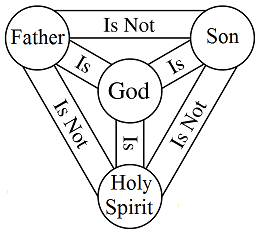
The primary question at hand concerning the issue at hand is the identity of the one God who is mentioned thousands of times in the Scriptures. In Trinitarianism, this identity is a three person being, three distinct identities who together are one single identity: the Triune God. According to the Scriptures, there is only one God, one Creator. Trinitarianism claims that this one God, this one Creator, is their Triune Being. According to Trinitarianism, the one God is the Triune God described by their own doctrine of the Trinity.

In order to test the veracity of the Trinitarian claim, all we need to do is contemplate the implications of an extremely simple question. Do the Scriptures tell us that the one God is Jesus Christ’s God? Is it true or false to say that the only God is Jesus Christ’s God? And since there is only one true God, would it ever be plausible to suppose that the only true God is not Jesus Christ’s God? Of course it would not. Hence, it is an inescapable fact that the only true God is Jesus Christ’s God.

Jesus Christ’s God is not a Triune being. Trinitarianism itself acknowledges that Jesus Christ’s God is only one person, the Father. So when we use the expression, “Jesus Christ’s God,” we are effectively referring to only one person, the Father. And if the only true God is Jesus Christ’s God, we are compelled by common reason to conclude that the only true God is the Father, Jesus Christ’s God.

Additionally, it seems that few Trinitarians recognize that the expression, “Jesus Christ’s God” is referring to a person’s God, the person Jesus Christ’s God. In the Trinity doctrine, the person that is in view is God the Son, the Second Person of the Trinity. Therefore, the expression “Jesus Christ’s God” effectively means “God’s God” in Trinitarianism since it would be a reference to the person God the Son and his God. God’s God. This is absurd. God does not have a God. For God to have a God would necessarily involves two true Gods since if God the Son has a God, his God is necessarily someone else. But there is only one God.

Another question you can ask yourself is this question: “Is Jesus Christ’s God someone else?” The obvious answer is Yes. Jesus Christ’s God is someone else – his Father. In fact, this is true in Trinitarian doctrine. But if his God is someone else then he is not his God is he? And if he is not his God then he isn’t that God. And if he isn’t that God, you would therefore end up with two Gods by claiming that Jesus is God in addition to someone else who is his God.

There are numerous question one can ask which reveal the truth of the situation. For example, you could ask, “Who created everything?” Did the Triune God create everything? Or did Jesus create everything? Or did Jesus Christ’s God create everything? Since Jesus is not his God, and Jesus Christ’s God is not a Triune God, it is a question which must be asked and honestly answered. It is inescapable that Jesus Christ’s God created everything.

When we regard these things, we can see that Trinitarianism is something which just won’t add up and it is irrational nonsense. In Trinitarianism, Jesus Christ is identified as “God” while Jesus Christ’s God is also identified as “God.” However, in Trinitarianism, Jesus Christ and his God are two different identities; they are not the same identity. He is one identity and his God is another. To say he is God results in two Gods since his God would not be the God that he is. In Trinitarian doctrine, the Father is most definitely not the Son. Therefore, that would mean by definition that Jesus as “God” and his God are not the same God since he is not his God. But in the Scriptures there is only one God. So we end up with a situation where Jesus Christ and Jesus Christ’s God are not the same and since Jesus is not his own God, that necessarily means somebody else is his God. Jesus Christ’s God is not Jesus and does not include Jesus. It is here that one can easily see the contradictions of this Trinitarian farce.

The light of truth begins to shine very brightly when we consider these things honestly and reasonably. If we exclude all Scriptural mentions of pagan gods and false gods, is it safe to conclude that all mentions of the one God of Israel are in fact Jesus Christ’s God ? This is not a question which a Trinitarian can reasonably answer as “No.” But if he answers “Yes,” he must accept the contradictions with his own doctrine. If you are a Trinitarian, you must insist that your Triune God and Jesus Christ’s God are the very same God. Otherwise you have two or more God’s on your hands. But you won’t be making any sense since a one-person-God and a three-person-God are obviously not the same God. Jesus Christ’s God is not a Triune God in Trinitarianism, therefore, his God is obviously not the same God as the Trinitarian God. So since there is only one God, and not two or more, the Trinitarian is compelled to agree that all mentions of God in the Scriptures are references to Jesus Christ’s God. But notice what happens to Trinitarian doctrine if you acknowledge that all references to the one God in the Scriptures are references to Jesus Christ’s God.

To you it was shown that you might know that the LORD, He is God; there is no other besides Him….. Know therefore today, and take it to your heart, that the LORD, He is God in heaven above and on the earth below; there is no other. Deuteronomy 4:35,39

Is this verse referring to Jesus Christ’s God? Think about his carefully. His God is no one but the Father and to interpret this passage to refer to the Father would mean that the Father is exclusively the one God and the one God is no one else but the Father. That rules out the Trinity since two other persons are also God in the doctrine of the Trinity. Because of this, Trinitarians are forced to interpret this verse to refer to the Triune Being. “He” the Triune Being is God and there is no other besides “Him” the Triune Being. However, the Trinitarian must then insist this passage is NOT referring to Jesus Christ’s God. And that puts him in a very serious dilemma. There is only one God and no one can reasonably and honestly avoid interpreting this verse to be referring to Jesus Christ’s God. And his God is most definitely not the Trinitarian’s Triune God. Whether a Trinitarian acknowledges or denies this passage is referring to Jesus Christ’s God, he is caught in a contradiction with respect to his own doctrine. This demonstrates that the Trinity is most certainly false.

To you it was shown that you might know that [Jesus Christ’s God], He is God; there is no other besides [Jesus Christ’s God]….. Know therefore today, and take it to your heart, that [Jesus Christ’s God], He is God in heaven above and on the earth below; there is no other. Deuteronomy 4:35,39

No one can deny this verse is referring to Jesus Christ’s God without getting caught in an inescapable contradiction. And if this verse is referring to Jesus Christ’s God then it is referring to the Father alone and the verse is telling us that only the Father is God and nobody else is God except the Father. And no one can reasonably say that this verse is not referring to Jesus Christ’s God since that would be resorting to completely irrational behavior. But Trinitarians do claim this verse is referring to a God which is not Jesus Christ’s God, namely, the Trinity. However, there is only one God and if that God is not Jesus Christ’s God then Jesus Christ has a false God. But we know that Jesus does not have a false God; his God is the only true God and the only true God is his God. Hence, the Bible affirms that only Jesus Christ’s God is God and nobody else. There are numerous other examples in Scripture which illustrate the same type of thing. With respect to Trinitarian doctrine, the passage is either referring to Jesus Christ’s God or the Triune Being and you can’t have it both ways since Jesus Christ’s God is not a Triune Being. So which is it? Can anyone in their right mind deny that the above verse is referring to Jesus Christ’s God? There are numerous passages which illustrate the same problem for Trinitarian doctrine.

Additionally, when you read verses such as Matthew 1:23, “God with us” you will also realize that such verses are also necessarily referring to Jesus Christ’s God . God the Father was with Israel by giving them Jesus to save them from their sins (context). He was with them in plan and purpose; He was with them, on their side. This understanding is also confirmed at Isaiah 7-8 where the child Immanuel is given as a sign to King Ahaz that his God, Yahweh, was with him concerning the two kings attacking Judah. Or for example when Thomas says, “My Lord and my God,” you will realize the words “my God” are necessarily a reference to Jesus Christ’s God, since both Thomas and Jesus have the same one God. This is also clearly explained by Jesus at John 12:44-45 and 14:5-10. Jesus revealed the Father (Jn 1:18) who is his God. Or again, at 1 John 5:20 the true God in view is Jesus Christ’s God, the Father. This is obviously true since the point of this passage is to say that Jesus came so that we might know the true God by being in the true God’s son and that true God is necessarily Jesus Christ’s God. Just as Jesus himself declared, his God and Father is our God and Father (Jn 20:17).

The only true God is Jesus Christ’s God, and since there is only one God, this cannot be denied by any rational and honest person who accepts the Scriptures as the truth. This simple fact demonstrates to reasonable people that the doctrine of the Trinity is obviously false. Whenever you read your Bible, and the one God is mentioned, just ask yourself whether the passage is referring to Jesus Christ’s God. You will soon realize that you cannot truthfully answer “No” without creating an unresolvable contradiction for yourself. And that means that claiming the existence of a Triune God conflicts with the Scriptural facts and when claims conflict with the facts, we know the claimant is a telling lie. Another thing you can do is to keep this in mind when you are discussing the doctrine of the Trinity with Trinitarians (or Modalists). Whenever they refer to God, and they don’t seem to be referring to the Father, ask them if they are referring to Jesus Christ’s God. Also observe their confused responses. They are not accustomed to being asked such a question or even having such a thought.

If you are an honest seeker of the truth, I would encourage you to always keep in mind that the only true God of the Scriptures is necessarily Jesus Christ’s God. This is inescapable. Since there is only one God, the only true God can’t be someone else’s God since that would necessarily amount to another God. So whenever you read a passage of Scripture which mentions our God, the God of Israel, the Creator, just ask yourself, “Does this passage necessarily refer to Jesus Christ’s God?” You will soon see that you must always answer “Yes.” And when you do this, you will also clearly realize that you will know with absolute certainly, and without any hesitation, that the only God is Jesus Christ’s God and no one else can possibly be God than his God. And seeing this clearly, you will know this leaves the Trinity doctrine behind in the trash bin along with all the other false Gods which true followers of Jesus have left behind.

If you can’t confess that every mention of the one God of Israel in the Scriptures is Jesus Christ’s God you will be found mired in your own contradictions. And if you are a Trinitarian who confesses that every mention of the one God of Israel in the Scriptures IS Jesus Christ’s God, you will still be found mired in your own contradictions. And that is what happens when you espouse a tangled web of lies. There is no escape from your dilemma and your only option will be to resort to irrational mental gymnastics in the fantasy that there must be some way you can somehow talk your way out of it. But you can’t. You are trapped in your own lies with no way out but to confess your claims are false.

As you read this, and digest the implications, you might wonder how it could be so easy to demonstrate why this doctrine is certainly false and why you didn’t see this before. But as you contemplate the matter and how the only God cannot be any other than Jesus Christ’s God, you will indeed realize this does show the Trinity is obviously false. And then you will likely also have other realizations. You will realize the utter insanity of having a three-person-God which is not your Lord’s God. And again, you will also wonder how anyone could believe the Head of the body of Christ has a one-person-God while the rest of the body of Christ has a three-person-God who is not the God of the Head of the body of Christ.

The God of our Lord Jesus Christ, the Father of glory, may give to you a spirit of wisdom and of revelation in the knowledge of Him. Ephesians 1:17.

The only God is our Lord’s God, the God and Father of our Lord Jesus Christ. He is God and there is no other but Him. Serve only our Lord’s God and no other.

Jesus Christ’s God in the Scriptures

A Simple Fact Which Proves the Doctrine of the Trinity is a Farce

Jesus Christ’s God

Are the following verses referring to Jesus Christ’s God? And do you understand the implications of saying, “No”?

In the beginning God created the heavens and the earth. Genesis 1:1.

Jesus Christ’s God created everything?

And God said, “Let us make man in our image, according to our likeness…” Genesis 1:26.

Jesus Christ’s God said this?

To you it was shown that you might know that Yahweh, He is God; there is no other besides Him. Deuteronomy 4:35

Is this verse referring to Jesus Christ’s God?

Hear, O Israel! Yahweh is our God, Yahweh is one! You shall love Yahweh your God with all your heart and with all your soul and with all your might. Deuteronomy 6:4

Is the Shema command referring to Jesus Christ’s God?

You are great, O Yahweh God; for there is none like You, and there is no God besides You. 2 Samuel 7:22

Does this verse say there is none like Jesus Christ’s God and there is no God besides Jesus Christ’s God?

I am the LORD, that is My name; I will not give My glory to another. Isaiah 42:8

Did Jesus Christ’s God say that?

I, even I, am the LORD, And there is no savior besides Me. Isaiah 43:11

Did Jesus Christ’s God say that?

I, the LORD, am the maker of all things, stretching out the heavens by Myself and spreading out the earth all alone. Isaiah 44:24

Did Jesus Christ’s God say that?

Father…. this is eternal life, that they may know You, the only true God and Jesus Christ whom You sent. John 17:3

Was Jesus referring to his God?

Thomas answered and said to him, “My Lord and my God.” John 20:28

When Thomas said, “my God” is that God Jesus Christ’s God?

The God of Abraham, Isaac and Jacob, the God of our fathers, has glorified His servant Jesus. Acts 3:13

Is Peter referring to Jesus Christ’s God?

You believe that God is one. You do well; the demons also believe, and shudder. James 2:19

Is James referring to Jesus Christ’s God?

for us there is but one God, the Father, out of whom are all things and we for Him and one Lord, Jesus Christ, through whom are all things, and we through him. 1 Corinthians 8:6

Would this one God be the Lord Jesus Christ’s God?

You turned to God from idols to serve the Living and True God, and to wait for His son from heaven, whom He raised from the dead, that is Jesus, who rescues us from the wrath to come. 1 Thessalonians 1:9-10

Would this Living and True God be Jesus Christ’s God?

Jesus said to him, “Go, Satan! For it is written, ‘You shall worship the Lord your God, and serve Him only.'”

Was Jesus referring to his God?

No one is good but God alone. Mark 10:18

Was Jesus referring to his God?

Do you understand the implications of saying, “No” to any of these questions?

If these are not references to Jesus Christ’s God, what God are they identifying? There is only one God.

Do you worship a God that is not Jesus Christ’s God? If so, why would you do such an insane thing? There is only one God.

If you are a Trinitarian, did it sink in that this simple fact illustrated on this pages proves your doctrine is false? It was really easy to prove wasn’t it?

God’s God in Trinitarianism

God’s God

In the Scriptures, there is only one God. So does God have a God? Would it ever make sense to say that God has a God. Of course it doesn’t make any sense whatsoever to say God has a God? Or course not. It’s absurd to say God has a God. God, by definition, has no God. He is above all and greater than all. Moreover, if God had a God then his God would be someone else and you will necessrily end up with two Gods where one of these Gods is a God of the other. It’s a ludicrous proposition.

But Trinitarian doctrine does indicate God has a God. In Trinitarianism, Jesus is the only true God and he has a God. In Trinitarianism, God, that is, God the Son, came down out of heaven and assumed a human nature for himself. And it was this same person, God the Son, who was hanging dead on a cross and laying dead in a tomb. After all, if it wasn’t God the Son who was hanging dead on the cross and laying dead in the tomb, who was it? Someone else? And so God the Son cried out, “My God, my God, why have you forsaken me?” And so the implications of the Trinity are that we have a situation where God has a God. The Father turns out to be God’s God in Trinitarian doctrine. It really doesn’t matter how Trinitarians qualify how and why God has a God. God the Son according to his human nature has a God in Trinitarian doctrine. It still remains that God has a God. Qualifying reasons why God has a God doesn’t turn the concept of God’s God from absurdity to validity. It will remain true in their theology that God has a God. God’s God. Absurd.

Consider these verses:

“My God, my God, why have you forsaken me?” Matthew 27:46.

Was that God the Son calling out to his God? God’s God? Did God think that his God had forsaken Him?

I am ascending to my Father and your Father and my God and your God John 20:17.

Did God the Son say that He, God, was ascending to his God? God’s God?

He who conquers, I will make him a pillar in the temple of my God. Never shall he go out of it, and I will write on him the name of my God, and the name of the city of my God, the new Jerusalem which comes down from my God out of heaven, and my own new name. Revelation 3:12

Was God the Son referring to His God? God’s God?

The God of our Lord Jesus Christ, the Father of glory…” Ephesians 1:17.

Is Paul referring to God’s God?

Do you understand the implications of your answers?

The Trinity on Trial: The Testimony of God’s Son

Our Most Trustworthy Witness: Our God’s own Son, Jesus Christ

Do you truly trust in Jesus? Do you trust his testimony concerning the true identity of God? If you consider yourself a follower of Jesus Christ, then it should be obvious to you that there is no better witness to this question than the testimony of God’s very own son, Jesus Christ. Indeed, the Scriptures tell us that Jesus came to reveal the one true God to us; he came so that we might have understanding and know the true God. If we truly trust in Jesus, who is our most reliable witness concerning the true identity of the one true God? Jesus Christ.

2. The Shema

Jesus considered the Shema to be the foremost commandment of the Law. The Shema is also an extremely important passage of Scripture for Christians. It is very important because of what it says:

“Hear O Israel, the LORD our God, the LORD is one and you shall love the LORD your God with all your heart and with all your soul and with all your strength.

OR

“Hear O Israel, YAHWEH our God, YAHWEH is one and you shall love YAHWEH your God with all your heart and with all your soul and with all your strength.

Deuteronomy 6:4-5.

Many people do not realize that the testimony of God’s own son decisively demonstrates for us exactly what those words mean. What does the testimony of God’s own Son tell us?

Jesus Christ’s Testimony

1. Jesus came to reveal the only true God to us

We are informed in the Scriptures that Jesus came to give us understanding that we might know the only true God. Jesus never directed attention to himself as God but always pointed to his Father. He did not say he created man, male and female. It was someone else who created man; it was his God who created man. He always referred us to this Father. He always referred us to HIS God and HIS God was his Father alone.

FACT #1: Jesus came to reveal the only true God to us and he did this by consistently referring us to his God, his Father.

2. Jesus was a Jew born under the Law

Every Israelite was required to obey the Law given to them by their God. Jesus was a Jew born under the Law. As a Jew, he was required by his God to observe the Law. As a Jew, he was required to obey the Law given to Israel by their God.

FACT #2: Jesus, a Jew, was required to obey the Law.

3. Jesus Testified that the Shema is the Foremost Commandment of the Law

One of the scribes came and heard them arguing, and recognizing that he had answered them well, asked him, “What commandment is the foremost of all?” Jesus answered, “The foremost is, ‘Hear, O Israel! The Lord our God is one Lord; and you shall love the Lord your God with all your heart, and with all your soul, and with all your mind, and with all your strength.’ The second is this, ‘You shall love your neighbor as yourself.’ There is no other commandment greater than these.” The scribe said to Him, “Right, Teacher; You have truly stated that He is One, and there is no one else besides Him; and to love Him with all the heart and with all the understanding and with all the strength, and to love one’s neighbor as himself, is much more than all burnt offerings and sacrifices.” When Jesus saw that he had answered intelligently, he said to him, “You are not far from the kingdom of God.” Mark 12:28-34.

FACT #3: The Shema (Deut 6:4-5) is the foremost commandment of the Law which Jesus was required to obey.

4. Jesus testified as to what words “the Lord is one” do mean in the Shema commandment.

One of the scribes came and heard them arguing, and recognizing that he had answered them well, asked him, “What commandment is the foremost of all?” Jesus answered, “The foremost is, ‘Hear, O Israel! The Lord our God is one Lord; and you shall love the Lord your God with all your heart, and with all your soul, and with all your mind, and with all your strength.’ The second is this, ‘You shall love your neighbor as yourself.’ There is no other commandment greater than these.” The scribe said to Him, “Right, Teacher; You have truly stated that He is One, and there is no one else besides Him; and to love Him with all the heart and with all the understanding and with all the strength, and to love one’s neighbor as himself, is much more than all burnt offerings and sacrifices.” When Jesus saw that he had answered intelligently, he said to him, “You are not far from the kingdom of God.” Mark 12:28-34.

Jesus’ testimony here shows us decisively that the words “the Lord is one” most certainly do not mean “the Lord is one ‘WHAT'” but rather mean “the Lord is one ‘WHO.'” These two Jews, Jesus and this Jewish scribe, clearly agree that the words of the Shema, “the Lord is one” mean that their Lord God is one single “HE/HIM,” “there no one else but HE.” The words “the Lord is one” refer to the fact that YAHWEH is one who, one identity, rather than one “what.”

FACT #4: The Shema refers to one identity and the words mean YAHWEH is one single “HE, ” “the Lord our God, the Lord is one HE.”

5. Jesus Testified to the Specific Identity of that “HE” by how he obeyed that Command of the Law

As a Jew under the Law, Jesus was required to obey the Law. He also considered the Shema to be the foremost commandment of the Law. In order to obey this commandment, he needed to know what those words meant. He needed to interpret the Shema in order to obey it.

And Jesus testifies to us how he interpreted the Shema by how he obeyed the Shema. He obeyed this commandment by serving only one person as his one and only God. He obeyed this commandment by recoginizing only his Father as his God. He obeyed the Shema commandment by loving his Father with all his heart, with all his soul, with all his strength. It was his only his Father who was Jesus’ one and only God and no one else.

The fact that Jesus recognized only his Father as his one and only God shows us how he interpreted the words of the Shema. The fact that Jesus obeyed the Shema by worshiping and serving only his Father as his one and only God shows us how he interpreted the words of the Shema. Jesus’ own life of obedience decisively demonstrates for us what the Shema means. In the account of his discussion with the Jewish scribe, we see clearly that Jesus believed the Shema to be referring to one single HE. And we can also clearly identify that one single “HE” by recognizing WHO Jesus recognized and obeyed as the one God of the Shema – only one person – his Father alone.

FACT #5: The Shema means the Lord is one single “HE, and Jesus recognized only his Father as that one “HE.”

6. The Shema says “OUR” God.

Yahweh OUR God, Yahweh is one. OUR God? Could Jesus join his Israelite brethren in saying these words or not? His God was the Father alone. The Father is not the Triune Being. Yet Trinitarians insist the God of Israel was a Triune Being and Jesus’ God was his Father alone. How then could Jesus unite with his Israelite brethren and say the words “OUR” God when he had a one persn God and they had a three person God. If Israel’s God was a Triune Being, how then could Jesus confess these words since his God was NOT a Triune Being?When Jesus said these words, was he not affirming that HIS God is the same God as the God of all Israel, “OUR God”?

FACT #6: The Shema is referring to the God of every Israelite including Jesus, “OUR God.”

7. Jesus’ Perfect Obedience to the Law give us complete assurance as to the meaning of the Shema

Jesus did not sin. He was obedient to the Law in every respect. We cannot suppose he interpreted the Shema commandment to mean one thing but he actually did something else contrry to what those words mean. The Shema instructed him to recognize his God and to love his God with all his heart, soul, and mind. If Jesus knew that the Shema commandment meant one thing but he observed this commandment by doing something else, he disobeyed the commandment. But he did not sin. He did obey the commandment. He did not believe it meant one thing and live as if it meant something else. We cannot suppose he believed this commandment referred to a three-person-being but then disobeyed it as if the commandment meant something else or we make him a disobedient sinner. Rather, he observed the commandment according to what the commandment meant and instructed him to do – to recognize only his Father as his God and to love Him, His Father, with all his heart, soul, and mind. Because he did not sin, we can be certain that whatever Jesus did to interpret, understand, obey, and observe this commandment, is a perfect reflection of what that commandment is intended to mean. Jesus’ understanding of the Shema and his obedience to the Shema must match or else he would have been disobedient to the commandment.

FACT #7: Jesus obedience to the Shema, the foremost commandment, shows us clearly what it means and precisely who the Shema is identifying.

8. Jesus has made us priests to HIS God; HIS God is to also be OUR God.

We are not to have some other God than Jesus’ God. He taught us that HIS God is to be OUR God. HIS God was one person, the Father, and so we know that OUR God is to be one person, the Father. He has also made us priests to HIS God, his Father. He did not make us priests to another God or a three-person God. If we recognize and serve a different God than Jesus served, we have a different God than the God of Jesus.

FACT #8: Jesus has made us priests to HIS God and HIS God is to be OUR God.

Summary of Jesus Christ’s own Testimony, the Witness of God’s own Son

  • Jesus came to reveal the true God to us and he always directed our attention to his Father.
  • Jesus was born under the Law and required to obey the Law.
  • Jesus recognized the Shema as the foremost commandment, “the Lord our God the Lord is one.”
  • Jesus needed to interpret and understand the words of the Shema in order to obey the commandment.
  • Jesus’ obedient response to the commandment shows us clearly what those words are intended to mean.
  • If Jesus knew the Shema to meant one thing but he did not do what it meant, he disobeyed the foremost commandment of the Law
  • Jesus understood the words of the Shema to mean there is one single HE, “there is no other but HE.”
  • Jesus recognized and obeyed only one person, his Father alone, as that one single “HE.”
  • Jesus an Israelite confessed the Shema just like every other Israelite, “OUR God.” His God was his Father alone.
  • Jesus taught us that his God is to be our God and he has made us priests to HIS God and Father.

Call for Honest Judgment

Jesus’ testimony concerning the identity of the God of Israel is more trustworthy than any other man. We cannot find a more reliable witness to the true identity of the God who sent him than God’s own son. Jesus’ testimony concerning the Shema shows us without any ambiguity whatsoever that he interpreted the Shema to be referring to one single HE and that one single HE was, and is, his Father alone and no one else. We can be certain that the one God of Israel was Jesus’ God and Jesus’ Father and his Father alone, because Jesus could have interpreted those words no other way and neither did he.

Jesus’ own testimony decisively demonstrates for us that the one God of the Shema, “the Lord our God, the Lord is one” means there is one single HE and that one single HE is clearly identified by how he observed this commandment; he observed this commandment by worshiping and serving one single HE as his God. He observed this commandment by worshiping and serving only his Father and no one else.

The facts compel us to conclude that the one God of Israel is the Father of our Lord Jesus Christ and no one else. “There is no other but HE.” And this is the one single HE Jesus revealed to us. And Jesus has made us priests to one single HE, his God, his Father alone.

Idolatry

You turned to God from idols to serve a Living and True God, and to wait for His Son from heaven, whom He raised from the dead, that is Jesus, who delivers us from the wrath to come.
– 1 Thessalonians 1:9-10.

Modern Idols

True believers serve a Living and True God. They do not serve idols and they do not serve false gods. Their God is a living God. Unlike a lifeless idol, their God is someone who is alive and personal. Their God is not an image of God but God Himself, a Living Being whom they know, a Living God who truly dwells with their hearts.

Modern people within the world of the organized church system tend to think of idols as little stone men carved up by ancient pagans. In this way, they delude themselves into supposing they have no idols. Idolatry is not confined to stone sculptures sitting in a shrine. Notice carefully how the Apostle John ends his first letter:

Little children, guard yourself from idols. 1 John 5:21.

Many folks read these words as if John is having some kind of afterthought not have any idea why he decided to say such a thing at the end of his letter. He concludes his letter with these words. Why? Notice the context of John’s words:

We know that the Son of God has come, and has given us understanding so that we may know the True One and we are in the True One, in His Son Jesus Christ. This is the True God and eternal life. Little children, guard yourselves from idols.

Idols are not the True God but false gods. Observe that we are in “the True One” if we are in His son Jesus. Through Jesus we know the True God. The True God is He who is known in/through the Son. Here John is saying essentially the same thing we find in John’s Gospel. Eternal Life is that we might know the Father, the only True God, and Jesus Christ whom the only True God sent (John 17:3). Since Jesus is the Way to the Father (14:6), we cannot know the Father apart from the Son.

John tells us to guard ourselves from idols in this context. Why? There is the True God. And there are idols. If we are not serving the True God, we are serving an idol. John’s letter is addressing a false prophet antichrist teaching. In his letter, he emphasizes that the True God, the Father, is known through the Son, Jesus. You must confess the Son to have the Father and whoever denies the Son also denies the Father, the True God.

Today, most people serve idols, images of God. They serve doctrines of men depicted with paper and ink, images of God. They serve things which do not have life and do not give life. The images they serve are paper and ink images of God, the doctrines of men. They are images of God in words on paper, images which do not have life nor give life. The serve lifeless things which do not give life. For most people, their God is not the Living God, but an image of God they have in their minds and which depict on paper and ink. Their God is an image imagined in their imaginations rather than the Living God Himself. Here is another image of God which man have crafted and command you to serve:

This is a man’s image of God. Idolatry. Men command you to serve this God, this lifeless image of God created by men. This is not the True God which John is describing. The True God is a Living Being not an image and He is the God who we know through Jesus: the Father. The above image is a lifeless idol created by men. But such images of God are the only God most people know; they do not know the Living and True God. The only know an image in their minds which they project in paper and ink. The above image is not the True God; it is a man’s graven image of God. You can believe in this image all you like and it will do nothing for you but lead you away from the True God. This image is an idol of men. It is not the Living God; it is a lifeless creation of men and it will not give you life. The True God is the Living God who is Life and gives Life, our Father. And we know the Living and True God through His Son Jesus His Anointed One.

John ended his letter with the words, “Little children, guard yourselves from idols” for a very good reason. He had just described how we might know the True God. Anything other than the True God is a false god. Any god other than the True God is an idol and not the True God. And John identified the True God here for us. The True God is the God we know through His Son: the God of our Lord, Jesus Christ. And who else would be the True God but our Lord’s God? For if our God is not his God, we only know a false god and not the Living and True God whose Son delivers us from the coming wrath.

They have quickly turned aside from the way which I commanded them. They have made for themselves a molten calf, and have worshiped it and have sacrificed to it and said, “This is your god, O Israel, who brought you up from the land of Egypt!” Exodus 32:8

Trinity: Spirit of the Antichrist

1. The Trinity is Antichrist because it implicitly denies that Christians are begotten of God

In the doctrine of the Trinity, there is only one begotten child of God, Jesus, and there will never be more than one begotten child of God. He was, and will forever be, God’s “only begotten son.” In the doctrine of the Trinity, there is no possibility that you or me can really be God’s own son or daughter. This is the spirit of the antichrist. All those who are born again from above by the Spirit of God are begotten children of God and God is truly their own Father. Jesus is “the firstborn of many brothers.” When Jesus walked in Galilee and when Jesus suffered on the cross, he was indeed God’s only begotten son. No one else had ever been begotten of God except Jesus. But that is no longer true. The very point of God sending his son to die on the cross and rise again was not so that he might remain God’s only begotten son but so that he might be the firstborn of many brothers, many begotten sons and daughters of God. The doctrine of the Trinity robs this away from the children of God by having them think that only Jesus will ever be God’s own true child.

Every true believer who has been born again of the Spirit is a begotten child of God. It is the lie of Trinity doctrine that only Jesus is really God’s own begotten child. It is the lie of Trinity doctrine that believers are not God’s own begotten children. It is the same spirit of the antichrist that led those who killed Jesus. They could not bear the notion that a human being could possibly be God’s own son. And that same spirit of antichrist cannot bear that many human beings have now become begotten children of God.

A difficulty here is that many people may suppose that such language is motivated by an intention to demonize a doctrine simply for the sake of demonizing a doctrine. But if indeed this doctrine is rooted in the spirit of antichrist, we must recognize that reality. The religious leaders killed Jesus because they could not bear the thought that a human being was God’s very own son and it was on this basis that they wanted him dead. The same spirit of the antichrist will then likewise reject the notion that any other human, such as you or me, could possibly be God’s own begotten child. But the Scriptures plainly teach us that true believers are those who are begotten of God by the Spirit of God. They have died to that life into which they had been born of natural parents and they were begotten again into a new life where their father is God and God is truly their father just as God was truly Jesus’ father. As Peter says, they are “partakers of the divine nature.” God is spirit, Holy Spirit. And to be a true child of God means we must be, by nature, a spiritual being. Spirit gives birth to spirit. And that is who you are in indeed you have been born again. You are a begotten child of God and He is truly your own father. The spirit of antichrist would have you believe that only Jesus will ever be a true child of God. And that is the devil’s lie. All who have been begotten of the Spirit of God are truly His own children just as baby Jesus was His own child since he had been begotten of the Spirit of God. God makes us his sons and daughters not by some vague undefined notion of “adoption.” God makes us truly his sons and daughters by begetting us so that we, like Jesus, are truly begotten of God. If we have been born again, God is truly our own Father because he begat us.

2. The Trinity is Antichrist because it necessarily denies that Christ himself is in us.

Christ himself dwells in believers. God the Father dwells in believers. Jesus promised that the Father and the Son would come to make their home in us. This is because believers have the Holy Spirit in them. The Scriptures testify that believers only have ONE Spirit in them, the Holy Spirit of the Living God. In this way the Father and the Son are in them because the Father and the risen Son are that one Spirit. But in the doctrine of the Trinity, the Holy Spirit is most definitely NOT the Son and the Holy Spirit is most definitely NOT the Father. How then could the Father and Son be abiding in anyone who denies that the Father and Son are that one Spirit? But this is the case in the doctrine of the Trinity since the Holy Spirit is NOT the Father and the Holy Spirit is NOT the Son. In the doctrine of the Trinity, the only possible way that the Father and the Son could possibly be in believers is for the Father and the Son to be separate spirits since neither the Father or the Son is the Holy Spirit. Hence, the Trinitarian must either confess he has three Spirits in him, Father, Son, Holy Spirit, or he must confess that only one Spirit is in him who is not the Father and not the Son and thus he must deny that the Father of the Son is in him since that one Spirit is NOT the Father or the Son. But since the Scriptures testify that we only have ONE Spirit in us, the Holy Spirit, the Trinitarian must therefore deny that Christ is in him since the Holy Spirit is not Christ and Christ is not the Holy Spirit in his doctrine. This is the Spirit of the Antichrist which denies the Father and the Son.