False Claim: The title “Lord” demonstrates Jesus is God

Trinitarian Claim

Trinitarians sometimes make the claim that the word “Lord” is a term which does by itself signify that “Jesus is God.”

Examination of the Claim

1. Many Lords in Scripture

There are numerous characters in the Bible who are called “Lord.” The word “Lord” is simply a term used to refer to someone with a higher authority.

The following examples show how the word is used in Scriptures to refer to an array of different individuals:

Abraham is Sarah’s Lord

So Sarah laughed to herself, saying, “After I have grown old, and my Lord is old, shall I have pleasure?” (Genesis 18:12; cf. 1 Peter 3:9).

Sarah obeyed Abraham, calling him “Lord” (1 Peter 3:6).

Two Angels are Lot’s Lords

The two angels came to Sodom in the evening and Lot was sitting in the gate of Sodom. When Lot saw them, he arose to meet them, and bowed himself with his face to the earth, and said, “My Lords, turn aside, I pray you, to your servant’s house and spend the night, and wash your feet; then you may rise up early and go on your way.”

The Philippian Jailer calls Paul and Silas “Lords.”

“Lords, what must I do to be saved? (Acts 16:31).

There are numerous characters in Scripture who are called “Lord.” And as we can see, it has nothing to do with deity. You may also note how Trinitarians traditionally refrain from translating the word as “Lord” in verses like Acts 16:31 above. However, this is misleading since it is the exact same Greek word that is used to refer to the Lord Jesus. The word was quite simply used to refer to anyone who had authority over someone else.

2. God made Jesus Lord

The word “Lord” is a term which refer to authority. When Jesus rose from the dead he said, “All authority in heaven and upon the earth has been given to me” (Matthew 28:18). At Acts 2:36 we read that God made Jesus Lord when He raised him from the dead.

Therefore being exalted to the right hand of God, and having received from the Father the promise of the Holy Spirit, He poured out this which you now see and hear. For David did not ascend into the heavens, but he says himself: ‘The LORD said to my Lord, “Sit at My right hand, until I make your enemies Your footstool.” ‘ Therefore let all the house of Israel know assuredly that God has made this Jesus, whom you crucified, both Lord and Christ.”

The falsity of the Trinitarian claim is manifested when we realize that if the word “Lord” meant “God” then Trinitarians would have to say that God made Jesus “God” when he raised him from the dead.

God highly exalted Him, and bestowed on Him the name which is above every name, so that at the name of Jesus every knew will bow, of those who are in heaven and on earth and under the earth, and that every tongue will confess that Jesus Christ is Lord, to the glory of God the Father. (Philippians 2:9-11).

4. The word “Lord” in the Hebrew Scriptures

Understanding the use of the English word “Lord” in the Old Testament is a bit more complicated than it is in the New Testament. The reason for this is that most English Old Testament Bibles use the word “Lord” to translate the tetragrammaton “YHWH,” that is, “Yahweh.” Jews, not wishing to pronounce the divine name used the term “Adonai” in place of “YHWH.” Adonai is the word we translate as “Lord” in English Bibles. So when you see the word “LORD” with all capital letters in English Bibles, it translates both the Hebrew “Adonai” used by Jews in place of “YHWH.” Some English Bibles do not capitalize all the letters. Adonai is a special Hebrew word used only to refer to Yahweh God. Another Hebrew word “Adoni” is the normal Hebrew word for “Lord.” This distinction is very important. But there is a reason for the difference in the one vowel between these two words. When referring to someone other than God as “Lord” the word “Adoni” was always used. This one letter makes a very significant difference just as the one letter between “He” and “She” makes a big difference in English. Jesus tells us that these “jots and tittles” of the Old Testament are indeed very significant (Mt 5:18). The Hebrew word “Adoni” occurs nearly 200 times in the Old Testament. In each and every single occurrence, it is a reference to a human superior and not a reference to God. And indeed, this is also the very same word used at Psalm 110:1 in reference to the Messiah, “The LORD said to my Lord,” that is, “Adonai said to my Adoni.” Adonai is simply a Jewish replacement of “YHWH” and it is translated into English as “LORD” and in some Bibles as “Lord.” And Peter explains in Acts 2 that the Lord of Psalm 110:1 is the crucified man Jesus risen from the dead.

5. The Trinitarian Dilemma

The Trinitarian ultimately finds himself caught in an escapable dilemma with his claim that the word “Lord” is simply another way of indicating that one is “God.” Carefully regard the following passages of Scripture:

the God and Father of our Lord Jesus Christ (Rom 15:6).

the God and Father of our Lord Jesus Christ (2 Cor 1:3).

The God and Father of our Lord Jesus Christ (2 Cor 11:31).

the God and Father of our Lord Jesus Christ (Eph 1:3).

the God of our Lord Jesus Christ (Eph 1:17).

the God and Father of our Lord Jesus Christ (Col 1:3).

the God and Father of our Lord Jesus Christ (1 Pet 1:3).

“For us…. there is one Lord: Jesus Christ. This Lord has a God, the God and Fther of our Lord, the Lord’s God. The repeated New Testament expression, “the God and Father of our Lord Jesus Christ” means by definition, “the Lord of our Lord Jesus Christ.” Jesus is our Lord; God is Jesus’ Lord. Only in the throne is God greater just as Pharaoh said to Joseph when he made Joseph Lord of all Egypt. Genesis 41:40.

If indeed the word “Lord” was a way of indicating one is God then the Trinitarian has the following problem on his hands:

the God and Father of our [God] Jesus Christ (Rom 15:6).

the God and Father of our [God] Jesus Christ (2 Cor 1:3).

The God and Father of our [God] Jesus Christ (2 Cor 11:31).

the God and Father of our [God] Jesus Christ (Eph 1:3).

the God of our [God] Jesus Christ (Eph 1:17).

the God and Father of our [God] Jesus Christ (Col 1:3).

the God and Father of our [God] Jesus Christ (1 Pet 1:3).

If indeed the word “Lord” was a way of referring to one as God, the Trinitarian creates a situation where God has a God. Absurd.

The Lord in question has a God. God the Father is the God of the Lord. And we see this Lord is the one who God made Lord, the crucified man Jesus, the man who has a God.

Therefore being exalted to the right hand of God, and having received from the Father the promise of the Holy Spirit, He poured out this which you now see and hear. For David did not ascend into the heavens, but he says himself: ‘The LORD said to my Lord, “Sit at My right hand, until I make your enemies Your footstool.” ‘ Therefore let all the house of Israel know assuredly that God has made this Jesus, whom you crucified, both Lord and Christ.” Acts 2:36.

“All authority in heaven and upon the earth has been given to me.” Matthew 28:18.

Conclusion

It is quite clear from the evidence that once again the Trinitarian claim is utterly false. Yes the one God is Lord but that does not mean someone who is Lord is God.

False Claim: “Son of God” Means One is God?

Grace, mercy and peace will be with us, from God the Father and from Jesus Christ, the Son of the Father, in truth and love. (2 John 1:3).

Trinitarian Claim

Trinitarians claim that since Jesus is the son of man it means he is a man and we should consistently reason that is he is a son of God then he is God.

Examination of the Claim

1. Logical Fallacy

Trinitarians are here committing a categorical fallacy by confusing definitions of the terms. In short they are comparing apples and oranges. To argue that the term “son of man” means Jesus is a man is to imply the term “man” refers to human nature. This definition of “son of man” is being suggestively used to mean “son of humanity” or “son of human nature” in contrast to “son of divine nature.” However, we can see clearly in the Scriptures the term “son of God” is to used to refer to the son of another person, not the son of a nature. It is a term which means that Jesus is the son of another identity, namely, God the Father.

The error in this claim is easily seen when we ask the Trinitarian that if Jesus is a son of Adam does that mean he is therefore “Adam” by identity? No, it does not. In the same way, if Jesus is a son of God it does not mean he is the one God by identity.

The term “son of man” means that a person is the son of a man and ultimately a son of the first man Adam. In Hebrew it is “ben Adam”, a son of Adam, the son of an identity. In the same way, the term “son of God” means that one identity is the son of another identity. Jesus is the “son of the Father” (2 John 1:3).

Also hidden within the Trinitarian claim here is a false premise. The premise is that if you have the divine nature of God then you are God. But it is plainly evident that we have the human nature of Adam and we are not Adam. The most anyone can say is that having the divine nature of God the Father means you are divine just as having the human nature of Adam our Father means we are human. But just as being human does not make anyone the one person Adam by identity, being divine does not make anyone the one God by identity.

2. The One God is not a Son of Man

God is not a man, that He should lie, Nor a son of man, that He should repent. (Numbers 23:19).

3. The Israelites are Sons of God

You are the sons of the LORD your God. (Deuteronomy 14:1; cf. Ex. 4:22; Deut 32:6, 18-19; Psalm 29:1; Rom 9:4).

4. The Judges of Israel are Sons of God

I said, “You are gods,and sons of the Most High – all of you. Nevertheless you will die like men and fall like any one of the princes.”

5. Angels are Sons of God

Where were you when I laid the foundation of the earth?…. When the morning stars sang together and all the sons of God shouted for joy? (Job 38:4,7).

6. Satan is a son of God

Now there was a day when the sons of God came to present themselves before the LORD, and Satan also came among them. (Job 1:6).

7. Christians are Sons of God

You are all sons of God through faith in Christ Jesus. (Galatians 3:26).

The Trinitarian error is also made plain when we recognize that true disciples of Jesus are sons of God. In fact, just as Jesus was begotten from above by the Spirit of God, all the disciples of Jesus are begotten from above by the Spirit of God. For this reason Jesus is described as the “firstborn of many brothers.” God is the true Father of the disciples and indeed they are all “partakers of the divine nature” and Jesus also teaches they “will be like the angels being sons of the resurrection.” And of course it does not mean any of them are “God.” The very same thing is true of Jesus. Trinitarians need to stop confusing or conflating identity and nature and accusing everyone else of the very error they commit themselves.

Conclusion

It is quite easy to see that “son of man” does not make one Adam and “son of God” does not make one “God.” Angels are also sons of God yet Trinitarians do not try to claim that this means they are the one God. And being one of those angels, Satan is also a “son of God.” Moreover, believers in Jesus are “sons of God.” The term means one is a son of another identity called “God.”

False Claim: Jesus is “the Angel of the Lord”

The angel of the Lord appeared to him in a blazing fire from the midst of a bush.
Exodus 3:2.

The Trinitarian Claim

Trinitarians claim that the “angel of the Lord” appearances are appearances of a “pre-incarnate” God the Son.

The Claim vs. The Facts

The Scriptural facts show us that the angel of Yahweh was in fact an angel, a messenger of Yahweh God.

The Problems with the Claim

1. Interpretation by Eisegesis and some Doublespeak to Spice it up

Once again, Trinitarians interpret with their imaginations rather than Scriptural facts. Here they imagine that this angel of the Lord is a pre-existent Jesus despite the fact they have no evidence which indicates they should think such a thing. In fact, it’s even worse than this. They themselves will argue Jesus was not an angel yet here they claim Jesus is in fact the angel of the Lord. They are talking out of both sides of their mouth.

2. So the angel isn’t an angel or what?

When it is realized that they insist Jesus is not an angel while yet claiming that Jesus is this angel of the Lord, Trinitarians then expect people to accept their ludicrous claim that this angel of the Lord is not an angel. They must do so because they also argue Jesus was not an angel (see Hebrews chapter one). So, we are expected to believe that this “angel of the Lord” is not really an angel but is actually God Himself, that is, God the Son. Even on the face of it their claim is ludicrous. They expect people to believe this angel is not an angel. Now if it was God Himself appearing, why on earth would the Scripture identify God as His angel? This Trinitarian claim makes absolutely no sense.

3. Stephen’s Testimony

Trinitarians suppose this angel of the Lord really isn’t an angel but God himself, specifically, God the Son. But the first Christian martyr Stephen testifies that this angel was in fact an angel.

After forty years had passed, an angel appeared to him in the wilderness of Mount Sinai, in the flame of a burning thorn bush.
Acts 7:30

Stephen tells us clearly that the angel of the LORD was in fact an angel. Now let the reader stop and think for just one second. Doesn’t it seem ridiculous to you that we would actually need to provide evidence to Trinitarians to demonstrate that the angel of the Lord was in fact an angel because they are claiming the angel of the Lord is not not an angel?

4. The angel of the Lord is an angel; the Son is not an angel

Jehovah’s Witnesses believe that Jesus pre-existed as an angel. Trinitarians debate this Watchtower claim by insisting that Jesus is not an angel. But when it comes to this matter, Trinitarians are talking out of both sides of their mouth. On one hand, they insist Jesus was this angel of the Lord and on the other hand they are insisting Jesus is not and was not an angel. But as we have seen, Stephen testified plainly this was indeed an angel who appeared to Moses.

If the Son was not an angel, then this angel of the Lord is not the Son.

5. Yahweh is His Messenger?

The Hebrew word we commonly translate as “angel” simply means “messenger.” Not only are we expected to believe the angel is not an angel. We are also expected to believe that Yahweh is His messenger. Yahweh is His messenger? It’s absurd. Now consider the absurdity. Trinitarians are claiming that Yahweh is His messenger. How is this ever going to make any sense? The English word “angel” is simply an anglicized form of Latin angelus and Greek aggelos. These words mean “messenger” and that is what the equivalent Hebrew word here also means. The Hebrew literally reads, “messenger of Yahweh” or “Yahwehs’ messenger.

Let the reader appreciate how absurd it is to suppose the Scriptures would identify Yahweh as His messenger. Why would you ever identify anyone’s messenger as the One who sent that messenger? Is it not plain that it is absurd to confuse the Sender with the messenger He sent?

6. Scripture makes it clear that Yahweh is not His Angel/Messenger

The Scripture makes it abundantly clear that “the angel of the LORD” is not God Himself but His angel, His messenger.

When the angel stretched out his hand toward Jerusalem to destroy it, the LORD (YHWH) relented from the calamity and said to the angel who destroyed the people, “It is enough! Now relax your hand!” The angel of the LORD (YHWH) was then at the threshing floor of Araunah the Jebusite. 2 Samuel 24:16

Then the angel of the LORD (YHWH) said, “O LORD of hosts, how long will You have no compassion for Jerusalem and the cities of Judah, with which You have been indignant these seventy years?” The LORD (YHWH) answered the angel who was speaking with me with gracious words, comforting words. Zechariah 1:12-13.

7. Hebrews 1:1-2

Hebrews 1:1-2 informs us that God did not speak to His people in a Son until the last days. This verse would be a meaningless statement if the Son had spoken to God’s people in the Old Testament. Hence, we can be certain this was not the Son speaking to Moses. Not only do Trinitarians themselves argue that Jesus is not an angel, and the angel of the Lord is an angel, the Scriptures tell us that God did not speak to His people in a Son in Old Testament times. The Bible shows us the Son could not possibly be the angel of the Lord.

Analysis of the Facts

1. God vs. His Messengers

At Exodus 33:11, we are told that God spoke to Moses “face to face” in the Tent of Meeting. This language means God spoke to Moses as someone speaks to a friend. We also know the words “face to face” do not mean Moses saw anyone’s face. This language is an idiom which means God spoke personally to Moses. He spoke to Moses “in person.” We know this for certain this language means God spoke to Moses in person because in the next few verses (33:12-23) God tells Moses that he could not see His face and live. So He would not allow Moses to see his face. God spoke to Moses personally and the Bible makes it clear that Moses was unique in this respect (see Numbers 12:5-9). But we read in Scripture that an angel of the Lord appeared to several people. Because of this fact, we know that this cannot be God Himself. Otherwise, Moses’ communications with God Himself was not unique as the Bible testifies.

2. God’s Messengers deliver His messages

This isn’t difficult. Yahweh sends His messengers to deliver His messages. He communicates through His messengers and makes Himself known through His messengers. He sends them to represent Him and to speak His words on His behalf. So when people encounter Yahweh’s messengers they know they are hearing from Yahweh Himself because that is the purpose of His messengers and that is why He sent His messengers – to represent Him and speak His words – to deliver His messages. They speak in the name of Yahweh so when people respond to His messengers/angels, they are responding to God Himself who sent these messengers to speak His words, His messages, and speak on His behalf. Men are responding to what God Himself is saying to them because His messengers are sent to speak His words, to deliver HIS messages.

Conclusion

When the Scriptural facts are set before us, it is plainly obvious that appearances of Yahweh’s messenger(s) are not appearances of Yahweh Himself. It is silly to suggest that Yahweh is His own messenger. Stephen also tells us this messenger/angel of Yahweh is indeed a messenger/angel. And we are plainly told at Hebrews 1:1-2 that God did not speak to His people in a Son until the last days which commenced at Jesus’ resurrection. The claim that the angel of the LORD appearances are appearances of a pre-existing God the Son are obviously impossibly wrong.

Angels are intermediaries between God and men. The are God’s messengers. The say what God sent them to say. When people hear one of God’s messengers speak, they are hearing from God Himself through His intermediary who speaks the message God sent him to speak. So when men respond to that message, they respond to God Himself because it is God’s words these messengers were sent to speak.

The Absurdity of the Trinity

The doctrine of the Trinity:

The absurdity which gullible minds do not see….

No Trinitarian can deny the above diagram is what he really believes without getting himself caught in his own contradictions. If this diagram confuses you, realize that it should confuse you. Trinitarian doctrine is not designed to actually be sensible but to sound plausible. The above diagram illustrates what the doctrine really expresses. Like a man who tries to detect a how magician’s illusion works, but is unable do so, most people are kept in just enough confusion that they are unable to detect how they are being tricked. Most people end up following their own confusion instead of seeing what is actually going on. When you fully comprehend what is going on here, then you are on your way to comprehending how Trinitarian doctrine is nothing more than a word trick crafted to dupe unsuspecting individuals into accepting the complete nonsense of an illogical farce.

Note: The Doctrine of the Trinity is even more absurd than illustrated on this page. The entire complex is also called “God” (i.e. the Triune being). The center circled “God” is not the Triune being but the divine nature. Additionally, the second circled “God” has two natures which is not shown on the Trinity shield.

Disproving the Trinity

“God catches the wise in their craftiness.”

If one just clears away all the confusing cobwebs and looks at it simply and clearly, the doctrine of the Trinity is remarkably easy to completely refute. This article presents only one of numerous ways to disprove the Trinity. Robert Bowman Jr., a Trinitarian apologist, writes that Trinitarians must affirm ALL of the following points in order to affirm a belief in the doctrine of Trinity. And he is correct. All the following points must be affirmed to be a believer in the doctrine of the Trinity. (In other words, if you say you believe in the Trinity but you disagree with any of the points below, you don’t know what you are talking about). Bowman also admits that if ANY one of these points can be disproven, the doctrine of the Trinity is thereby proven false. And that is correct and true. ALL of the following points absolutely must be true for the Trinity to be true. If any one of them is proven to be false, the entire doctrine is false.

1. There is one God (i.e., one proper object of religious devotion).

2. The one God is a single divine being, the LORD (Jehovah, Yahweh).

3. The Father of our Lord Jesus Christ is God.

4. The Son, Jesus Christ, is God.

5. The Holy Spirit is God.

6. The Father is not the Son.

7. The Father is not the Holy Spirit.

8. The Son is not the Holy Spirit.

Trinitarian Point 2 – The one God is a single divine being.

That there the one God is a single divine being is affirmed. However, Bowman’s intentional selection of language is employed to at the same time deny that God is one person. That the one God is not one person is disputed by the Scriptures. That the one God is a single person is shown by the following Scriptural facts:

  • The one and only God of Jesus the Jewish man born under the Law and an obedient servant of the Shema, “the LORD our God, the LORD is one,” was, and is, the Father alone, who Trinitarians admit is one single person.
  • The very purpose of singular personal pronouns is to signify a single person is being identified. In the Bible, God profusely refers to Himself as a singular “Who”, “I”, and “Me” and inspires His prophets to refer to Him as a singular “You”, “He”, and “Him” in passages where He declares that He Himself is the only God, there is no other, there is no other besides Him, and there is no other like Him. Since the very purpose of singular personal pronouns is to signify a single person is being identified, we must conclude that God was deceptive to lead the Israelites into thinking He was one person when He was actually three, or we must conclude in common sense that these singular personal pronouns are used of the one God in this manner because the one God is in fact one person.
  • Jesus and the Jewish scribe indicate to us how the Shema is to be understood when they qualify the words “the Lord is one” by indicating it means “there is no other but HE.” Since neither the Jewish scribe, nor Jesus, worshiped anything other than a one person God, and since Jesus declared that the Jews “worship what we know,” we must conclude that Jesus knew who the one God was and was not and that one God was the God of Jesus, his Father alone.
  • Since the Father is one person, the Bible identifies the one God as one person at 1 Corinthians 8:6 where it says, “there is one God, the Father.”

Trinitarian Point 4 – The Son, Jesus Christ, is God.

That Jesus is the one God is disputed by the Scriptures. Since this particular point tends to be the main obsession of Trinitarians, most of the articles on this site deal with this claim. Only a few brief points will be made here to demonstrate that the Scripture disputes this Trinitarian claim.

There are 3 possible ways to disprove the statement “Jesus is God.” First, we could find a statement in Scripture that insists the Son is NOT God. No such statements exist in Scripture. Of course, no such statement exists that says the Son is not a space alien either but this does not give us a license to suggest that he is a space alien. Secondly, we can demonstrate that there is no evidence that the Son is “God.” Most of the information on this site is devoted to demonstrating this fact and exposing the logical fallacies behind Trinitarian claims on that point and so we will not discuss that particular point here. The third way is to find a statement where someone else claims that he alone is God and only he is God, such as the Father of Jesus. If we were to accept such a statement from God to be true then we must confess the doctrine of the Trinity is false. But does such a statement exist? Yes.

Do you thus repay Yahweh, O foolish and unwise people? Is He not your Father who has bought you? He has made you and established you…. See now that I, I am He, and there is no God besides ME. (Deuteronomy 32:6, 39).

Here, the LORD, YHVH, identifies himself as the Father and He declares there is no God besides “ME”. He says “there is no Elohim besides “ME.” Who is “Me?” The Father has identified himself as the one doing the speaking. The Father is insisting that He alone is God. Now if He alone is God then no one else can also be God. But Trinitarianism insists that two other persons are also “God” too in direct opposition to the Father’s declaration. Who are you going to believe?

Who is necessarily speaking in this passage? Who is this person’s servant and chosen?

Behold, my servant, whom I uphold; my chosen, in whom MY soul delights: I have put MY Spirit upon him… I am YHVH, that is my name; and my glory will I not give to another. (Isaiah 42; cf Mt 12:18).

The speaker in the above verse is necessarily the Father.

Since Jesus declares that ONLY one person, the Father, knows the day and hour of his return, he cannot be God since to be God is be omniscient and Jesus insists that ONLY the Father is omniscient. Therefore, Jesus most certainly cannot be the one God.

Jesus cannot be God because the Bible says there is one God, the Father, and the one Lord, Jesus (1 Corinthians 8:6; Ephesians 4:5). Jesus is not the one God but our one Lord. The Father is not the one Lord but our one God. The one Lord in question is not the Father since the one Lord in question has a God, “the God and Father of our Lord Jesus Christ.

Jesus cannot be the one God because he mediates between the one God and men (1 Timothy 2:5) and by definition a mediator cannot be either party for whom he mediates. And as mediator is neither of the other two parties in view; he is not the group of men for whom he mediates and he is not the one God for whom he mediates. WHY Jesus can mediate simply obfuscates the issue at hand and that issue is that a mediator is by definition not the other two parties, by identity, for whom he mediates.

In the book of Revelation, we read that Jesus will send his angel to reveal things to John. But when we continue reading we see that this angels is not a third party of some sort but is a manifestation of Jesus himself appearing to John and speaking to John saying things such as “I am the First and the Last… I was dead,” etc. Note the following passages how Jesus’ angels turns out to be a manifestation of Jesus himself:

I, Jesus, have sent my angel to testify to you these things for the churches. (Revelation 22:16).

The Revelation of Jesus Christ, which God gave him to show to His servants, the things which must soon take place; and he sent and communicated it by his angel to His servant John…. Then I turned to see the voice that was speaking with me. And having turned I saw seven golden lampstands; and in the middle of the lampstands I saw one like a Son of Man, clothed in a robe reaching to the feet, and girded across his chest with a golden sash. His head and his hair were white like white wool, like snow; and his eyes were like a flame of fire. His feet were like burnished bronze, when it has been made to glow in a furnace, and His voice was like the sound of many waters. In his right hand He held seven stars, and out of His mouth came a sharp two-edged sword; and his face was like the sun shining in its strength. When I saw him, I fell at his feet like a dead man. And his placed his right hand on me, saying, “Do not be afraid; I am the first and the last, and the living One; and I was dead, and behold, I am alive forevermore, and I have the keys of death and of Hades.” (Revelation 1).

Now follow the speaker:

“I, John, am the one who heard and saw these things. And when I heard and saw, I fell down to worship at the feet of THE ANGEL who showed me these things. But HE said to me, “Do not do that. I am a fellow servant of yours and of your brethren the prophets and of those who heed the words of this book. Worship God.” And HE said to me, “Do not seal up the words of the prophecy of this book, for the time is near. Let the one who does wrong, still do wrong; and the one who is filthy, still be filthy; and let the one who is righteous, still practice righteousness; and the one who is holy, still keep himself holy. Behold, I am coming quickly, and MY reward is with ME to render to every man according to what he has done. I am the Alpha and the Omega, the first and the last, the beginning and the end.” (Revelation 22).

Trinitarian Point 8 – The Son IS NOT the Spirit

The Bible affirms very clearly that Jesus IS the Spirit.

In Trinitarian doctrine Jesus is not the Holy Spirit since the Holy Spirit is a separate third person in Trinitarian doctrine. One cannot say that Jesus is the Holy Spirit since that would be saying one person is indeed also another person. However, the Bible clearly affirms the risen Lord Jesus IS the Spirit at 2 Corinthians 3:17.

But their minds were hardened; for until this very day at the reading of the old covenant the same veil remains unlifted because the veil is removed in Christ. But to this day whenever Moses is read, a veil lies over their heart; but when a person turns to the Lord the veil is taken away. Now the Lord is the Spirit, and where the Spirit of the Lord is, there is freedom. But we all, with unveiled face, beholding as in a mirror the glory of the Lord, are being transformed into the same image from glory to glory, just as from the Lord, the Spirit. Therefore, since we have this ministry, as we received mercy, we do not lose heart, but we have renounced the things hidden because of shame, not walking in craftiness or adulterating the word of God, but by the manifestation of truth commending ourselves to every man’s conscience in the sight of God. And even if our gospel is veiled, it is veiled to those who are perishing, in whose case the god of this world has blinded the minds of the unbelieving so that they might not see the light of the gospel of the glory of Christ, who is the image of God. For what we preach is not ourselves, but Jesus Christ as Lord, with ourselves as your servants for Jesus’ sake. (2 Corinthians 3:14-4:5).

Now it is quite obvious to the unbiased reader that the Lord of this passage is Jesus Christ and the Apostle Paul is telling us that Christ IS the Spirit. However, since Trinitarians perceive this passage destroys the doctrine of the Trinity, an interpretive contrivance is in order. One contrivance is to pretend “the Spirit” at 2 Corinthians 3:17 is not a reference to their third hypostasis, the Holy Spirit, but a term to refer to a substance, a what, “spirit”. However, the honest person will quickly see that Paul has been discussing the superiority of the ministry of the Spirit over the Law.

….written not with ink but with the Spirit of the living God… God, who has made us competent to be ministers of a new covenant, not in the letter but in the Spirit for the letter kills, but the Spirit gives life.

Since the Spirit is understood to be a 3rd person in Trinitarian doctrine, the Trinitarian is caught in an inescapable dilemma of having Person A as Person B but Trinitarian doctrine claiming Person A is not Person B. Hence, they perceive a need to contrive.

When it is realize the above contrivance will not work for them, another contrivance pulled out of the hat is to suggest that “the Lord” of this passage is not Jesus but some other identity such as the Father. However, this will not work either. In Trinitarian doctrine, the Father is not the Spirit either. If we were to identify the Lord as the Father, the Trinitarian would then be caught saying the Father is the person who is the person of the Spirit and he cannot say this without contradicting his own doctrine. In his doctrine the Father is NOT the Spirit. If we were to identify “the Lord” as the Triune God then they would be caught in saying the Triune God is the person who is the Spirit and he cannot say this either without contradicting his own doctrine. No matter how the Trinitarian identifies the Lord he is caught in his own snare.

Secondly, the Lord is indeed clearly identified in the immediate context. Paul opens his letter with two references to the “Lord Jesus Christ.” “The Lord” is the standard way for Paul to refer to the risen Jesus and this passage is no different. We see in this passage that the veil is removed “in Christ” and only when one turns to “the Lord” is it taken away. Reasonable people will see that “turning to the Lord” and having the veil taken away is the same idea as having the veil “removed in Christ.” The Lord who is the Spirit is Jesus Christ.

But their minds were hardened; for until this very day at the reading of the old covenant the same veil remains unlifted, because it is removed in Christ. But to this day whenever Moses is read, a veil lies over their heart; but whenever a person turns to the Lord, the veil is taken away. Now the Lord is the Spirit, and where the Spirit of the Lord is, there is freedom.

And even further to the point, Paul says we are being transformed into the same image from glory until glory. This is the same typical Pauline language for being free in Christ being conformed into the image of Christ that Paul uses elsewhere in his writings:

For I consider that the sufferings of this present time are not worthy to be compared with the glory that is to be revealed to us… the creation itself also will be set free from its slavery to corruption into the freedom of the glory of the children of God…. For those whom He foreknew, He also predestined to become conformed to the image of His Son. so that He would be the firstborn among many brethren; and these whom He predestined, He also called; and these whom He called, He also justified; and these whom He justified, He also glorified.(Romans 8:29-30; cf. Gal 4:29-5:1; Php 3:10-11; 1 Cor 15:49).

When we look at the obvious evidence of the immediate context we can see plainly that “the Lord” of this passage is no one else but the Son of God and Paul identifies the Son of God as “the Spirit” in direct opposition to Trinitarian doctrine which claims “the Son is not the Spirit” and there is absolutely no way out of the dilemma here for the Trinitarian but a good dose of denial.

At 1 Corinthians 15:45, Paul refers to the risen Jesus as being raised “life-giving Spirit.” Paul has the very same thing in mind here in 2 Corinthians. And just as he talks about the glorification of the body in 1 Corinthians 15, he has the same thing in mind here when he is referring to the glory of Jesus in believers. The risen Jesus IS the Spirit.

In the preceding context, Paul discusses the ministry of the Spirit. Trinitarians otherwise insist “the Spirit” in this passage is the 3rd person of his Triune God. But when the doctrine of the Trinity is in view and he must deal with the words of 2 Corinthians 3:17, he changes his mind for the occasion. He is caught in the inescapable dilemma of Jesus being identifed as the Spirit, that is, the dilemma of the 2nd person of his Trinity being identifed as the 3rd. But in Trinitarian doctrine the 2nd person is NOT the 3rd and he ends up with a contradiction diametrically opposed to his doctrine.

Trinitarian Point 7 – The Father IS NOT the Spirit

The Bible affirms very clearly that our Father IS the Spirit.

Did the Father of the man Jesus of Nazareth conceive Jesus in the womb of Mary? In Trinitarianism the answer is that he did not. In Trinitarian doctrine, another person altogether conceived the man Jesus of Nazareth and that person is the Holy Spirit, someone who is not the Father in Trinitarianism. In other words, Trinitarians are caught in the serious dilemma of having one person conceiving baby Jesus (the Holy Spirit) but another person being his father (God, the Father of Jesus). It is an absurdity of absurdities.

The angel answered and said to her, “The Holy Spirit will come upon you, and the power of the Most High will overshadow you; and for that reason the holy Child shall be called the Son of God. (Luke 1:35).

The honest reader can see that the Holy Spirit is the Spirit of God the Father who conceived baby Jesus of Nazareth and not a 3rd and separate person who is not the Father. In Trinitarianism, the Holy Spirit is not the Father and they create for themselves here the ridiculous predicament of having one person conceive baby Jesus but Jesus having another person altogether as his father. Absurd.

Another clear indication that the Father is the Holy Spirit are parallel statements made by Matthew and Luke:

When they bring you before the synagogues and the rulers and the authorities, do not worry about how or what you are to speak in your defense, or what you are to say; for the Holy Spirit will teach you in that very hour what you ought to say.” (Luke 12:11-12).

But beware of men, for they will hand you over to the courts and scourge you in their synagogues; and you will even be brought before governors and kings for My sake, as a testimony to them and to the Gentiles. But when they hand you over, do not worry about how or what you are to say; for it will be given you in that hour what you are to say. For it is not you who speak, but it is the Spirit of your Father who speaks in you. (Matthew 10:17-20).

The term “Spirit of God” is obviously a term which means “Spirit of God the Father.” However, in Trinitarian doctrine, “the Spirit” is not the Spirit of the Father but a 3rd person in addition to the Father and so they must conclude and do conclude that, “the Father is NOT the Spirit.” But we have clear Scriptures which show the Father is the Spirit. And again the Trinitarian doctrine is easily proven wrong.

Even further is Jesus’ teaching at John 4:24, “God is Spirit.” That Jesus is referring to the Father is made plain by the context. And that Jesus is referring to the Holy Spirit is also made plain by the context.

When He, the Spirit of Truth, has come, He will guide you into all truth. John 16:13.

Jesus said to her, “Woman, believe me, the hour is coming when you will neither on this mountain, nor in Jerusalem, worship the Father. You worship what you do not know; we know what we worship, for salvation is of the Jews. But the hour is coming, and now is, when the true worshipers will worship the Father in Spirit and Truth, for the Father is seeking such to worship Him. God is Spirit, and those who worship Him must worship in in Spirit and Truth.” John 4:22-24.

It is plain to the honest mind that “God” is the Father in the phrase “God is Spirit” and it is equally plain that “Spirit” is the Holy Spirit. But in Trinitarian doctrine, God the Father is most definitely NOT the Holy Spirit. Scriptures proves them wrong.

Of course, multitudes of denials are always in order when such things are presented to the Trinitarian. And of course this brings up the issue of how both Jesus and the Father can be “the Spirit.” But anyone who comprehends the nature of the resurrection can quickly see how this is so. his will be clearly elucidated in another article. “Father” and “Son” are WHO they are; “Spirit” is WHAT they both are; the risen Jesus and the Father are both “the Spirit.” In the same way that both Adam and Eve are both “the flesh” and the one flesh of Adam, both God the Father and his Son are now one Spirit of God. The flesh of Eve is the flesh of Adam and the Spirit of Christ is the Spirit of God. And just as Eve is the flesh of Adam but is not Adam so also Christ is the Spirit of God but is not God. The Spirit in us is the presence of both the Father and Jesus which is why Jesus taught that both Father and Son will come to make their home in believers. God the father IS Spirit and so now also is the risen Jesus.

The Bible plainly shows the Trinity doctrine to be completely wrong. In Trinitarianism the Spirit and the Father or the Spirit and the Son cannot be one and the same. The Bible says the Son of God IS the Spirit. Trinitarianism says the Son of God IS NOT the Spirit. The error can be no plainer than this and the whole doctrine of the Trinity must affirm the Son is NOT the Spirit or it does not and cannot stand. The reader should seriously consider the gravity of the facts here. This is not a minor and inconsequential point. If point number 7 above, or point number 8 above, are false statements, the entire doctrine of the Trinity is proven to be FALSE. And the honest reader will realize there is no escape from that reality.

Conclusion

It is easy to demonstrate that Trinitarian doctrine opposes the Holy Scriptures. While their doctrine says the Son is not the Spirit the Bible says the Son is the Spirit. While their doctrine says the Father is not the Spirit, the Scripture indicates the Father is the Spirit. And even though God the Father says there is no God besides “me” the doctrine of the Trinity declares there are two others who are God too in direct violation of God’s very own words. Even if only one point of the eight is wrong the entire doctrine is also wrong. And if we hold the Bible to always be true then the doctrine of the Trinity is proven to be necessarily and absolutely false whether any given individual or group of individuals likes it or not.

“Father… that they many know You, the only true God, and Jesus Christ whom You sent.” – Jesus

Absolute Proofs of the Trinity Error

Information for reasonable people only:

Proof. What Three-Person-God? There is no evidence that a three-Person-God even exists.

It is never up to anyone to prove a negative. It is not up to anyone to prove to Trinitarians that a three-person-God does not exist. The onus is on Trinitarians to demonstrate that a three-person-God does exist.

Trinitarians often try to take the stance that the Trinity is true unless someone else proves it to be false. This is a farce in itself. No one needs to prove the existence of nothing. We often talk about nothing as if it is a something. But nothing is really not a something; it is only a way of describing the non-existence of anything. If I said, “There is a planet out there with self conscious bananas who are far more intelligent than us and unless you prove me wrong then we must believe it is true,” I am speaking ridiculous nonsense. A made up concept is not true unless it is proven false. That is essentially what we have with the doctrine of the Trinity since the concept of the Trinity is a made up concept; a three person God is not mentioned once in the entire Scriptures even though the one true God is the main character of the Scritures and is mentioned thousands of times. Rather, Trinitarians must first assume that a three person God does exist and then read this concept back into the Scriptures. The onus is upon Trinitarians to demonstrate that a three-person-God actually exists since it is never up to anyone to prove a negative.

But even though the onus is on Trinitarians to prove that a three person God does exist, and no one needs to demonstrate otherwise, we can indeed decisively show the doctrine of the Trinity to be utterly false.

For the Trinitarian there is almost nothing which would satisfy them and and nothing which will cause them to acceptthat their doctrine is false. Even if Jesus had said, “I am most definitely not God,” we can easily imagine what the Trinitarian response would be: “Jesus just meant he was not the Father.” We can easily see that Trinitarian apologists will always have their excuses and self made justifications. And we can also see that they take a position which essentially says, “I will continue to believe in the Trinity unless you are able pry my doctrine from my cold dead hands.” In other words, they take the stance that they must be forced to accept their doctrine is wrong since they will not do so on their own account. God does not force us to believe the truth nor should his servants try to force men into believing the truth. If Trinitarians want to be stiff-necked and stubborn and don’t want to accept the truth freely and willfilly then that is their problem. And they try to make it everyone else’s problem by suggesting they must be proven wrong. Humans have always had the means to devise self deceptive excuses and justifications and set up walls of denial. In the face of their behavior, we can also ask if there is anything in the Scriptures that will perhaps wake them up and illustrate to them that they are clearly promoting an error. And indeed there is much evidence of that sort.

If Jesus clearly excludes himself from identity as the one God, the Trinity is decisively proven to be an error. If the Father excludes everyone else but Himself, the Trinity is decisively proven to be an error. If the Scriptures exclude everyone else but the Father then the Trinity is desively proven to be an error. And if it can be demonstrated that any one of the three persons of the doctrine of the Trinity is also the other, the Trinity is decisively proven to be an error. All these things can be decisively proven.

Additionally, if it can be shown that Trinitarians must change their definitions of the one God to suit the occasion, the doctrine of the Trinity is an error since different definitions of the one God, where one definition cannot be said to identity the same God as the other, shows a belief in multiple Gods, and the doctrine of the Trinity is decisively proven to be an error. And since Trinitarians insist they do not believe in three Gods, then if the Father alone can be shown to be a God of anyone, then the doctrine of the Trinity is decisively shown to be an error.

A. Proof from the Bible

Proof 1. Jesus’ God was His Father Alone.

There are numerous references to Jesus’ God in the Scriptures, the one God of Jesus. Jesus refers to his Father as “my God” both before and after his resurrection, and the Scriptures refer to the Father as “his God” and “THE God and Father of” Jesus. He was not his own God nor was the Holy Spirit another person who was his God in addition to his Father. His Father alone was his one and only God and he walked by his Father’s Spirit, the Holy Spirit. Jesus, the Jew born under the Law, had the same God as every other Jew such as his Mother and brothers, and that one God was his Father alone. To have a three-person being as your God is to have a different God than Jesus’ God who was a one person being.

Additionally, Paul explains, “I have been crucified with Christ; and it is no longer I who live, but Christ lives in me.” Who is the God of Christ who lives in Paul? The Father alone.

PROOF: Jesus’ one and only God was his Father alone which thereby excludes everyone else.

Proof 2. Jesus’ Identified THE Only True God as HIS His Only True God, the Father.

At John 17:3, Jesus prayed to his Father, “Father…. this is eternal life, that they may know You, the only true God. The only definition of the word “God” which Trinitarians can attempt to use is to define the word “God” as “the divine substance” so that they can also attempt to claim that the Son and Holy Spirit are also this “only true [divine substance].” But it is clear that Jesus is not talking about knowing a divine substance for eternal life. He is talking about knowing an identity; he is talking about a personal relationship with an identity: the only true God. And Jesus identifies “the only true God” as his Father.

And furthermore, Jesus is praying to his God and Father. His words are directed to his Father and his prayer is between he himself and his Father. He says these words, “You, the only true God,” in prayer to his Father. And we know that his one and only God was his Father alone. So when he says the words, “You, the only true God,” to his God and Father, we know he is praying to his only God and to the one who is alone is only God, the Father, and we can be absolutely certain that the Father alone is “the only true God” Jesus ever knew and worshiped and served.

PROOF: Jesus’ only true God was his Father alone and he identified his Father as the only true God that everyone else needs to personally know for eternal life.

Proof 3. Jesus Identified the One God of the Shema as his Father alone.

When the devil tempted Jesus with all the Kingdoms of the world, Jesus responded by quoting Deuteronomy 6:13, “You shall worship the Lord your God and serve Him alone.” In each temptation, Jesus responded to the temptation by indicating that he would (1) live by the word of His God, (2) not put the Lord his God to the test, and (3) serve His God alone. The one and only God of the Jew, Jesus of Nazareth, was his Father alone, “I praise You, Father, Lord of heaven and earth.” The “Lord your God” whom he mentions at his temptation is his Father alone and the same God identified in the Shema: “the Lord our God the Lord is one” because this is the same Lord mentioned in the verse he quotes in response to the devil. His Father alone, the one Lord of the Shema, was that Lord, “You shall worship the Lord your God and serve Him only.”

Hear, O Israel! The LORD is our God, the LORD is one! You shall love The LORD your God with all your heart and with all your soul and with all your might…. You shall fear only The LORD your God; and you shall worship Him and swear by His name. (Deuteronomy 6:4-5,13).

PROOF: Jesus identifies the one Lord God of the Shema as his Father only.

Proof 4. Jesus Identified Our God for us.

After Jesus had risen from the dead, he met Mary Magdalene and said to her:

I ascend to my Father and your Father and your Father and my God and your God.

Jesus’ one and only God was a one person being, his Father alone. If your God is a three person being you have a different God than Jesus’ God who was a one person being.PROOF: Jesus identified his only God, his Father, as the God and Father of Mary Magdalene.

Proof 5. Jesus the Jew and a Jewish Scribe Explain How to Understand the Shema.

At Mark 12:28-34, a Jewish scribe asked Jesus which is the foremost commandment. And Jesus responded to him by quoting the Shema, “the Lord our God the Lord is one.” The scribe then replied, “You are right Teacher. You have truly said that He is one, and there is no other but He and to love him with all the heart, and with all the understanding, and with all the strength, and to love one’s neighbor as oneself, is much more than all whole burnt offerings and sacrifices. And then we read that Jesus saw that he had responded wisely and Jesus then said, “You are not far from the kingdom of God.”

Jesus the Jew, born of a woman, born under the Law, and this Jewish scribe, illustrate to us how the Shema is to be understood. In Trinitarian doctrine, the oneness of God is not a oneness of person. There are three persons not one in the doctrine of the Trinity. Rather, the oneness of the Trinity is the divine nature (ousia, being, substance). And so the Shema then necessarily means “the Lord our God the Lord is one [substance/being/ousia/divine nature]” in the doctrine of the Trinity. However, these two Jews whole-heartedly agree that the word “one” refers to a personality not a nature, “He is one” means “there is no other but HE. It is one “HE” not one substance belonging to and shared by three persons. Moreover, one is to love this “HE” with all their might; we do not love natures and substances; we love persons, that is, “HE.”

Even further, we read that the Jews believed the Father was their God, “we have one Father: God” (John 8:41) which Jesus also affirms (8:54). There is no doubt who the Jewish scribe and Jesus had in mind when they agreed “there is no other but HE.” Either they were both wrong or we must accept that the “one” of the Shema, “the Lord our God the Lord is ONE” is the one person known as the Father.

Even further, they both agree that that there is no other but “HE.” Both Jesus and the Jewish scribe are talking about someone else, a third person. The fact that they both agree that “there is no other but he” and are talking about this other third party, who is Jesus’ one and only God, then rules out any possibility that Jesus is that one God.

PROOF: Jesus the Jew, and a Jewish Scribe, show us that the Shema refers to one HE, the Father.

Proof 6. Paul Identifies the One God of Christians as One Person, the Father.

At 1 Corinthians 8:4 Paul tells us “there is no other God but one.” Carefully regard Paul’s point. He is saying that there is a God and that there is no “other” God except this particular one. His point is that there is one who is God and there is no other but this one. Who is this “one” whom Paul is talking about? Because whoever it is, “there is no other God but one” necessary means that there is no God but this one particular identity. And then he tells us who this “one” specific identity is, “for us there is one God: the Father.” The Father is this “one” of whom Paul says, “there is no other God except ONE.” There is no other God but “the Father.” There is one God: the Father.

Also compare the following:

For us there is one God, the Triune being. For us there is one God, the Father For us there is one God, the Son For us there is one God, the divine ousia.

In Trinitarian doctrine, the one Triune God is not the Father. The one Triune God is the whole of three persons subsisting in one divine ousia. Hence the “one God” Paul mentions cannot be defined as the one Triune being or Paul would be indicating the one Triune being is the Father which is not true even in Trinitarian doctrine. Also, in Trinitarian doctrine the divine ousia/being/substance is not the Father either since that would be defining the divine substance/being/nature as a person, the Father. Not only so, Jesus is said to have a divine nature/ousia as one of his two natures in Trinitarian doctrine. If we said that the one divine ousia/substance/being/nature is the Father then that would be saying that Jesus’ divine nature/substance/ousia is the Father. Once it is realized that the Trinitarian is compelled to define the word “God” in this verse, it is also realized that there is absolutely no escape for the Trinitarian concerning this verse. There is absolutely no definition of the word “God” which will work for his Trinitarian doctrine in this verse which will also not exclude everyone else but the Father.

PROOF: Paul identifes the one God as the Father thereby excluding everyone else.

Proof 7. Paul Identifies the one God as an Identity who cannot be Jesus.

At 1 Timothy 2:5, Paul says, “there is one God, and one mediator between God and men, the man Jesus Christ. There are three identities mentioned here, three parties in view:

  • The One God
  • Men, mankind as a group
  • Jesus

By definition a mediator is neither of the two parties by identity for whom he mediates. If he was one of the other parties by identity there would be only two identities and he would not be a mediator by definition. A mediator is someone in the middle, between, two other parties. All three parties must be different identities for mediation to occur by definition.

Paul also says that it is the MAN Jesus who is the mediator. In Trinitarian doctrine this is Jesus according to his human nature only, Jesus according to flesh. It is the man Jesus who has a God and is therefore not God according to his humanity which is the reason he can have a God. It is a MAN who is mediating between the one God and men.

The fact that Jesus is the mediator between the one God and me means that Jesus is not either of the two identities for whom he mediates, (1) the one God, and (2) men. He is not the men for whom he mediates and he is not the one God for whom he mediates. By definition, he cannot be either party. Hence, Jesus is not the one God.

PROOF: Paul identifes Jesus as someone who cannot be the one God.

Proof 8. Song of Moses: Deuteronomy 32:39 – YAHWEH the Father excludes everyone but He Himself.

At Deuteronomy 32:39 we find YAHWEH indicating “there is no God besides ME.” When we check the context to see specifically who is making this statement we find that it is YAHWEH the Father.

At Deuteronomy 32:6, Moses is speaking and says,

“Do you thus repay YAHWEH O foolish and unwise people? Is HE not your Father who has bought you?”

Here we find an explicit and direct reference to YAHWEH the Father. As we keep reading what Moses has to say about YAHWEH the Father, we also find the language of filial relationship between Israel and YAHWEH their FAther, “you neglected the Rock who begat them,” and they forgot “the God who gave them birth,” and YHAHWEH was then provoked to spurn His “sons and daugters.” It is a clear reference to God the Father.

Beginning at verse 20, we are told that the speaker changes from Moses to YAHWEH, and then YAHWEH the Father then speaks,

“And HE said…”

And then YAHWEH the Father is still speaking at verse 39 when HE says:

See now that I, I am He, and there is no God besides ME (v. 6)

It is quite clear if we simply follow through in the context that YAHWEH the Father is speaking through Moses in verse 39:

[Moses]: “Do you thus repay YAHWEH O foolish and unwise people? Is He not your Father who has bought you?”

[Moses then indicates YAHWEH the Father is now the speaker]: “And HE said…”

[YAHWEH the Father]: See now that I, I am HE, and there is no God besides ME (v. 6)

PROOF: YAHWEH the Father excludes everyone else by telling us Himself there is no God besides “ME”.

Proof 9. 2 Samuel 7:22: King David excludes everyone but God the Father.

At Hebrews 1:5, the writer quotes 2 Samuel 7:14 as a reference to Jesus

For to which of the angels did He ever say, “You are my son, Today I have begotten You” and again, “I will be a Father to him and He shall be a son to Me.”

At 2 Samuel 7:14, YAHWEH is making a promise to David that his descendant would sit on his throne forever.

When your days are fulfilled and you lie down with your fathers, I will raise up your offspring after you, who shall come forth from your body, and I will establish his kingdom. He shall build a house for my name, and I will establish the throne of his kingdom for ever. I will be his Father, and he shall be my Son. when he commits iniquity, I will correct him with the rod of men and the strokes of the sons of men, but My lovingkindness shall not depart from him, as I took it away from Saul, whom I removed from before you. Your house and your kingdom shall endure before Me forever your throne shall be established forever. (2 Samuel 7:12-16).

The same account is found at 1 Chronicles 17:11-14.

When your days are fulfilled that you must go to be with your fathers, that I will set up one of your descendants after you, who will be of your sons; and I will establish his kingdom. He shall build for Me a house, and I will establish his throne forever. I will be his Father and he shall be My son and I will not take My lovingkindness away from him, as I took it from him who was before you. But I will settle him in My house and in My kingdom forever, and his throne shall be established forever.

Then in 2 Samuel chapter 7, we read how David responds to this promise from YAHWEH:

Then David the king went in and sat before the LORD, and he said…. “For this reason You are great, O YAHWEH God for there is none like You, and there is no God besides You, according to all that we have heard with our ears. (17:18-22; see 1 Chronicles 17:20)

And when we carefully regard the context, it is clear David is responding to the identity who will be a Father to David’s son:

For this reason You are great, O YAHWEH God for there is none like You, and there is no God besides You, according to all that we have heard with our ears. And what one nation on the earth is like Your people Israel, whom God went to redeem for Himself as a people and to make a name for Himself, and to do a great thing for You and awesome things for Your land, before Your people whom You have redeemed for Yourself from Egypt, from nations and their gods? For You have established for Yourself Your people Israel as Your own people forever, and You, O YAHWEH, have become their God. Now therefore, O YAHWEH God, the word that You have spoken concerning Your servant and his house, confirm it forever, and do as You have spoken, that Your name may be magnified forever, by saying, ‘YAHWEH of hosts is God over Israel’ and may the house of Your servant David be established before You. For You, O YAHWEH of hosts, the God of Israel, have made a revelation to Your servant, saying, ‘I will build you a house‘ therefore Your servant has found courage to pray this prayer to You. Now, O YAHWEH God, You are God, and Your words are truth, and You have promised this good thing to Your servant. (2 Samuel 7:22-28; see 1 Chronicles 17:

There are many typologies of Christ in the Old Testament. But all of these “type” fell short of the Messiah. Solomon was a type of Christ just as Isaac was a type of Christ. David was also a type of Christ. But David’s son Solomon did not reign forever. This promise made to David promises that a descendant of David to reign forever and that is exactly what we find when Jesus is born into the House of David:

He will be great and will be called the Son of the Most High and the Lord God will give Him the throne of His father David and He will reign over the house of Jacob forever, and His kingdom will have no end. (Luke 1:32-33).

Furthermore, we are told explicitly by the writer of the book of Hebrews that this verse applies to the risen Jesus. It does not matter if one wishes to apply the verse to Solomon or to Jesus. It still stands that Solomon will be this person’s son and this person will be Solomon’s father, “I will be a Father to him and he shall be a son to me.” In either case, Solomon or Jesus, God the Father is the Father in question here.

PROOF: King David excludes everyone else by telling us there is no God besides God the Father.

Proof 10. The Holy Spirit Fathered Jesus and God the Father is Jesus’ Father.

In the doctrine of the Trinity, the Father is most definitely NOT the Holy Spirit since that would mean that the first person of the Trinity is the same identity as the third person of the Trinity. However, in the Gospels of Matthew and Luke we find that baby Jesus was begotten by the Holy Spirit.

Now the birth of Jesus Christ was as follows: when His mother Mary had been betrothed to Joseph, before they came together she was found to be with child out of (ek the Holy Spirit… that which has been begotten (gennao) in her is out of (ek) the Holy Spirit. (Matthew 1:18,20).

Now notice how begetting necessarily means that Jesus was fathered by the Holy Spirit:

Abraham begat (gennao) Isaac, and Isaac begat (gennao) Jacob, and Jacob begat (gennao) Judah and his brethren… that which is has been begotten (gennao) in her is out of the Holy Spirit.

The book of the genealogy of Jesus the Messiah, the son of David, the son of Abraham: Abraham gennao Isaac, Isaac gennaoJacob, and Jacob gennao Judah… that which has been gennao in her is out of the Holy Spirit.

The book of the genealogy of Jesus the Messiah, the son of David, the son of Abraham: Abraham fathered Isaac, Isaac fathered Jacob, and Jacob fathered Judah… that which has been gennao in her is out of the Holy Spirit.

In fact, Gabriel makes this explicitly clear in his announcement to Mary:

Mary said to the angel, “How can this be, since I am a virgin?” The angel answered and said to her, “The Holy Spirit will come upon you, and the power of the Most High will overshadow you and for that reason the holy Child shall be called the Son OF God.”

The Holy Spirit is called “the Spirit of God” and “the Spirit of the Father” for a good reason. The Holy Spirit is not a separate third person but the Father’s own divine nature. As we are flesh, our Holy God is spirit, Holy Spirit.

Jesus is the son of the Father (2 John 1:3). Gabriel tells us the veru reason that the child will be called the “son of God” is because the child begotten of here will be born out of the Holy Spirit. However, in the doctrine of the Trinity, the Father is most definitely NOT the Holy Spirit and the first person of the Trinity is NOT the third person. But we find that Jesus is fathered, begotten, by the Holy Spirit. From the perspective of Trinitarian doctrine, this would necessarily mean the third person of the Trinity is Jesus’ father and not the first person of the Trinity. So in the doctrine of the Trinity, one person begets Jesus but another personal altogether turns out to be Jesus’ father. However, we know that God the Father is Jesus’ Father.

PROOF: Matthew and Luke make it quite clear that the Father and the Holy Spirit cannot be two separate persons otherwise one must accept the absurdity that one person begat/fathered Jesus (i.e. the Holy Spirit) but another person altogether turns out to be Jesus’ father and is not the one who begat the infant son Jesus.

Proof 11. The Holy Spirit Fathered All the Disciples.

In the Bible, the disciples are begotten of the Holy Spirit (Jn 3:6) and they are also said to have been begotten of the Father (1 Peter 1:3; 1 John 5:1). In the doctrine of the Trinity, the Holy Spirit is not the Father. But if the Holy Spirit and the Father are two distinct persons, then a contradictory absurdity results where Christians are fathered by two different fathers who begat them: (1)God the Father (2) the Holy Spirit. However, if the Holy Spirit is not a separate third person but the personal presence and power of God, there is no contradiction.

PROOF: The Bible makes it quite clear that the Father and the Holy Spirit cannot be two separate persons otherwise one must accept the contradictory absurdity that one person begat/fathered the disciples of Jesus (i.e. the Holy Spirit, the third person of the Trinity) but another person altogether turns out to be their father (the first person of the Trinity).

Proof 12. Only the Father knows the day and hour of Jesus’ return.

At Matthew 24:36, Jesus tells us that ONLY the Father knows the day and hour of Jesus’ return. By definition this therefore means that ONLY the Father sets the times and seasons and ONLY the Father is omniscient and knows all things.

But of that day and hour no one knows, not even the angels of heaven, nor the Son, but the Father ONLY.

The word “only” has meaning and significance or Jesus would not have used the word. It has relevance. Jesus’ intent here is also quite clear. To emphasize this fact he tell us that no one knows the day and hour of his return, not even the angels know, and not even the son knows. There is only one who knows and that One is God the Father and Him alone.

Indeed, Jesus also explains at Acts 1:7 that it is the Father who fixes these times and seasons. We also read at Acts 17:31 that it is the one God who made the heavens and earth who has fixed the day of Jesus return, this one God having appointed the man Jesus to judge.

Indeed, this would also mean, from the perspective of Trinitarian doctrine, that the Holy Spirit, the third person of the Trinity, does not know either. That would mean the Holy Spirit is not omniscient and does not know. This of course is no problem for those who do not believe that the Holy Spirit is a separate third person distinct from the Father and/or the Son. But in the doctrine of the Trinity and we find here that the Holy Spirit is a separate third person.

PROOF: The one God is omniscient and knows absolutely everything. Jesus here excludes everyone but God the Father.

Proof 13. The RISEN Jesus IS the Holy Spirit.

At 2 Corinthians 3, it is quite clear that Paul is discussing the greater glory of the ministry of the Holy Spirit which gives life and righteousness as opposed to the glory of the ministry of the Law which kills and condemnation:

Are we beginning to commend ourselves again? Or do we need, as some, letters of commendation to you or from you? You are our letter, written in our hearts, known and read by all men being manifested that you are a letter of Christ, cared for by us, written not with ink but with the Spirit of the living God, not on tablets of stone but on tablets of human hearts. Such confidence we have through Christ toward God. Not that we are adequate in ourselves to consider anything as coming from ourselves, but our adequacy is from God, who also made us adequate as servants of a new covenant, not of the letter but of the Spirit for the letter kills, but the Spirit gives life. But if the ministry of death, in letters engraved on stones, came with glory, so that the sons of Israel could not look intently at the face of Moses because of the glory of his face, fading as it was, how will the ministry of the Spirit fail to be even more with glory? For if the ministry of condemnation has glory, much more doeS the ministry of righteousness abound in glory. For indeed what had glory, in this case has no glory because of the glory that surpasses it. For if that which fades away was with glory, much more that which remains is in glory. Therefore having such a hope, we use great boldness in our speech, and are not like Moses, who used to put a veil over his face so that the sons of Israel would not look intently at the end of what was fading away. (2 Corinthians 3:1-12).

And then Paul clearly states that the risen Jesus IS the Holy Spirit:

But their minds were hardened; for until this very day at the reading of the old covenant the same veil remains unlifted, because

THE VEIL is removed in CHRIST. But to this day whenever Moses is read, a veil lies over their heart

but THE VEIL is taken away when a person turns to THE LORD.

Now THE LORD is the Spirit,

and where the Spirit of THE LORD is, there is fredom.

But we all, with unveiled face, beholding as in a mirror the glory of the Lord, are being transformed into cfrom glory to glory, just as from

THE LORD, the Spirit.

Therefore, since we have this ministry, as we received mercy, we do not lose heart, but we have renounced the things hidden because of shame, not walking in craftiness or adulterating the word of God, but by the manifestation of truth commending ourselves to every man’s conscience in the sight of God. And even if our gospel is veiled, it is veiled to those who are perishing, in whose case the god of this age has blinded the minds of the unbelieving so that they might not see the light of the gospel of

the glory of CHRIST, who is the image of God

For we do not preach ourselves

but Jesus Christ as LORD,

and ourselves as your bond-servants for Jesus’ sake. For God, who said, “Light shall shine out of darkness,” is the One who has shone in our hearts to give the Light of the knowledge of

the glory of God in the face of Christ .

When he says “the Lord IS the Spirit” Paul clearly is identifying the Lord as Jesus, specifically, the RISEN Jesus. The veil is removed in Christ is a parallel statement to the veil being taken away when one turns to the Lord. Before Paul ever says “the Lord is the Spirit” he already has told us that Christ is the Lord he has in mind. And indeed, he says it again at the end of verse 18, “the Lord, the Spirit.” In fact, if we just keep reading we see that Paul tells us explicitly that he has been preaching Jesus Christ as “Lord.” In Trinitarian doctrine, Jesus is most definitely NOT the Spirit since that would mean the second person of the Trinity is also the third person of the Trinity making them not two distinct persons but the same person thereby destroying the Trinity. But the Bible here says Jesus IS the Spirit in reference to the risen Jesus. And when Paul says “the Spirit of the Lord,” he is plainly speaking of the Spirit of Jesus.

Carefully regard where Paul says the Lord is the Spirit and then he says we are being transformed into the same image from glory unto glory. What is that “same image”? It is the Spirit. Notice also these parallel statements made in this same passage:

The Lord is the Spirit

The Lord, the Spirit

Christ who is the image of God

The very same thing occurs at 1 Corinthians 15:45 and 49:

Life-giving Spirit. (v. 45)

Bear the image of the heavenly man (v. 49)

Paul explains that Jesus’ resurrection body, the same body which was crucified, is now raised up and called “life-giving Spirit.” And again, we are told we will bear the image of the heavenly man. What is that image? Life-giving Spirit. Same idea exactly as 2 Corinthians 3:18 which also if we keep reading leads into another passage about the resurrection body (4:17ff.).

Whether one understands what Paul means in this passage it is crystal clear that he is identifying the Lord Jesus as the Holy Spirit. In the doctrine of the Trinity, Jesus is most definitely not the Holy Spirit.
PROOF: The Bible plainly tells us that the Lord Jesus IS the Holy Spirit.

Proof 14. Jesus explicitly denied he was God.

On one occasion a man came up to Jesus and asked, “Good Teacher, what shall I do that I may inherit eternal life?” Jesus said to him, “Why do you call ME good? No one is good but One, God.” Jesus is not here referring to moral goodness. Notice that the man called him “GOOD Teacher.” Jesus is responding to the man’s address, “GOOD Teacher” and responding to the goodness of his teaching, not talking about moral goodness. Now observe what the Scriptures say and Jesus himself said about his teaching:

A man can receive nothing unless it has been given to him from heaven. (John 3:27).

Do not be deceived, my beloved brethren. Every good thing given and every perfect gift is from above, coming down from the Father of lights, with whom there is no variation or shifting shadow” (James 1:16-17).

My Teaching is not mine, but His who sent me. If any man’s will is to do His will, he shall know whether the teaching is from God or whether I am speaking on my own authority. He who speaks on his own authority seeks his own glory but he who seeks the glory of him who sent him is true, and in him there is no falsehood. (John 7:16-18).

Rabbi, we know that You are a Teacher come from God for no one can do these signs that you do unless God is with him. (John 3:2; cf. 1:6).

When you lift up the Son of Man, then you will know that I am He, and I do nothing on My own, but I speak these things as the Father taught me. (John 8:28).

The words that I say to you I do not speak on My own, but the Father abiding in Me does His works…. the word which you hear is not mine, but the Father’s who sent me. (John 14:10, 24).

‘GOOD Teacher’…. Why do you call me GOOD? No one is GOOD but God alone. (Mark 10:18).

[YAHWEH]: I will raise up for them a prophet like you from among their brethren, and I will put MY words in his mouth, and he shall speak to them all that I command him. (Deuteronomy 18:18).

Moses said, “The Lord God [YAHWEH] will raise up for you a prophet from your brethren as he raised me up. You shall listen to him in whatever he tells you. (Acts 7:22 RSV).

In response to being called “GOOD Teacher,” Jesus indicates that “no one is good but God alone.” What he means is abundantly clarified by other statements he makes about his teaching. His good teaching is not his own but his Father’s who sent him. Jesus here denies that he is good. “Why call ME good [teacher]. No one is good but God alone.”

PROOF: Jesus denied that he was God

Proof 15. Jesus’ Father indicates Israel has know no other God besides Him.

Out of Egypt I called My son. (Hosea 11:1)

This was to fulfill what had been spoken by the Lord through the prophet: “Out of Egypt I called My Son.” (Matthew 2:15).

Because this verse refers to Jesus, it is necessarily God the Father who said at Hosea 11:1, “Out of Egypt I called my son.” And it is the exact same identity who says this in chapter 13:

Yet I YAHWEH your God ever since the land of Egypt, and you shall know no God but Me; For there is no Savior besides Me.

PROOF: God the Father indicates Israel knew no God but Him.

Proof 16. God the Father indicates there is no God besides Him.

The Holy Spirit proceeds from God the Father:

But when the Helper comes, whom I shall send to you from the Father, the Spirit of truth who proceeds from the Father, He will testify of Me. John 15:26.

The Spirit is poured out at Pentecost, and Peter accordingly proclaims:

This Jesus God has raised up, of which we are all witnesses. 33 “Therefore being exalted to the right hand of God, and having received from the Father the promise of the Holy Spirit, He poured out this which you now see and hear. (Acts 2:33-34)

Jesus pours out the Father’s Holy Spirit as the Old Testament prophesied several times. And Peter had quoted one of those prophecies:

For these are not drunk, as you suppose, since it is [only] the third hour of the day. 16 “But this is what was spoken by the prophet Joel: 17 ‘And it shall come to pass in the last days, says God, > on all flesh; Your sons and your daughters shall prophesy, Your young men shall see visions, Your old men shall dream dreams. 18 And on My menservants and on My maidservants I will pour out My Spirit in those days; And they shall prophesy. 19 I will show wonders in heaven above And signs in the earth beneath: Blood and fire and vapor of smoke. 20 The sun shall be turned into darkness, And the moon into blood, Before the coming of the great and awesome day of the LORD. 21 And it shall come to pass [That] whoever calls on the name of the LORD Shall be saved.’

And when we go back and check this passage in Joel, we find:

Thus you will know that I am in the midst of Israel, And that I am the LORD your God, And there is no other; And My people will never be put to shame. 28 “It will come about after this That I will pour out My Spirit on all mankind; And your sons and daughters will prophesy, Your old men will dream dreams, Your young men will see visions. 29 “Even on the male and female servants I will pour out My Spirit in those days. 30 “I will display wonders in the sky and on the earth, Blood, fire and columns of smoke. 31 “The sun will be turned into darkness And the moon into blood Before the great and awesome day of the LORD comes. 32 “And it will come about that whoever calls on the name of the LORD will be saved.

PROOF: God the Father indicates there is no other.

Proof 17. The Father alone was the God of Jesus in contradiction to Trinitarian doctrine.

The doctrine of the Trinity states that Trinitarians do not believe in Three Gods but only in one God. By definition, this means that the only God of anyone is a three person being and that none of the three persons of the Trinity are by themselves, each and apart from the other two, a God of anyone. In other words, one cannot say that Jesus is a God by Himself or that the Holy Spirit is a God by Himself or that the Father is a God by Himself or this would result in three Gods. However, the Scriptures declare that the Father is indeed a God by himself apart from anyone else, the God of Jesus and is indeed a distinct God in his own right, THE God of Jesus.PROOF: The God of Jesus is the Father alone which contradicts the Trinity doctrine which insists none of the three persons of the Trinity are a God of anyone.

Proof 18. The One True God is a singular “Who,”, “I,” “Me,” “He,” and “Him.”

Trinitarians deny that God is a single person. However, the very purpose of singular personal pronouns in either English or Hebrew is to signify and identify a single person is in view. And there are numerous passages where God, using singular personal pronouns of Himself, indicates that there is absolutely no other God besides Him alone. By definition, these singular personal pronouns identify the one true God as one person. And indeed, Trinitarians unwittingly betray themselves by admitting that singular personal pronouns signify and identify a single person when they insist that these pronouns are used of the Holy Spirit to indicate the Holy Spirit is indeed one single person.PROOF: The uses of singular personal pronouns proves the one true God is a single person and Trinitarians unwittingly admit this fact when they insist that the Holy Spirit is a single person because singular personal prounouns are used to refer to the Holy Spirit.
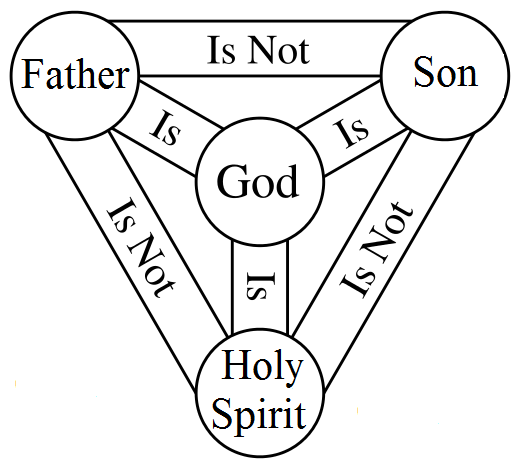
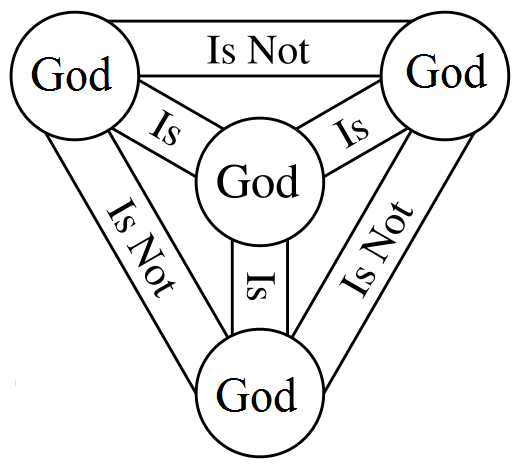
Major Problems with the Trinity

1. The One True God is Identified in the Bible as a singular “I”, “Me”, “He”, “Him” and “Who.”

In Hebrew, Greek, or English, the very purpose of singular personal prounouns is to signify a person is being identified. However, Trinitarians must resort to outright denial of this plain and obvious fact and insist rather that the one true God is three plural persons rather than one singular person. And because the one true God identifies himself with singular personal pronouns (see examples below) they must further insist that the one true God of the Bible is a singular “I”, “Me”, “He”, “Him” and “Who” not because God is one person but because the one true God is one “being.”

To you it was shown that you might know that YAHWEH, HE is God and there is no other besides HIM. (Deuteronomy 4:35; see Mark 12:32).

I, I am HE, And there is no God besides ME. (Deuteronomy 32:9).

Thus says YAHWEH, your Redeemer, and The One who formed you from the womb, “I, YAHWEH, am the maker of all things, stretching out the heavens by MYSELF And spreading out the earth all alone.” (Isaiah 44:24).

While singular personal pronouns have the express purpose of signifying and identifying a single person, Trinitarians must deny this fact and insist rather the above verses do not refer to a single person. HOWEVER, in total contradiction to these claims, Trinitarians also insist that one much conclude that the Holy Spirit is indeed one distinct third PERSON because singular personal pronouns are used of the Holy Spirit and the Holy Spirit has the “attributes” of a PERSON and while both of these things are true of the one true God which they hypocritically deny is one person.

2. The Identity of Jesus’ One and Only God was not a Triune God

Jesus had a God. Jesus still has a God. Jesus’ one and only God was his Father alone. For Jesus, the one and only God was the Father alone and he alone was Jesus’ God. Trinitarians do not have the same God as Jesus. A one person God is not the same God as a three person God and God the Father is not by himself a distinct God in Trinitarian doctrine but only one hypostasis/person of the Triune God. Yet, this one person is was, and is, indeed for Jesus the one true God. Hence, Jesus’ one true God is not the same God as the God of Trinitarians.

My God, my God, why hast thou forsaken me? (Matthew 27:46).

I ascend to my Father and your Father, to my God and your God. (John 20:17).

He who conquers, I will make him a pillar in the temple of my God and never shall he go out of it, and I will write on him the name of my God, and the name of the city of my God, the new Jerusalem which comes down from my God out of heaven, and my own new name. Revelation 3:12.

3. Jesus Identifies Our God for Us and it is not a Triune God.

Jesus never indicates he is our God or that three persons are our God. Jesus tells us who our God is and our God turns out to be the same God as his God: his Father.

I ascend to my Father and your Father, to my God and your God. (John 20:17).

Father…. this is eternal life, that they may know You, the only true God, and Jesus Christ whom You have sent. (John 17:3).

And one of the scribes came up and heard them disputing with one another, and seeing that he answered them well, asked him, “Which commandment is the first of all?” Jesus answered, “The first is, ‘Hear, O Israel: The Lord our God, the Lord is one,’ and ‘you shall love the Lord your God with all your heart, and with all your soul, and with all your mind, and with all your strength.’ The second is this, ‘You shall love your neighbor as yourself.’ There is no other commandment greater than these.” And the scribe said to him, “You are right, Teacher; you have truly said that HE is one, and there is no other but HE and to love HIM with all the heart, and with all the understanding, and with all the strength, and to love one’s neighbor as oneself, is much more than all whole burnt offerings and sacrifices.” And when Jesus saw that he answered wisely, he said to him, “You are not far from the kingdom of God.” (Mark 12::28-34).

Who did Jesus and this Jewish scribe have in mind? What one God were these two men talking about? Who was the one God of these two Jewish men? Jesus makes it quite clear that our God is his God, the same God as his God. Keep in mind that Trinitarians insist they do not believe in three Gods. This necessarily means that there is no such thing for them as the Father being a God all by Himself. Hence, the Father is not a God but only one hypostasis (person) of the one God. But for Jesus, his Father was indeed a God, his God, and the only true God.

4. Paul Identifies the One God of Christians as One Person

Trinitarians insist that the one God is not one person but three persons. However, at 1 Corinthians 8:6, Paul identifies the one God as one person. At 1 Corinthians 8:4 Paul declares “there is no God but one” and then he goes on to say that “for us there is one God” and he then identifies the one God as one person: the Father. If Paul believed in a three person God whatever then could be his point? Why identify

….there is no God but one….. for us there is one God, the Father. (1 Corinthians 8:6).

5. The First Person of the Trinity is Jesus’ Father but the Third Person of the Trinity Fathered Jesus

To beget a son is to Father a son. Abraham begat Isaac means Abraham fathered Isaac. However, in the doctrine of the Trinity, we have the absurd implication that the third person of the Trinity fathered Jesus but the person who begat and fathered Jesus does not turn out to be his father. Rather the first person of the Trinity turns out to be Jesus’ father! In the doctrine of the Trinity, the Holy Spirit is most definitely NOT the Father.

Abraham begat (gennao) Isaac, and Isaac begat Jacob, and Jacob begat Judah and his brethren, and Judah begat Pharez…Joseph, son of David, do not be afraid to take Mary as your wife; for the Child who has been begotten (gennao) in her is of the Holy Spirit.. (Matthew 1).

The Holy Spirit will come upon you, and the power of the Most High will overshadow you, therefore the child to be begotten (gennao) will be called holy, the Son of God. (Luke 1:35).

6. The Risen Jesus is the Holy Spirit

In the doctrine of the Trinity, the Spirit is definitely not Jesus. However, Paul identifies Jesus as the Holy Spirit. At 2 Corinthians 3, Paul is clearly discussing the ministry of the Holy Spirit.

You are a letter from Christ delivered by us, written not with ink but with the Spirit of the living God… ministers of a new covenant, not of the letter but of the Spirit… the ministry of the Spirit… the Lord IS the Spirit/u>. (2 Corinthians 3).

It is quite clear that “the Spirit” in view here is the Spirit Paul has just been talking about, the Holy Spirit. Now carefully observe how Paul identifies just who that Lord is when he says “the Lord is the Spirit.”

But their minds were hardened; for until this very day at the reading of the old covenant the same veil remains unlifted, because the veil is removed in Christ.

But to this day whenever Moses is read, a veil lies over their heart; but the veil is taken away when a person turns to the Lord.

Now the Lord is the Spirit,

And Paul even makes it more clear:

But their minds were hardened; for until this very day at the reading of the old covenant the same veil remains unlifted, because the veil is removed in CHRIST. But to this day whenever Moses is read, a veil lies over their heart; but the veil is taken away when a person turns to the Lord. Now THE LORD is the Spirit, and where the Spirit of THE LORD is, there is freedom. But we all, with unveiled face, beholding as in a mirror the glory of THE LORD, are being transformed into the same image from glory to glory, just as from THE LORD, the Spirit. Therefore, since we have this ministry [of the Spirit], as we received mercy, we do not lose heart, but we have renounced the things hidden because of shame, not walking in craftiness or adulterating the word of God, but by the manifestation of truth commending ourselves to every man’s conscience in the sight of God. And even if our gospel is veiled, it is veiled to those who are perishing, in whose case the god of this world has blinded the minds of the unbelieving so that they might not see the light of the gospel of the glory of CHRIST, who is the image of God. For we do not preach ourselves but CHRIST JESUS AS “LORD”, and ourselves as your servants for Jesus’ sake. (2 Corinthians 3-4).

Paul makes it crystal clear that he has Jesus in mind when he says “the Lord is the Spirit.” However, in Trinitarian doctrine, Jesus is most definitely NOT the Holy Spirit. Observe also how Paul had been talking about the glory of the Spirit and now calls this the glory of the Lord and then even further the glory of Christ.

7. Jesus declared that ONLY the Father Knows the Day and Hour

Jesus declared that only the Father knows the day and hour of Jesus’ return. This not only excludes Jesus the second person of the Trinity, it also excludes the Holy Spirit defined as the third person of the Trinity. Hence, two persons of the Trinity are not omniscient by definition while at the same time Trinitarians insist that all three persons are omniscient (all knowing).

But of that day and hour no one knows, not even the angels of heaven, nor the Son, but ONLY the Father. (Matthew 24:36).

8. Every single Trinitarian “Prooftext” has very serious problems associated with it.

These are illustrated on this website.

The Bible vs. the Trinity

A Cursory Look

What does the Bible truly teach? Which of the following rings true?

Trinity: The Bible teaches that God is three hypostases in one ousia, three persons in one substance. The Triune God has one will. Three persons, one will. However, the person Jesus has two wills. One person, two wills.

Bible: The Bible teaches that God is one person, the Father of Jesus Christ. God has one will and Jesus has one will.


Trinity: The Bible teaches us that Jesus is God the Son.

Bible: The Bible teaches us that Jesus is the Son of God.


Trinity: The Bible teaches us that the Holy Spirit is a separate third person, God the Holy Spirit, in addition to God the Father and God the Son.

Bible: The Bible teaches us that the Holy Spirit is the divine nature, power, and presence, of God the Father.


Trinity: The Bible teaches us that the God of Christians is the Triune God

Bible: The Bible teaches us that the God of Christians is Jesus’ God, His Father.


Trinity: The Bible teaches us that the God of the Apostles was the Triune God.

Bible: The Bible teaches us that the God of the Apostles was Jesus’ God, His Father.


Trinity: The Bible teaches us that Jesus was God who became a man.

Bible: The Bible teaches us that Jesus was a man who was God’s son.


Trinity: The Bible teaches us that Jesus had two natures.

Bible: The Bible teaches us that Jesus had one nature, humanity, and he was led by the Holy Spirit of God the Father.


Trinity: The Bible teaches us that Jesus believed in the existence of a Triune God.

Bible: The Bible teaches us that Jesus’ only true God was His Father alone.


Trinity: The Bible teaches us the Father is the only true God, Jesus is the only true God and the Holy Spirit is the only true God.

Bible: The Bible teaches us that Jesus identified his Father alone as the only true God.


Trinity: The Bible teaches us that “the Lord our God the Lord is one” means God is one divine substance.

Bible: The Bible teaches us that “the Lord our God the Lord is one” means God is one person.


Trinity: At Mark 12:28-34, Jesus and the Jewish scribe were discussing the Triune God.

Bible: At Mark 12:28-34, Jesus and the Jewish scribe were discussing Jesus’ Father.


Trinity: Jesus had known all along that the one true God is a three person being.

Bible: Jesus never conceived of such an idea since His Father alone was His one and only true God.


Trinity: When Jesus said, “I am ascending to My Father and your Father, to My God and your God,” he didn’t mean that our God is not a three person God.

Bible: When Jesus said, “I am ascending to My Father and your Father, to My God and your God,” he meant His Father alone is His one God and His Father alone is to also be our one God.


Trinity: While Jesus’ one and only God was/is not a three person God, our one God is indeed a three person being.

Bible: Because Jesus’ one and only God was/is His Father alone, our one and only God is the Father alone.


Trinity: The Bible says that our one God is the Triune God.

Bible: The Bible says that our one God is the Father (1 Corinthians 8:6).

The Preponderance of the Evidence

In order to accept the doctrine of the Trinity, one must completely deny the preponderance of the evidence. The overwhelming weight of the evidence concerning the identity of God is heavily against Trinitarian claims. Not only so, the veracity of their doctrine is quite distant from reasonable doubt. Indeed, a three person God is never even mentioned in the entire Bible but must be read into the text.

Jesus is the son of God. God is one and Jesus is another, his son. Throughout Scripture, time and time again, God is clearly understood to be quite simply the Father of Jesus. Indeed, Jesus declares quite plainly that his Father is his God and our God too. And Jesus even teaches that the Jews “worship what we know” and then proceeds to explain that a time has come to worship the Father in Spirit and in Truth. Yet, Trinitarians would have it that Jesus has a God on one hand and we are supposed to worship Jesus himself as God on the other because Trinitarians have decided for themselves that they have dreamed up excuses for these things. And not only so, we are supposed to believe that three persons are God even though no three person God is ever mentioned by Jesus or anyone else in the Bible. And even worse, we are supposed to believe God’s Spirit is a separate third person?

In the Bible, God regularly refers to himself with the singular personal pronouns “I” and “Me.” He also inspires his prophets to refer to him as “He” and “Him.” Wouldn’t God be misleading people by using singular personal terms to refer to himself if God is not one person but three persons? Was God playing mind games with his people? And we also find in the Bible that Yahweh God, explicitly identifying himself as the Father, declared, “there is no God besides Me.” Is that declaration not plain enough?

In the Bible, “God” is simply Jesus’ Father. Jesus is God’s Son, that is, the Son of the Father. Are we really supposed to assume that God is something more than Jesus’ Father? The one and only God which Jesus himself worshiped and served was one person – his Father alone. Jesus said, “My Father and your Father, my God and your God.” Quite plainly, Jesus expects our God to be the same God as his God. Who then is Jesus’ God? Are we really expected to believe he served a three person God? And if the Father is the one and only God Jesus served, why then do Trinitarians advocate serving a different three person God? And a God that is also never once described in the entire Bible?

The word “God” is normally used in the Bible to refer to Jesus’ Father. Is that not plain enough? Jesus also refers to his Father as “the only God” and “the only true God.” Paul contrasted many gods to “one God, the Father.” He also said there is “one God and Father of all.” Is it not clear enough? Is it not plain who Jesus and his apostles worshiped as God? Paul said, “there is one God and one mediator between God and men, the man Jesus.” A mediator by definition is neither party in question. And here in this verse, the mediator, Jesus, is neither “the one God” nor the group of “men” for whom he mediates. Is it not clear enough?

Who was the God of the Jews? A three person being? No. Their God was one person, Jesus’ Father. And Jesus was the Son of their God. The Bible says the God of Abraham, and Isaac, and Jacob glorified his son Jesus. That certainly is not a reference to a three person God.

While much more decisive proof exists on many accounts, the preponderance of the evidence itself is decisive. The God of the Bible was Jesus’ Father, and only his Father. And he reminded us that his God is our God. Indeed, since there is only one God we should need no reminding by Jesus that the God he worshiped, his Father, and only his Father, is the one and only God.

Questions for Trinitarians

Things to Think About:

Logic/Reason

  • If the doctrine of the Trinity is so fundamental to Christianity, as Trinitarians claim, why is there a complete failure on the part of Jesus or his apostles to articulate it anywhere?
  • What do you honestly think the New Testament would look like if today’s Trinitarians wrote these books? Would it look any different? Would they say some things the apostles did not say?
  • Since the one God is the main character in the Bible, where can anyone find even a single mention of a three person God in the Bible without asking them to imagine preconceived Trinitarian doctrine into the text?
  • Have you ever noticed that you are expected to “discover” God is three persons? Why is this three person being so elusive about His true identity?
  • Do you actually think Jesus should have, or could have, told Nicodemus that he was the second person of the Jews’ Triune God
  • When the ancient Israelites prayed or heard the words, “Hear O Israel, the LORD our God the LORD is one”, don’t you think they were expected to understand these words? If so, how could they be expected to think it means, “the Lord is one divine ousia”? If not, why would they be expected to believe something which they did not know?
  • Was Moses a Trinitarian?
  • If the one true God was fully aware that his choice of language and imagery would most definitely lead people to conclude he is one person, when He was not one person but was actually three persons all along, wouldn’t that make God a deceiver?
  • Is the word hypostasis synonymous with the English word “person”? If not, why are you using the word “person” to describe your doctrine? If so, please define the word “person.”
  • Is it true to say that for Christians the one God is the Triune God or the one God is the Father?
  • How do you know the Father is in fact a person? What quality or characteristic defines the Father as a person?
  • How do you know the Son is in fact a person?What quality or characteristic defines the Father as a person?
  • When Trinitarians claim that the Bible never indicates that the one God is a person, why do they fail to notice the Bible never indicates the Holy Spirit is a person either?
  • Why do Trinitarians insist that the Holy Spirit is one distinct person because singular personal pronouns are used of the Holy Spirit, but deny the one God is one distinct person when the same thing is true of the one God?
  • Why do Trinitarians insist that the Holy Spirit is one distinct person because Biblical language shows the Holy Spirit has the attributes of a single person, but deny the one God is one distinct person when the same thing is true of the one true God?
  • Is Jesus the Son, the second person of the Trinity, a “being” or a “person”?
  • If Jesus is not a being then is it wrong to say he is a human being?
  • If the one true God is one divine being and Jesus is not a divine being then shall we conclude he is not the one true divine being, the one true God? Or, If the one true God is one divine being and Jesus is the one true God must we conclude he is the one divine being?
  • If the one true God is a Triune Being then shall we conclude that Jesus is that one true God? If not, is Jesus then a different God? If so, can you explain how Jesus is the one Triune God?
  • If the Triune Being is the one true God then shall we conclude that Jesus is that one true God? If not, is Jesus then a different God? If so, can you explain how Jesus is the one Triune God?
  • Is it true to say that for Christians the one God is the Triune God or is it true that for Christians the one God is the Father?
  • If both are true, then can we say that the one true God is either three persons or that the one true God is one person?
  • Is it ever okay to identify the one God as one person? If not why does Paul do it? If so, why do Trinitarians object to identifying God as one person?
  • If God the Father is the first hypostasis OF the Trinity, then may we conclude there is something antecedent to God? Is the Father the Triune God’s first person? If so, then does this mean the Father belongs to the Triune God?
  • What would be the quality or characteristic feature that would determine that multiple identities are not one God but multiple gods?
  • If three persons having one nature are deemed to be one being, then should you consistently say that one person having two natures is deemed to be two beings?
  • When Jesus told Mary Magdalene that he was ascending to “my Father and your Father and to my God and your God” do you think he really meant he was ascending to, “my Father and your Father and to my God and the first hypostasis of your God”?
  • Was God the Son, the Second Person of the Trinity, that dead flesh hanging on the cross and laying dead in the tomb? If not, who was? If so, was God the Son half dead and half alive?
  • Are God the Son and Jesus the same person?
  • If Jesus was conceived by the Holy Spirit, the third person of the Trinity, how did the first person of the Trinity turn out to be Jesus’ Father?
  • Have you ever noticed that Paul said that the risen Jesus IS the Spirit? Don’t you find that troubling since Jesus most definitely IS NOT the Spirit in Trinitarian doctrine?
  • Was Jesus a Trinitarian? If not, why are you? If so, are you actually claiming that his one and only God was a three person being?
  • Are you a child of God or a child of the first hypostasis of the Triune God or both?
  • If God is a God of the living and not the dead, and we have died and it is no longer us who live but Christ who lives in us, then who is the one true God of Christ who lives in us?
  • If Peter had asked Jesus the question, “Who is your God?”, do you think he would have gotten a Trinitarian answer? Or do you think Jesus would have said, “My Father alone”?
  • When John said no one has ever seen God but the Son expresses the Father, does it honestly sound to you like John meant, “no one has ever seen the first hypostasis but the second hypostasis expresses the first hypostasis”?
  • If Jesus had said, “I am not God,” do you think Trinitarians would simply say, “Jesus meant he was not the Father,” and still claim Jesus is God?

Scripture

  • Why do suppose Trinitarians simply read their doctrine into the text at Genesis 1:26?
  • Why do suppose Trinitarian scholars have so many other interpretations of Genesis 1:26?
  • Did you know that a singular versus plural interplay occurs at Genesis 1:26 concerning man as well as God?
  • Don’t you suppose the natural reading of Genesis 1:26-27 would be to see that the image and likeness of “us” and “our” in this verse is “male and female.”
  • Did you know that the Hebrew word EL, which is usually translated as “God” at Isaiah 9:6, is not equivalent to our English word God and this word EL is used to refer to men, mountains and trees?
  • Have you ever noticed that the Trinitarian translation of Zechariah 12:10 doesn’t even makes sense? People will look upon “ME” whom they pierced but they will mourn for “HIM.”
  • Have you noticed that when Yahweh says He will not give His glory to another at Isaiah 42:8, that it is necessarily the Father speaking?
  • When you read Isaiah 43:11, “there is no Savior besides Me,” do you forget that Scripture says that Jesus is God’s salvation and it is God who raised up this Savior?
  • Did you know that the early Christians rarely quoted the “only begotten God” variant of John 1:18?
  • Did you know that the Greek text at John 10:33 is how an ancient Greek speaker would say, “make yourself a god”?
  • Did you know that important manuscripts read “church of the Lord” at Acts 20:28 and not “church of God”?
  • Did you know that Codex Sinaiticus, one of our most important manuscripts, reads “righteousness of our Lord and Savior, Jesus Christ” at 2 Peter 1:1 and not “righteousness of our God and Savior, Jesus Christ”?
  • Did you know that 1 John 5:7 is not in modern translations for a very good reason?

An Important Question for Trinitarians

Trinitarians should be able to answer simple questions about their doctrine without resorting to evasion or denial. The following is one important question you can ask a Trinitarian.

Are both of the following statements true? YES or NO.

For Christians, there is one God, the Triune God.

For Christians, there is one God, the Father.

1. If YES, then please explain how the one God of Christians is both a three person being and a one person being.

2. If NO, then please identify which of the two above statements is true.

“For us there is one God, the Father” – (1 Corinthians 8:6).

God: One Person

Does the Bible reveal that God is one person? Yes it most certainly does. Trinitarians will often claim the Bible never says God is one “person.” You need to ask them what the Hebrew or Greek word for “person” might then be. Here is what they don’t tell you. The Scriptures never says that God the Father, or Jesus, or the Holy Spirit, or King David, or Moses, or Noah, or Adam, or anyone else in the entire Bible, is a “person” either. This Trinitarian claim is highly misleading because it suggests that since God is never described as a “person” then there is no reason to believe he is one person. But “person” is an English word and the Bible is not written in English. So of course God is not described as a “person” in the Bible. Neither is anyone else. We must then ask ourselves what word a Hebrew or Greek speaking person would use that indicates the same thing as the English word “person.”God: One Soul

The Hebrews and Greeks did indeed have a word for a person. It is the word we most often see translated as “soul.” When the Bible talks about souls it is a reference to persons. For example, Peter says eight souls were saved through water he means eight persons were saved through water. When Luke writes that three thousand souls were saved he means three thousand persons were saved.

The Bible indicates God is a soul. He is a person.

Old Testament – Hebrew: nephesh

And I [Yahweh] will raise up for myself a faithful priest, who shall do according to what is in My heart and in My soul. (1 Samuel 2:35).

Yahweh tests the righteous and the wicked, and His soul hates him that loves violence. (Psalm 11:5).

There are six things which Yahweh hates, seven which are an abomination to His soul. (Proverbs 6:16).

[Yahweh]: Your new moons and your scheduled feasts My soul hated. (Isaiah 1:14).

[Yahweh]: Behold, My servant-son, whom I uphold, My chosen one in whom My soul approves.

Shall I [Yahweh] not punish these people,” declares the LORD, “And on a nation such as this shall My soul not avenge itself? (Jeremiah 5:9; cf. 5:29; 9:9)

[Yahweh]: Be warned, O Jerusalem, lest My soul be alienated from you. (Jeremiah 6:8).

I [Yahweh] have given the beloved of My soul into the hands of her enemies. (Jeremiah 12:7).

Have You [Yahweh] completely rejected Judah? Has Your soul abhorred Zion? (Jeremiah 14:19).

Then Yahweh said to me, “Even though Moses and Samuel were to stand before Me, My soul would not be with this people. (Jeremiah 15:1).

I [Yahweh] will rejoice over them to do them good and will faithfully plant them in this land with all My heart and with all My soul. (Jeremiah 32:41).

[Yahweh]: And she uncovered her harlotries, And she revealed her nakedness, and My soul turned away from her as My soul turned away from her sister. (Ezekiel 32:18).

The Lord Yahweh has sworn by his own soul. (Amos 6:8).

New Testament – Greek: psyche

[Yahweh]: Behold, My servant whom I have chosen, My beloved in whom My soul is well pleased. (Matthew 12:18).

[Yahweh]: But my righteous one shall live by faith and if he shrinks back, My soul has no pleasure in him. (Hebrews 10:38).

What an unusal way for a three person God to refer to himself. Do Trinitarians really expect anyone to believe these are references to a three person being? No they are the words of one person, one soul.
God: One “I,” One “Me,” One “He,” One “Him.”

In the Bible, God is profusely referred to with the personal prounouns “I”, “Me”, “He”, “Him” and “You.” He refers to himself in this way and inspires his prophets in this way. These are terms that we use to identify a single person. And this is something God knows. Is God not being a bit deceptive toward us by using these terms if indeed he is not one person but three?

In addition to this, we find that the Father says in Deuteronomy 32:6-39, “there is no God besides ME.” Is this not clear enough? And further we find God is the Father of Israel his firstborn? A three person father? God portrays himself anthropomorphically as one person who has a heart and eyes and hands and feet and goes for walks in the Garden of Eden. Three persons? And God sits on a throne in heaven? Three persons?

Jesus’ one and only God

Was Jesus’ God a three person being or a one person being? He did say, “my Father and your Father, my God and your God.” Is it not clear that Jesus’ Father was his God and his Father alone? Are we to actually believe that Jesus’ one God was a three person being? And he did say that his God is our God. Is it not clear that our God then is one person, Jesus’ Father?

God is a soul, a person, and He identifies himself as such in the Bible. Jesus identifies his one God as his Father. This God is an “I” and “Me” who, specifically identifying himself as the Father of Israel, declares “there is no God besides me.” Just how again do these facts result in a three person God?

The Many Fathers of the Trinity

Have we not one Father? Has not one God created us? Malachi 2:10

Trinitarians will of course insist they only believe there is one “God the Father.” However, an examination of their claims shows that they really believe in four “God the Fathers”:

  • Jesus’ Father (the first hypostasis)
  • The Holy Spirit who fathered baby Jesus
  • Jesus Himself
  • The Triune Being

Because we read that Jesus was fathered by the Holy Spirit, the Holy Spirit begat Jesus, and because the Holy Spirit in Trinitarian doctrine, is a distinct third person, we have a situation where Trinitarians believe that this third person begat, fathered, baby Jesus. In Trinitarian doctrine then, the Holy Spirit is a “God the Father” since “God the Spirit” begat, fathered, Jesus.

Because Trinitarians interpret Isaiah 9:6 to be describing Jesus, and because the name given to this child is partly “Mighty God, Eternal Father,” Trinitarians conclude that Jesus is here both God and Father, another “God the Father.”

And again at Deuteronomy 32:39 YAHWEH indicates “I, I am HE, and there is no God besides ME.” When we check to see who is speaking we find that Moses is referring to YAHWEH the Father in verse 6 and then YAHWEH begins to speak himself (through Moses) beginning at verse 20. So Trinitarians typically claim that “the Father” in view here is the Triune being.

So in Trinitarian theology, there there exists the absurd situation of having 4 “God the Fathers.” Of course Trinitarians will want to insist that each of these is a Father in a “different sense” or something along those lines, as if that is going to help their situation. But it doesn’t matter. They still have Four God the Fathers since each one of these identities is declared to be both God and “Father.”

Jesus taught otherwise. He taught his disciples they only had one Father who was in heaven (Matthew 23:9).

“One is your Father, He who is in heaven.” – Jesus

Have we not one Father? Has not one God created us? Malachi 2:10

The Many “I”‘s of the Trinity

The Trinity has many “I”s. There are not just three I’s in the Trinity. No, no. Trinitarians are very misleading about this matter. There are at least four, probably five identities in the doctrine of the Trinity.

  • The Father
  • The Son
  • The Holy Spirit
  • The One Divine Being
  • The Triune Being

Trinitarians are forced to admit that the one true God is a singular “Who,” I,” “Me,” “He,” and “Him.” And they insist this is not because God is one person but because God is one being. The word “being” in Trinitarian doctrine is a synonym for “substance” or “ousia” or “nature.” And so they insist that God is one “I” because God is one “being.” And indeed, this is all they can say because an “I” is a singular identity and the oneness of God is the “being” or “nature” of God. Hence, they can only say God is one “I” because God is one “being.” So this is a fourth “I” in addition to the Father, the Son, and the Holy Spirit.

It is also true that Trinitarians claim that the whole collective, Father, Son, Holy Spirit along with the divine nature which belongs to each of these three persons, is one “Who,” I,” “Me,” “He,” and “Him.” This is evident at their interpretation of Genesis 1:26 where they claim Elohim is an “US” and “OUR” and that “US” is the three persons of the Trinity. Hence there is even a fifth identity in the doctrine of the Trinity.

The Triune “I”: The God Above the Father

One God and Father Above All (Ephesians 4:6)

In the doctrine of the Trinity, the three person God is a singular identity, the Triune being is a singular “I.” Whenever the one God of the Bible is indicating there is no other God besides He Himself, Trinitarians insist, by an act of their own will, that this is the Triune God speaking.

In effect, this means there is a God above the Father. The Father alone is the one and only God of Jesus. However, in the doctrine of the Trinity, the person of the Father is only one person OF the Trinity. The one true God, Trinitarians say, is the three-person-God and they do not believe in three Gods. That also means the Father is not a God in his own right, even though we know the Father alone was the one and only God of Jesus. Rather, in the doctrine of the Trinity, the Father is only a “subset” of the greater Triune God. The Father is only one person OF this Being who is a single identity, a single “I.”

If we think this through, this means there is an identity greater than God the Father, the Triune God. It means there is an identity, a singular “I” above the Father, the Triune Being. Blasphemy. There is no God great or above the God of Jesus, his Father alone.

In Trinity doctrine, the Father is not above all. He is not above God the Son and He is not above the third person of the Trinity. And he is not above the Triune Being. Indeed, he is only one person “OF” the Trinity. However, the Bible says that there is “one God and Father who is ABOVE ALL.” (Ephesians 4:6).

3 Questions for Trinitarians

“You will surely not die. – The Serpent in the Garden of Eden

1. Are You An Immortal Entity just like God?

Have you ever noticed that when Trinitarians are asked who was dead on the cross that Trinitarians will commonly want to explain two things: (1) that Jesus had two natures and (2) what happens when all human beings die? Have you ever asked yourself why they would want to explain what happens when any human dies? Are they suggesting that you have two natures too?

Trinitarians believe in the immortality of the soul. This means that they believe in the a soul is something which cannot become ever dead. If a soul ever became dead it wouldn’t be immortal. They believe souls are not mortal but immortal. And because of this, Trinitarians believe they are immortal soul/spirit. They believe they are two things: (1) an immortal soul and (2) a mortal body. And so when they die, they believe they are an immortal soul and/or spirit who separates from their mortal bodies leaving their dead body behind. And after the point of death, they are not that dead body because they are in fact still alive. Their identity, their ego, their person, is not that dead body. Rather, they themselves are that immortal soul that cannot become dead. Immortality means forever remaining alive and they believe they are souls that will forever remain alive. Otherwise, they would not be immortal souls and they do confess they are immortal souls. The believe they are like God and are immortal like God.

Spirit is what makes alive and we all know this. Angels are spirit and so angels are immortal. God is spirit and so God is immortal. Therefore, in the doctrine of the Trinity, God the Son, the Second Person of the Trinity, is immortal and impassible. God the Son cannot suffer the pain of death and become dead. That person is immortal and impassible and cannot be dead. Only his body can be dead and that after the point of death that dead body is not him. God the Son cannot be that dead body because God the Son is immortal and impassible and cannot be dead. He was still alive or he would not have been impassible and immortal. And Trinitarians believe they are just like God the Son and they too are immortal and cannot be dead; they are immortal impassible souls who cannot become dead. Only their bodies can be dead but those dead bodies are not them because they are immortal souls who remain alive. If they did not remain alive they would not be immortal souls but they do believe they are indeed immortal souls. They believe they are immortal souls which by definition means they are not dead but immortally alive and incapable of being dead. They believe they are just like God who is impassible and immortal and is incapable of being dead but will remain alive after the point of death.

Question 1: The Bible says that the One God alone possesses immortality. Do you believe it is rational to think that you are immortal just like God?

2. Was Anyone Dead on the Cross for Your Sins?

Since the Logos aka God the Son aka Second Person of the Trinity, is immortal and impassible, and left his dead body behind on the cross, and God the Son was not dead on the cross, then who was? If it was not God the Son, and Jesus is not a different person than God the Son, then it could not be someone else who was dead could it? And we must therefore conclude that nobody was hanging dead on the cross. The person known as God the Son was not dead but alive since he is immortal and impassible; only a body was dead.

Question 2: Since in the doctrine of the Trinity, Jesus was not two persons but one, and Jesus and God the Son are the same identical person, and since this person, the Second person of the Trinity, is immortal and impassible and was therefore not dead but alive after the point of death, and only a body was dead, then do you believe that anybody at all was dead for your sins? If you do not agree, then who was dead and was this dead person a different person than God the Son who was not dead? If God the Son was not dead for your sins, was it someone else? If you insist the Second Person of the Trinity was indeed dead, are you suggesting he was not immortal? And why would you deny historical Trinitarian doctrine and claim to be a Trinitarian?

3. Is God Your Own Father?

Jesus was begotten in Bethlehem in Judea in the days of Herod. He had been begotten of God by the Spirit of God. Because he was begotten of God, Jesus calling God his own Father. And because Jesus called God his own Father, the Jews wanted to kill him.

For this reason therefore the Jews were seeking all the more to kill Jesus, because he not only was breaking the Sabbath, but also was calling God his own Father, making himself equal with God. John 5:18.

And they finally had him killed for this reason:

We have a law, and by that law He ought to die because he made Himself out to be a son of God. John 19:7.

Jesus also taught Nicodemus that no one can enter the Kingdom of God unless he is begotten again a second time. One must be begotten of God by the Spirit of God. All humans are begotten of natural parents. But if we want to enter the Kingdom of God, we must die to that life and be begotten again into a new life. We must die to the first life into which were were begotten of natural parents and be begotten again, begotten a second time into a new second life. We must be begotten of God by the Spirit of God. And when we are begotten of God by the Spirit of God, it is God who begat us anew, and God is our Father.

Question 3: The Jews wanted to kill Jesus because he was begotten of God and called God his own Father. Are you begotten of God and willing to confess God is your own Father like Jesus did knowing that men with the same spirit as these Jews will want to persecute you and perhaps kill you for confessing to be a begotten child of God? Are you begotten of God by the Spirit of God? Is God your own Father?

The Attribute Association Farce

If you have explored Trinitarian doctrine to any degree, you will have surely come across the “Jesus is God” or “Jesus is YAHWEH” attribute association charts. These charts are usually arranged to compare Jesus and Yahweh God by showing they share several things in common. These charts are nothing but deceptive fallacies. A person can share numerous things in common with another person and it will not make them that person by identity.

Perhaps you have heard of the phrase, “guilt by association” which is known to be a common fallacy. The Trinitarian is trying to claim that since Jesus shares many things in common with God then he is God by identity. It is pitifully ridiculous. The following chart is a similar layout to the ones Trinitarians use to compare Jesus and Yahweh. It is created with the exact same reasoning process used by Trinitarians to create their charts and demonstrates the complete foolishness of such “reasoning.”

Peter is the Messiah (“Anointed One”)
DescriptionJesusPeter
Son of GodLuke 1:35; Matt 3:16-17Matt 5:45; Rom 8:14;
Gal 3:26
Begotten of GodJn 3:161 Jn 5:1; Matt 16:17
ShepherdMatt 2:6; 26:31; Jn 10:11; Heb 13:20; 1 Peter 2:25; 5:4Jn 21:16; Acts 20:28;
1 Peter 5:2
Light of the worldJohn 8:12Matthew 5:14
Rock1 Cor 10:4Matthew 16:181
ApostleHebrews 3:1Matthew 10:2
PriestHebrews 7:3, 17, 241 Peter 2:5,9; Rev 1:6; 5:10 (see Romans 15:6).
KingMatthew 2:2; 27:37;
Luke 1:33-35
Rev 1:6; 5:10
Authority to forgive sinsMatthew 9:2,8John 20:21-23
Healed the lameMatthew 9:1-8Acts 3:6-7
Raised the deadJohn 11:43-44Acts 9:37-41
Walked on waterMatthew 14:25Matthew 14:29
Bestowed the SpiritJohn 20:22Acts 8:17-18
Crucified
for the Sheep
Matthew 27; Luke 23; John 19John 21:18-19
Early church testimony
Anointed2Luke 4:18; Acts 10:382 Cor 1:21; 1 John 2:20, 27
Conclusion:Both Peter and Jesus are the Messiah

A person can theoretically share absolutely everything in common with another person and it will still not amount to a common identity. Even if Peter shared 100% of Jesus’ attributes, Peter would not be Jesus. This is because there is one thing they cannot share in common: identity. Peter is one person and Jesus is another person. Peter is one identity, Christ is another identity, and the one thing they can never have in common is their personal identities. No matter how big you make the chart above, and no matter how many things you show Peter has in common with the Messiah, Peter will simply never be the Messiah. Peter is one identity, Jesus is another. They do not get to share common identity as “the Messiah.”

The same is true with the Son of God and his Father who is God. God is one identity, the son of God is another identity. They do not share common identity as “God.” In fact, Jesus does not share several things with the Father in addition to not sharing the Father’s identity. For example, the Father has no God; Jesus does. The Father is unbegotten but Jesus is not. The Head of Christ is God; the Head of God the Father is nobody. This Trinitarian ploy is nothing but a pitiful fallacy. On one hand they want to claim Jesus and the Father are two different identities (the Father is not the Son) but on the other hand they wish to claim that both of them share one common identity – “God.” (Stop and think carefully about that). And that is not to mention the fact that the ONLY way the Father and Son are the “same” in Trinitarian doctrine is having the same divine nature which is a “what” and NOT a “who”! Now how did they manage to make them the same identity (“God”) when they are not to confuse person and being, the “who’s” and the “what’s.” They are converting their “what” into a “who” by an act of their own will when they inform everyone else you should not confuse the who’s and the what’s.

What Trinitarians try to do is identity Jesus as God when God already is identified as the person of the Father and they attempt to do this by showing he shares things in common with the Father. It is just as ridiculous as trying to identify Peter as the Christ as we have shown above. They are simply not the same identity and just because they share things in common does not mean that Jesus is the same identity as the Father (i.e. “God”) anymore than Peter is the same identity as Jesus (i.e. the Messiah). Not only so, much of the information presented in these charts is simply false information anyway. For example, they will try to claim Jesus is “omniscient” and avoid the fact that Jesus increased in wisdom and does not know “the day nor hour.” Other falsehoods in these charts are based on their own misinterpretations. The truth is that even IF these charts were not presenting falsehoods within them, the claim is a farce anyway. The illustration above demonstrates that quite clearly. No matter how many things you show one person has in common with another person, it will never amount to both of them having a common identity. You don’t get to identify Jesus as “God” because he shares appellations with the Father anymore than you get to identify Peter as the Messiah because he shares appellations with Jesus.


Notes:

1. The actual name Jesus gave Simon is “Kephas” (Cephas) which is the Aramaic word for “rock,” kepha. It does not specifically mean “small stone” in contrast to a “big rock.” That is a totally unfounded myth. Kephas is the Aramaic word for “rock” and is essentially equivalent to our English word “rock.” John tells us in his Gospel that the way to interpret and translate this Aramaic word into Greek is with the word “Petros” (John 1:42). “Peter” is simply an anglicized form of Petros. Petros is a Greek masculine form of the feminine Greek word for rock, petra, and as such, an appropriate form of the Greek word for “rock” for the man Simon bar Jonah. Greeks did not give males feminine names and the Greek word for “rock” was masculinized for Simon. An example would be Ioannes (John) and Ioanna (Joanna). Same name, same meaning, different gender. In fact, the Bible shows that Jesus spoke Hebrew-Aramaic to his disciples. When he appeared to Paul this is also the language he spoke. Therefore we know that Jesus actually said, “You are kepha (rock) and upon this kepha (rock) I will build my church.”

2. The word Messiah, or maschiach, is Hebrew for “Anointed One.” The Greek word is chrisma which is a cognate of the word “Christ.”

Attributes Jesus Lacks

God is not lacking anything. By definition, God cannot lack one single thing and still be God. Yet, the Scriptures reveal there are many things which Jesus lacks.

Omniscience

Trinitarians actually have the audacity to claim Jesus was omniscient despite the utterly plain facts the Bible tells us that he increased in wisdom and he himself declared only his Father knew the day and hour of his return. One must ask why they would appeal to such dishonest measures.

And Jesus was increasing in wisdom and stature, and in favor with God and men. (Luke 2:52).

But of that day and hour no one knows, not even the angels of heaven, nor the Son, but the Father only. (Matthew 24:36).

Omnipotence

Trinitarians actually have the audacity to claim Jesus was omnipotent despite the utterly plain fact the Bible tells us that he lives by the power of God and that only God possess immortality within himself and he needed God to save him from death. God the Father lives by the power of his own inherent immortality. However, Jesus lives by the power of his Father’s immortality.

For indeed He was crucified because of weakness, yet He lives out of the power of God (2 Corinthians 13:4).

I charge you in the sight of God who gives life to all, and of Christ Jesus, who testified the good confession before Pontius Pilate, that you keep the commandment spotless and irreproachable until the appearing of our Lord Jesus Christ, which in his own time he will show the Blessed and only Sovereign Power, the King of Kings and Lord of Lords, who alone possesses immortality and dwells in unapproachable light, whom no man has seen or can see. To Him be honor and eternal might! Amen (1 Timothy 6:14-16).

He offered up both prayers and supplications with loud crying and tears to the One able to save Him from death, and He was heard because of His piety. (Hebrews 5:7).

His Existence is Dependent on the Father

God is not a begotten being. The Son of God is a begotten being. It matters not how anyone defines the word “begotten.” The fact will still remain that Jesus is begotten and God the Father is not. God the Father is unbegotten. He is sourced in nobody else. His existence is dependent on no other identity. On the other hand, Jesus is begotten. He is sourced in the Father. His existence is dependent on the Father. God’s existence is dependent on no one.

He was not the Creator

The Bible never once indicates Jesus created the universe. It does however indicate he is the Word of God and that God created the universe by means of his Word. Every occurrence that mentions Jesus in conjunction with creation says that God created “through” or “by means of” his Word. God is the Creator by definition. Jesus was the Word of God, that is, the means by which God had created. If you are not the Creator you are not God.

He has a Lord and God

God does not have a Lord or God over him. By definition God cannot have any authority above him or he wouldn’t be God. The Scriptures plainly show that Jesus has a Lord and God and still has a Lord and God. God has no authority above him. He is the top authority and power of all that exists. This is not true of Jesus. The Son of God is subject to his Father and always will be. Jesus has a God, his Father.

Just Who is Jesus’ Father?

In Trinitarian doctrine, God the Father is one person, and the Holy Spirit is another person separate from the Father. In Trinitarian doctrine, the Father is NOT the Holy Spirit. And in Trinitarian doctrine, the Holy Spirit is not Jesus’ Father. Rather, God the Father is Jesus’ Father.

But in the Bible we read that Jesus was conceived by the Holy Spirit:

Now the birth of Jesus Christ was as follows: when His mother Mary had been betrothed to Joseph, before they came together she was found to be with child out of the Holy Spirit. (Matthew 1:18).

But when he had considered this, behold, an angel of the Lord appeared to him in a dream, saying, “Joseph, son of David, do not be afraid to take Mary as your wife; for the child who has been begotten in her is out of the Holy Spirit. (Matthew 1:20).

She had begotten a son; and he (Joseph) called his name Jesus. (Matthew 1:25).

The Holy Spirit will come upon you, and the power of the Most High will overshadow you; and for that reason the holy child to be begotten shall be called the Son of God. (Luke 1:35).

So just who is Jesus’ Father. According to the doctrine of the Trinity, the Holy Spirit and God the Father are two separate persons. So who is Jesus’ Father? The person who conceived Jesus – the Holy Spirit? Or someone who didn’t conceive Jesus – the Father?

If we remember that God is Spirit and understand the Holy Spirit here to simply refer to God the Father’s own spirit, the Holy Spirit, the above verses make complete sense. But if the Holy Spirit is a separate person from the Father they make no sense whatsoever. Indeed, we are told that Jesus will be the son of God the Father BECAUSE the Holy Spirit conceived Jesus in the Virgin Mary. How can it possibly make sense to say that the reason God the Father is Jesus’ Father is because another person, the Holy Spirit conceived Jesus?

A Father of a person is the one who conceives that person. But here Trinitarians would have us believe Jesus was conceived by one person but another person altogether is his Father. Jesus was begotten by the third person of the Trinity but the first person of the Trinity turns out to be his father not the third. And of course they make this claim because they have turned the Holy Spirit into a separate third person who is distinct from the Father and have put themselves in this ridiculous situation.

But if we read Luke’s words closely we can see that “the Holy Spirit” and “the power of the Most High” are parallel statements and the Holy Spirit is the Spirit of the Holy God, the Father of Jesus Christ. And being honest with these facts, the person who conceived Jesus is the same person who is his Father. That is something which just cannot be the case in Trinitarian doctrine.

Why the Holy Spirit Can’t Be a Separate 3rd Person

The Father is the Holy Spirit

In the doctrine of the Trinity, the Father is most definitely NOT the Holy Spirit. You absolutely cannot confess this doctrine and say the Father is the Holy Spirit. They are not the same but DIFFERENT; they are two DIFFERENT persons in the doctrine of the Trinity. The doctrine of the Trinity would be proven false if the Father is the Holy Spirit. But the Scriptures do make it absolutely clear that the Father is the Holy Spirit in a number of ways.

The Holy Spirit is the Father’s Spirit

And in the last days it shall be, God declares, that I will pour out MY Spirit upon all flesh. (Acts 2:17).

He would grant you, according to the riches of His glory, to be strengthened with power through HIS Spirit in the inner man. (Ephesians 3:16).

By this we know that we abide in Him and He in us, because He has given us of HIS Spirit. (1 John 4:13).

Behold, my servant whom I have chosen, my beloved with whom my soul is well pleased. I will put MY Spirit upon him. (Matthew 12:18).

The Holy Spirit is the Spirit OF God the Father

When they bring you before the synagogues and the rulers and the authorities, do not worry about how or what you are to speak in your defense, or what you are to say; for the Holy Spirit will teach you in that very hour what you ought to say.” (Luke 12:11-12).

But when they hand you over, do not worry about how or what you are to say; for it will be given you in that hour what you are to say. For it is not you who speak, but it is the Spirit of your Father who speaks in you. (Matthew 10:19-20).

Just as nobody would say the spirit of Elijah is another person separate from Elijah we should not say the Spirit of God is another person separate from God the Father. Just as nobody would say their own spirit is not themselves but someone else, nobody should say the Holy Spirit of God the Father is another someone else.

John 4:24 – God is Spirit

At John 4:24, we read that God is Spirit.

You worship what you do not know; we worship what we know, for salvation is from the Jews. But an hour is coming, and now is, when the True worshipers will worship the Father in Spirit and Truth; for such people the Father seeks to be His worshipers. God is Spirit, and those who worship Him must worship in Spirit and Truth. (John 4:22-24).

Jesus said that God is Spirit and true worshipers must worship God is Spirit and Truth. Paul knew this kind of language meant worshiping in the Holy Spirit:

We are the true circumcision, who worship in the Spirit of God. (Philippians 3:3).

There were no capitalization conventions when the words in the Bible were written. Trinitarian translations tend to use a lower case ‘s’ in this verse to read, “God is spirit.” The word “God” in this context is obviously a reference to God the Father and it is not acceptable in Trinitarian doctrine to say God the Father is the Holy Spirit because they are two different persons in Trinitarian doctrine. However, the context reveals the truth of the matter.

God the Father is Spirit, Holy Spirit. God the Father is Holy. Our Holy God is therefore Holy Spirit. The Holy Spirit is the Spirit of the Father. The Father IS Spirit, Holy Spirit. So when Jesus says that God the Father is Spirit, it is abundantly clear he is referring to a Spirit that is Holy, Holy Spirit.

Paul tells us there is ONE Spirit (Eph 4:4) and we know that this one Spirit is the Spirit of the Father (Matthew 10:20) and the Holy Spirit is the one and same Spirit. Therefore, Jesus cannot be talking about another Spirit. Since there is only one Spirit and the Spirit of the Father and the Holy Spirit are therefore the same thing, the Spirit in question is necessarily the Holy Spirit. The Holy Spirit proceeds from the Father (John 15:26) because God the Father is that Spirit. Jesus is here teaching about worshiping in the Spirit and in Truth. In the context of John’s Gospel, it is quite clear that this is a reference to the Spirit of Truth, the Holy Spirit, which Jesus promises will come to the disciples. It is also quite clear that Paul’s words about being the True worshipers and “worshiping in the Spirit of God” are referring to the same idea again. There is no way of honestly escaping the fact that this passage is referring to the Holy Spirit and that Jesus’s words “God is Spirit” necessarily mean “the Father is the Holy Spirit.”

When we honestly appreciate the facts before us, it is absolutely clear that the Spirit in question in Jesus’ words, “God is Spirit,” is the Holy Spirit. God the Father is the Spirit of Truth in which true worshipers worship, the Spirit in which we walk, the Holy Spirit. In Trinitarianism, the Father is NOT the Holy Spirit and so they must reject and deny Jesus’ teaching here in John 4.

The Father of Baby Jesus

Believers in the doctrine of the Trinity, have to accept the absurdity of one person fathering baby Jesus but another person turns out to be Jesus father. In Trinitarian doctrine, the Holy Spirit is the third person of the Trinity and the Father is the first person of the Trinity. In Trinitarian doctrine these are two different persons and the Father is NOT the Holy Spirit and the Holy Spirit is NOT the Father. And so they have the ridiculous situation of one person begetting Jesus, the 3rd person of the Trinity, but another person turns out to be Jesus’ father, the 1st person of the Trinity. One person fathers Jesus but another person is Jesus’ father. It is absurd.

In the Scriptures, we have a different story. The Father begets baby Jesus by the power of His own Holy Spirit. The Holy Spirit is not a different person than the Father but his own divine nature, His own power, presence, and life. And so we find the Father HIMSELF begetting baby Jesus and not another person as we do in Trinitarian doctrine. The very reason the Father is Jesus’ Father is because He is the one who begat him and not someone else.

The Child who has been begotten in her is of the Holy Spirit. (Matthew 1:20).

The Holy Spirit will come upon you, and the power of the Most High will overshadow you and for that reason the begotten holy one shall be called the Son of God.

The above facts concerning Jesus’ birth demonstrate quite clearly that the Father and the Holy Spirit most certainly cannot be two different persons as they are in the doctrine of the Trinity.

The Father Our Comforter

Trinitarians have confused what Jesus is talking about concerning the Comforter in the Gospel of John. The Greek word for the Comforter is Parakletos. It is from the Greek words Paraklesis, Comfort, and Parakaleo, to Comfort. A Parakletos provides paraklesis. A Comforter provides comfort. Note what Paul says to the Corinthians:

Grace to you and peace from God our Father and the Lord Jesus Christ. Blessed be the God and Father of our Lord Jesus Christ, the Father of mercies and God of all paraklesis, who parakaleo us in all our affliction so that we will be able to parakaleo those who are in any affliction with the paraklesis with which we ourselves are parakaleo by God.

Grace to you and peace from God our Father and the Lord Jesus Christ. Blessed be the God and Father of our Lord Jesus Christ, the Father of mercies and God of all Comfort, who Comforts us in all our affliction so that we will be able to Comfort those who are in any affliction with the Comfort with which we ourselves are Comforted by God.

If you love Me, you will keep My commands. I will ask the Father, and He will give you another Parakletos, that He may be with you forever; that is the Spirit of Truth…. If anyone loves me, he will keep my word; and my Father will love him, and We will come to him and make Our abode with him.

The doctrine of the Trinity affirms that the Father is most definitely NOT the Holy Spirit. The Father and the Holy Spirit are two different persons in the doctrine of the Trinity. However, the Bible makes it abundantly clear that the Father and the Holy Spirit most certainly cannot be two different persons.